






A full polishing range.
From cutting and one-step correction to final finishing.
Specialist chemistry. Expert application.
 QUARTZ99 / CERAMIC BASE COAT
The foundation of your coating system.
A layerable quartz base coat designed for mechanical protection. Pair it with a suitable top coat to create the final finish.
For application by NANOLAB certified installers only.
Four formulas. Extended working time. Find the coating for your finish.
Explore the BEAST family of ceramic coatings.
Find the coating for each exterior surface.
 PPF & VINYLGLOSSProtection for glossy films and wraps.Discover
 MATTE & SATINMATTEProtection that respects the finish.Discover
 GLASSWINDOWSExplore dedicated glass protection.Discover
 WHEEL PROTECTIONWHEELSA dedicated coating for your wheels.Discover
 TRIM PROTECTIONPLASTICProtection for plastic surfaces.Discover
Dedicated care for the surfaces inside.
 LEATHER SURFACESLEATHERDiscover NANOLAB leather protection.Discover PLASTIC SURFACESPLASTICProtection for interior plastic surfaces.Discover TEXTILE SURFACESFABRICExplore the latest fabric formulation.Discover
Spray protection, maintenance and upcoming wash products.
 MAINTENANCEBEAST 365Explore the BEAST maintenance range.Discover
Next in washing, cleaning & care.
Ceramic protection for boats and yachts.
An easy-to-apply ceramic coating with an established track record on boats and yachts around the world.
Results vary with surface preparation, exposure and maintenance.
Read 50 MARINE guides →Explore MARINEProtection for the surfaces you live with.
A look at what we’re developing.
From cutting and one-step correction to final finishing.
A wider range for professional vehicle care.
Taking shape alongside BEAST & MATRIX.
Practical guidance for your next coating project.
Explore all guides →
Coordinate ceramic coating, curing and handover before a vehicle travels on an open transport carrier.
Updated · NANOLAB Knowledge
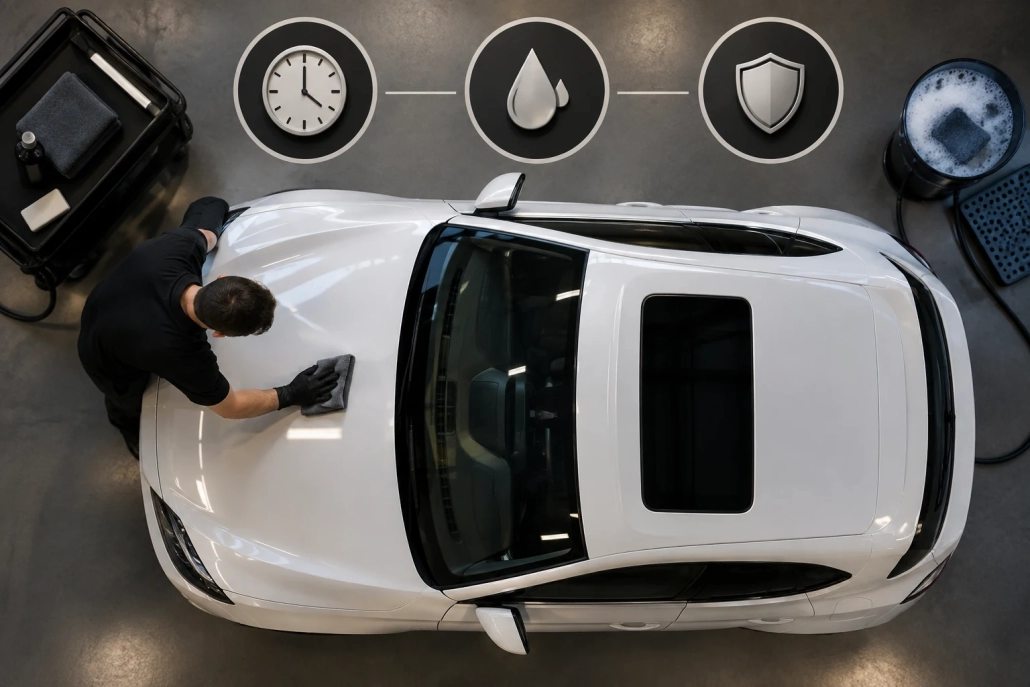
Open-carrier transport exposes a vehicle to a different handling and contamination sequence from ordinary parking. If ceramic coating is planned close to collection day, coordinate the application and required curing restrictions with the transport schedule before the appointment begins.
Obtain the coating’s current release and exposure requirements. Compare them with pickup timing, expected weather and the ability to keep the vehicle under suitable conditions. Do not assume the date printed on a booking creates enough curing time.
If the timetable cannot support the specified process, consider coating after transport. That also allows arrival contamination and any handling marks to be assessed before final protection. The decision depends on the actual project rather than a universal rule.
Provide the relevant curing restrictions and explain any freshly treated surfaces. Follow the carrier and vehicle manufacturer’s procedures for securing and handling the vehicle. Do not apply coating to tie-down areas or functional components outside the product’s approved scope.
Photograph the accepted finish at handover. If protective film, covers or other transport materials are proposed, confirm compatibility and timing rather than placing them over a fresh coating by assumption.
Document the condition before cleaning. Distinguish ordinary road contamination from visible impact or handling damage. Use a suitable wash before assessing water behaviour or deciding on maintenance products.
Refer to NANOLAB documentation when planning exposure and aftercare. Record any panels corrected or renewed after delivery. A coordinated transport plan preserves a clear history of the finish, while a last-minute application can create avoidable uncertainty about curing, inspection and responsibility.
Arrange suitable post-application parking and handover timing so a freshly coated vehicle can follow the product's cure and exposure instructions.
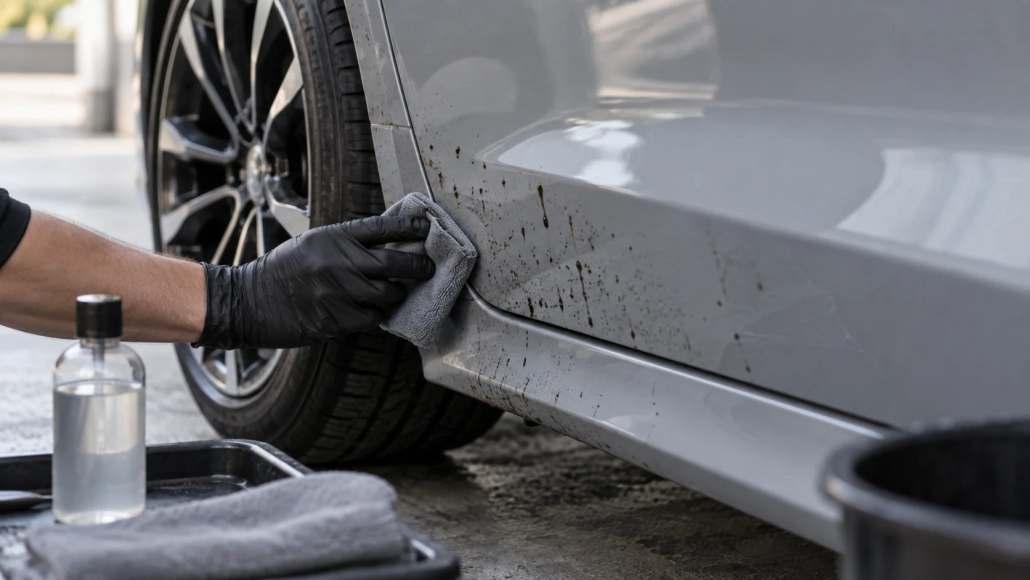
Inspect rubber marks, heavy wheel contamination and affected protection after a track day before choosing cleaners or local correction.
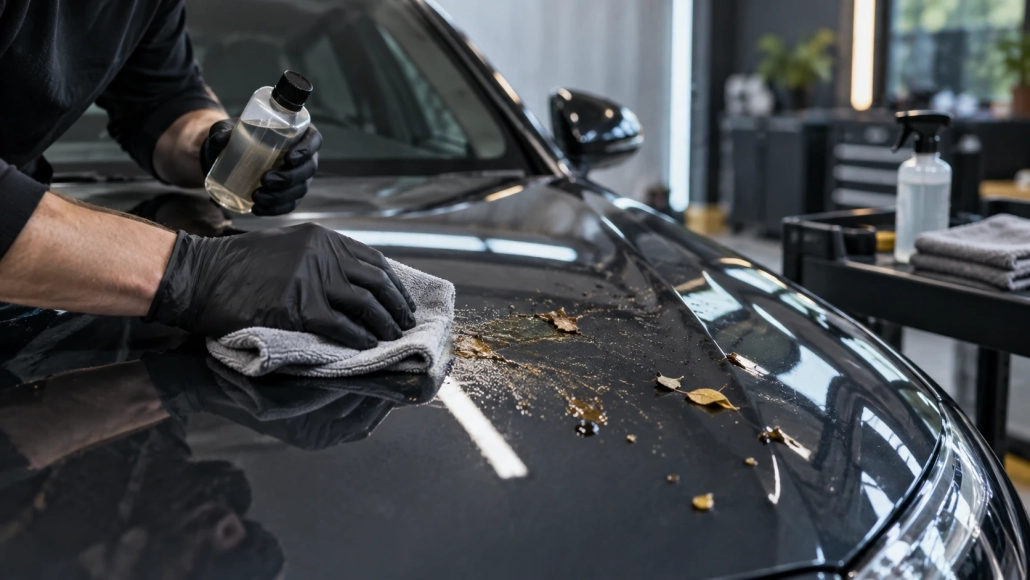
Inspect sap-like deposits, leaf debris and bird residue after a camping trip before washing a ceramic-coated vehicle.

 Ceramic Coating After a Track Day: Rubber and Contamination