






A full polishing range.
From cutting and one-step correction to final finishing.
Specialist chemistry. Expert application.
 QUARTZ99 / CERAMIC BASE COAT
The foundation of your coating system.
A layerable quartz base coat designed for mechanical protection. Pair it with a suitable top coat to create the final finish.
For application by NANOLAB certified installers only.
Four formulas. Extended working time. Find the coating for your finish.
Explore the BEAST family of ceramic coatings.
Find the coating for each exterior surface.
 PPF & VINYLGLOSSProtection for glossy films and wraps.Discover
 MATTE & SATINMATTEProtection that respects the finish.Discover
 GLASSWINDOWSExplore dedicated glass protection.Discover
 WHEEL PROTECTIONWHEELSA dedicated coating for your wheels.Discover
 TRIM PROTECTIONPLASTICProtection for plastic surfaces.Discover
Dedicated care for the surfaces inside.
 LEATHER SURFACESLEATHERDiscover NANOLAB leather protection.Discover PLASTIC SURFACESPLASTICProtection for interior plastic surfaces.Discover TEXTILE SURFACESFABRICExplore the latest fabric formulation.Discover
Spray protection, maintenance and upcoming wash products.
 MAINTENANCEBEAST 365Explore the BEAST maintenance range.Discover
Next in washing, cleaning & care.
Ceramic protection for boats and yachts.
An easy-to-apply ceramic coating with an established track record on boats and yachts around the world.
Results vary with surface preparation, exposure and maintenance.
Read 50 MARINE guides →Explore MARINEProtection for the surfaces you live with.
A look at what we’re developing.
From cutting and one-step correction to final finishing.
A wider range for professional vehicle care.
Taking shape alongside BEAST & MATRIX.
Practical guidance for your next coating project.
Explore all guides →
Inspect rubber marks, heavy wheel contamination and affected protection after a track day before choosing cleaners or local correction.
Updated · NANOLAB Knowledge
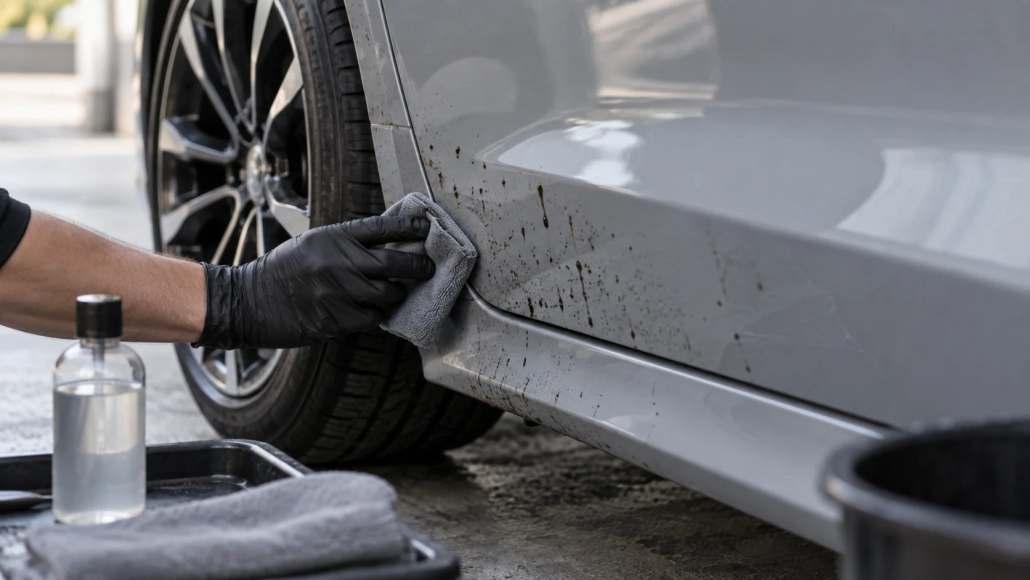
A track day can leave rubber marks and concentrated contamination on a ceramic-coated vehicle. Ceramic protection does not make those marks harmless or guarantee that an ordinary shampoo will remove them. Let the car and its components reach appropriate cleaning conditions before inspection.
Map paint, PPF, wheels, trim and glass. Each may require a different product or method. Keep wheel tools separate, and follow the vehicle and wheel manufacturers’ guidance when handling heavily used braking components.
Do not apply coating or cleaner to braking friction surfaces. A wheel coating’s stated suitability does not extend to every nearby mechanical part. If access requires wheel removal, use the correct service procedure and qualified assistance.
Remove loose contamination with a suitable wash and inspect the remaining rubber or tar-like marks. Identify a cleaner approved for the actual material and protection. Test in a small suitable area and respect the product’s removal and rinsing requirements.
Avoid dragging a solvent-soaked towel repeatedly across a large panel. If marks remain, obtain advice rather than assuming stronger chemistry or polishing is automatically appropriate. Film and paint can respond differently.
After cleaning, inspect for impact damage and finish defects. A coating cannot repair stone chips, and removing visible rubber does not prove that the protection is unchanged. Decide on local maintenance or renewal from the inspected condition.
Ask NANOLAB support about the selected system where compatibility is unclear. Keep the event and cleaning record with the vehicle’s maintenance history so later behaviour is interpreted in context, particularly on panels that combine paint and PPF.
Identify tar-like deposits and use a surface-compatible removal process before deciding whether a coated panel needs further treatment.
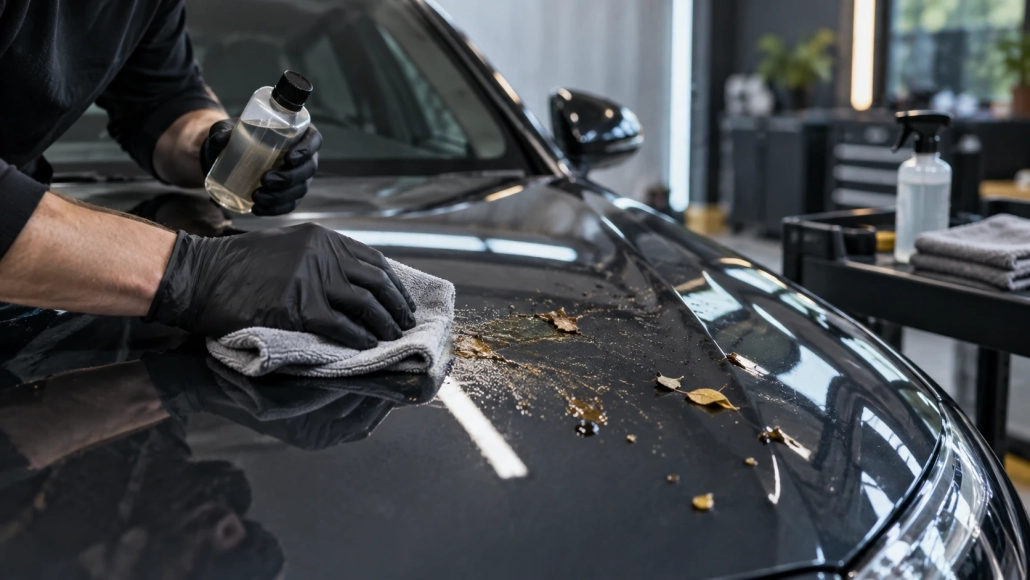
Inspect sap-like deposits, leaf debris and bird residue after a camping trip before washing a ceramic-coated vehicle.
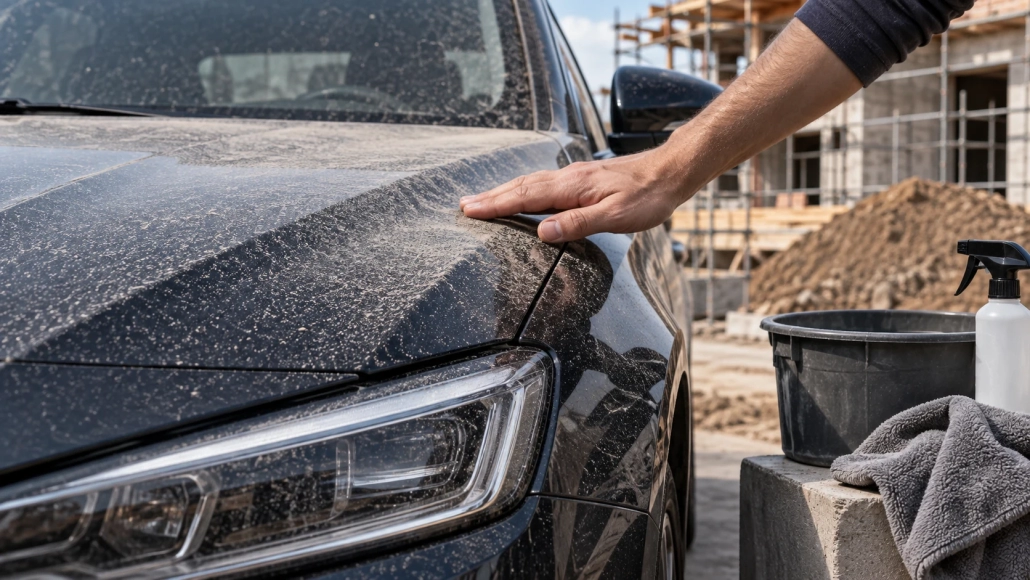
Distinguish loose dust from tar-like or bonded contamination after roadworks exposure before cleaning ceramic-coated paint.

 Ceramic Coating Care After Camping Under Trees