






A full polishing range.
From cutting and one-step correction to final finishing.
Specialist chemistry. Expert application.
 QUARTZ99 / CERAMIC BASE COAT
The foundation of your coating system.
A layerable quartz base coat designed for mechanical protection. Pair it with a suitable top coat to create the final finish.
For application by NANOLAB certified installers only.
Four formulas. Extended working time. Find the coating for your finish.
Explore the BEAST family of ceramic coatings.
Find the coating for each exterior surface.
 PPF & VINYLGLOSSProtection for glossy films and wraps.Discover
 MATTE & SATINMATTEProtection that respects the finish.Discover
 GLASSWINDOWSExplore dedicated glass protection.Discover
 WHEEL PROTECTIONWHEELSA dedicated coating for your wheels.Discover
 TRIM PROTECTIONPLASTICProtection for plastic surfaces.Discover
Dedicated care for the surfaces inside.
 LEATHER SURFACESLEATHERDiscover NANOLAB leather protection.Discover PLASTIC SURFACESPLASTICProtection for interior plastic surfaces.Discover TEXTILE SURFACESFABRICExplore the latest fabric formulation.Discover
Spray protection, maintenance and upcoming wash products.
 MAINTENANCEBEAST 365Explore the BEAST maintenance range.Discover
Next in washing, cleaning & care.
Ceramic protection for boats and yachts.
An easy-to-apply ceramic coating with an established track record on boats and yachts around the world.
Results vary with surface preparation, exposure and maintenance.
Read 50 MARINE guides →Explore MARINEProtection for the surfaces you live with.
A look at what we’re developing.
From cutting and one-step correction to final finishing.
A wider range for professional vehicle care.
Taking shape alongside BEAST & MATRIX.
Practical guidance for your next coating project.
Explore all guides →
Assess stored rainwater, sediment and final rinsing before using collected water to wash a ceramic-coated vehicle.
Updated · NANOLAB Knowledge
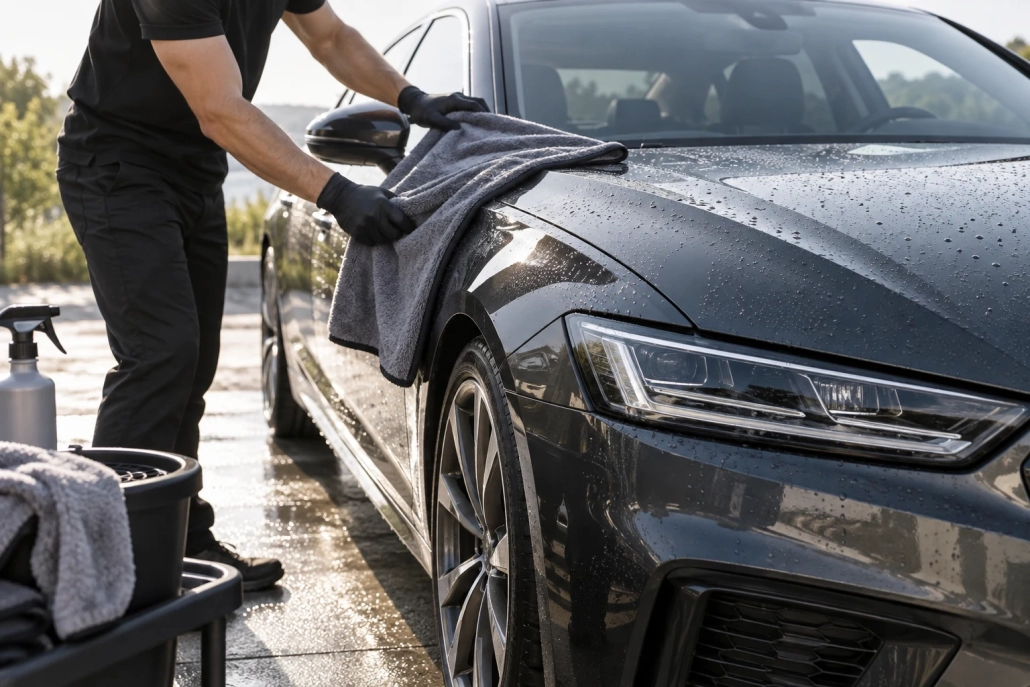
Collected rainwater is not the same as freshly falling rain, and neither is automatically suitable for finish-sensitive washing. Roofs, gutters, tanks and hoses can introduce debris. Before using stored water on ceramic-coated paint, assess the complete collection and delivery route.
Check the tank’s maintenance history and the intended use of its water. Clear appearance does not establish that water is free of fine particles or dissolved contamination. Follow the collection system’s guidance and local requirements for its use.
Keep sediment and dirty container surfaces away from wash media. A coating does not prevent suspended grit from becoming an abrasive when it is trapped beneath a towel or mitt. Use an appropriate filtration and maintenance arrangement rather than an improvised cloth filter presented as proof of cleanliness.
Confirm that the water supply supports thorough rinsing before detergent dries. If its quality is uncertain, choose a known suitable supply for the final rinse and drying stage. Avoid dipping a clean mitt into stored water of unknown condition.
For example, a well-maintained collection system used regularly has a different practical history from an open container that has stood beneath trees. Assess the actual setup instead of assuming both deserve the same washing method.
Check for grit, streaks or deposits on a small test area before washing the full vehicle. If marks appear, stop and investigate the water and process rather than repeatedly rubbing them away. Retain a gentle drying step appropriate to the coating.
Consult the coating care instructions for suitable products and timing. Rainwater can be part of a considered water-use plan, but it does not remove the need for clean equipment, controlled contact and a verified final finish.
Understand what a rinse can remove, how to assess remaining road film and why drying should wait until the coated surface is properly clean.
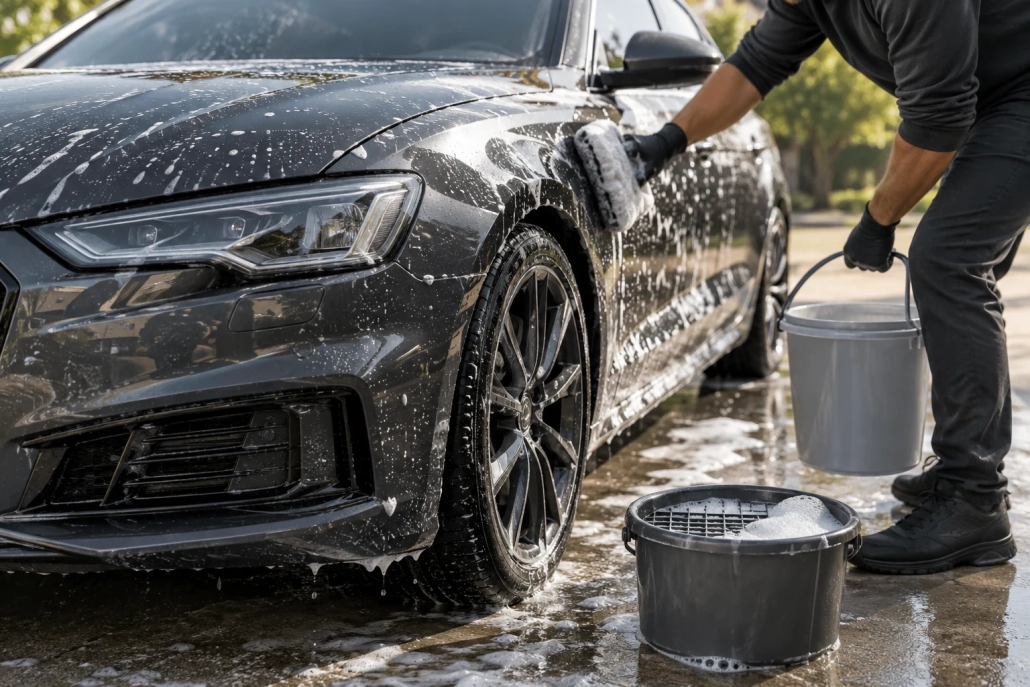
Decide whether contamination and product instructions support waterless cleaning, and distinguish it from a rinseless wash process.
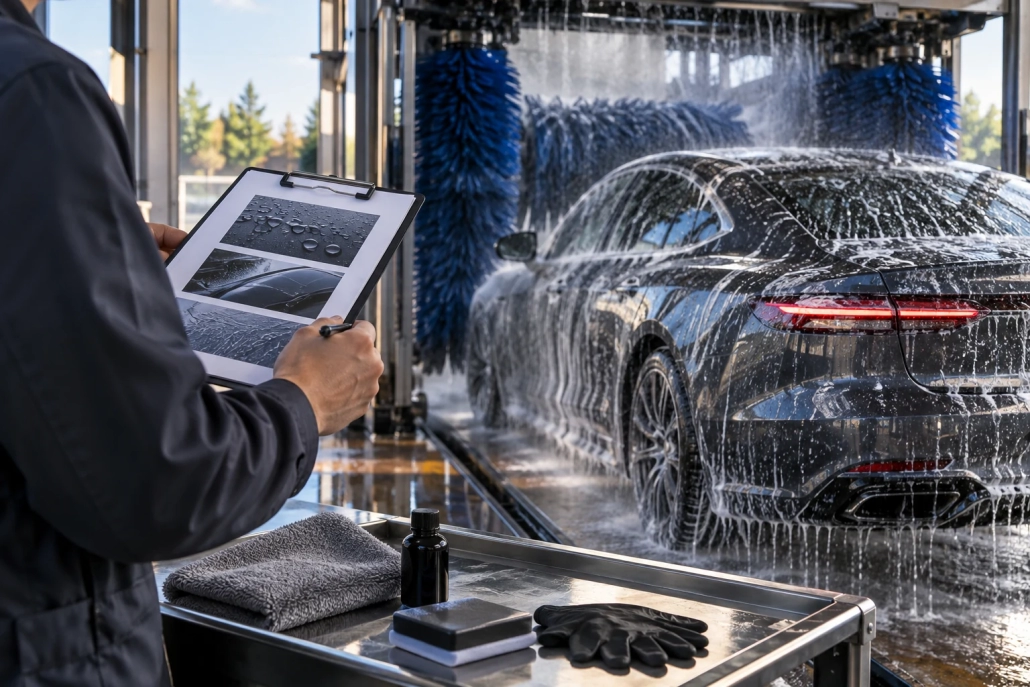
Assess an unexpected tunnel wash by checking the actual service, paint condition and finishing residue before renewing protection.

 Waterless Washing and Ceramic Coating: Assessing the Limits