






A full polishing range.
From cutting and one-step correction to final finishing.
Specialist chemistry. Expert application.
 QUARTZ99 / CERAMIC BASE COAT
The foundation of your coating system.
A layerable quartz base coat designed for mechanical protection. Pair it with a suitable top coat to create the final finish.
For application by NANOLAB certified installers only.
Four formulas. Extended working time. Find the coating for your finish.
Explore the BEAST family of ceramic coatings.
Find the coating for each exterior surface.
 PPF & VINYLGLOSSProtection for glossy films and wraps.Discover
 MATTE & SATINMATTEProtection that respects the finish.Discover
 GLASSWINDOWSExplore dedicated glass protection.Discover
 WHEEL PROTECTIONWHEELSA dedicated coating for your wheels.Discover
 TRIM PROTECTIONPLASTICProtection for plastic surfaces.Discover
Dedicated care for the surfaces inside.
 LEATHER SURFACESLEATHERDiscover NANOLAB leather protection.Discover PLASTIC SURFACESPLASTICProtection for interior plastic surfaces.Discover TEXTILE SURFACESFABRICExplore the latest fabric formulation.Discover
Spray protection, maintenance and upcoming wash products.
 MAINTENANCEBEAST 365Explore the BEAST maintenance range.Discover
Next in washing, cleaning & care.
Ceramic protection for boats and yachts.
An easy-to-apply ceramic coating with an established track record on boats and yachts around the world.
Results vary with surface preparation, exposure and maintenance.
Read 50 MARINE guides →Explore MARINEProtection for the surfaces you live with.
A look at what we’re developing.
From cutting and one-step correction to final finishing.
A wider range for professional vehicle care.
Taking shape alongside BEAST & MATRIX.
Practical guidance for your next coating project.
Explore all guides →
Prepare and inspect the small painted areas around vehicle badges without trapping water, residue or excess ceramic coating.
Updated · NANOLAB Knowledge
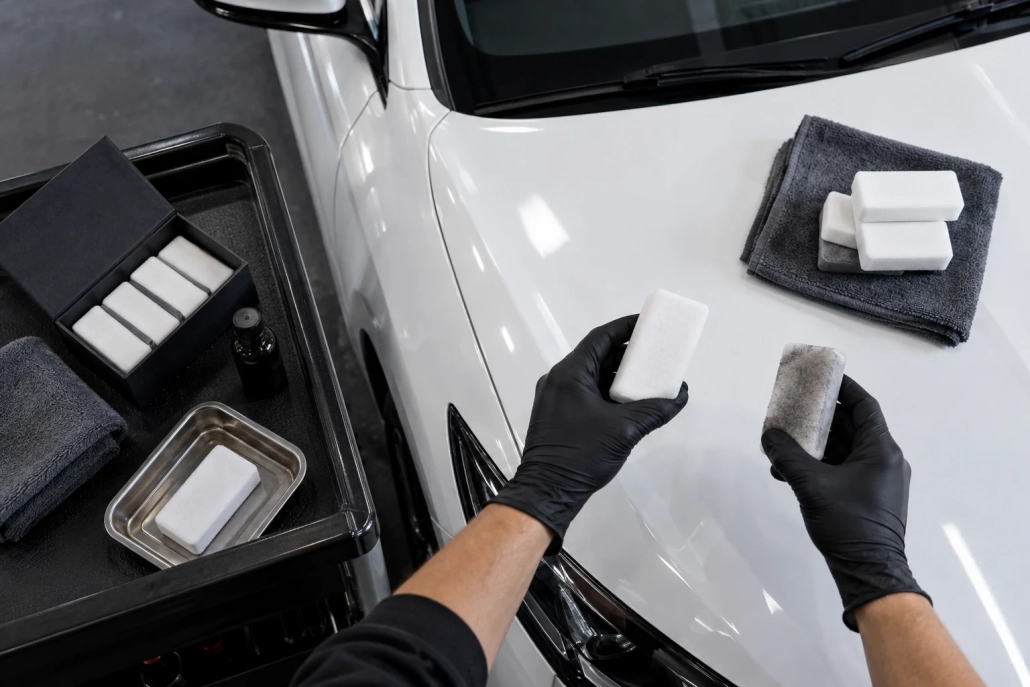
Badges and emblems interrupt an otherwise open painted panel. They create narrow spaces that are harder to clean, dry, coat and inspect. A careful plan keeps the accessible paint within the job while avoiding promises about hidden surfaces that cannot be reached properly.
Check for loose letters, damaged adhesive and accumulated contamination. Record existing defects before introducing cleaning tools. Removal is a separate decision requiring the owner’s agreement and a suitable replacement or refitting plan; it is not a routine requirement for every coating job.
Clean accessible areas with tools and products compatible with the paint, badge finish and adhesive. Avoid forcing brushes under edges. Rinse as appropriate and address trapped water before the final preparation stage. Later drips can reach a freshly treated panel.
Choose an applicator or approved small-area method that can reach and level the intended surface without flooding the recess. If you cannot remove excess material from a gap, do not fill it with coating. Coating compatibility with the surrounding paint does not establish compatibility with the badge material.
For final residue removal, NANOLAB PREP is a preparation product whose instructions should be checked against the surfaces involved. Apply the prescribed process carefully rather than spraying indiscriminately into adhesive joints.
Use angled lighting to check the spaces immediately beside letters and the lower edges where liquid can collect. Inspect again after completing the rest of the panel, particularly if a hidden drip has appeared. Record any inaccessible area excluded from the treatment.
At handover, explain how to clean around the emblem without picking at it or forcing a pressure-washer jet beneath it. The useful result is clean, even protection on compatible accessible surfaces, together with a clear account of where the work stopped.
Match a coating applicator to the accessible surface so product can be spread and levelled around contours without flooding adjacent materials.
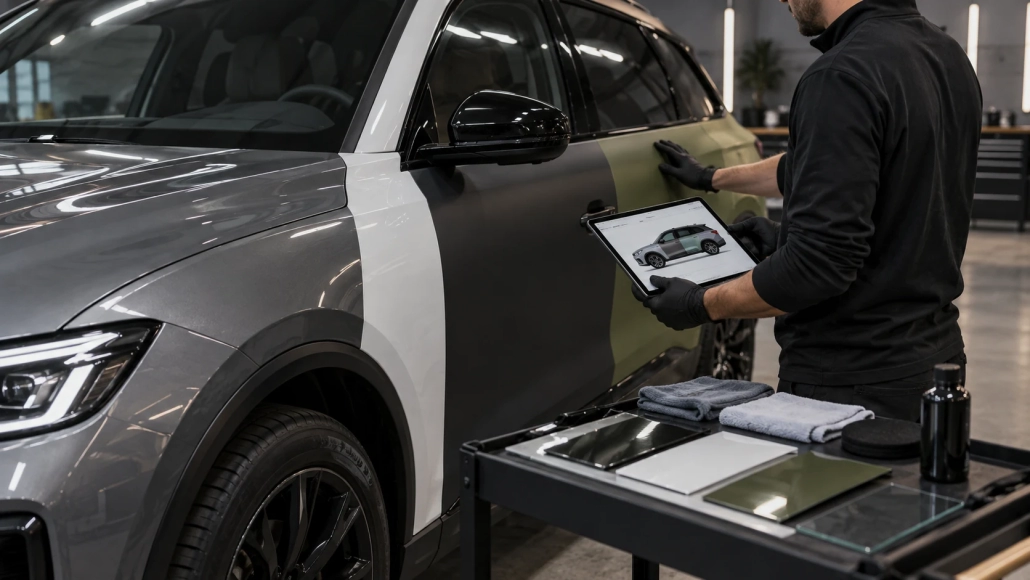
Plan ceramic coating on lower sills by identifying the finish, removing road film and arranging safe access for application and inspection.
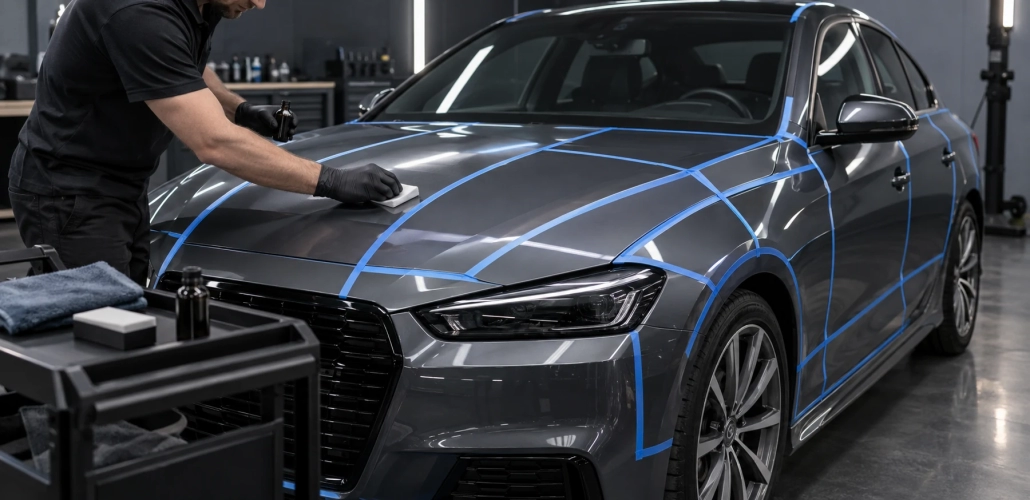
Prepare a practical response when loss of power interrupts lighting, ventilation or climate control during ceramic coating work.

 Ceramic Coating on Honeycomb Grilles: Access and Coverage