






A full polishing range.
From cutting and one-step correction to final finishing.
Specialist chemistry. Expert application.
 QUARTZ99 / CERAMIC BASE COAT
The foundation of your coating system.
A layerable quartz base coat designed for mechanical protection. Pair it with a suitable top coat to create the final finish.
For application by NANOLAB certified installers only.
Four formulas. Extended working time. Find the coating for your finish.
Explore the BEAST family of ceramic coatings.
Find the coating for each exterior surface.
 PPF & VINYLGLOSSProtection for glossy films and wraps.Discover
 MATTE & SATINMATTEProtection that respects the finish.Discover
 GLASSWINDOWSExplore dedicated glass protection.Discover
 WHEEL PROTECTIONWHEELSA dedicated coating for your wheels.Discover
 TRIM PROTECTIONPLASTICProtection for plastic surfaces.Discover
Dedicated care for the surfaces inside.
 LEATHER SURFACESLEATHERDiscover NANOLAB leather protection.Discover PLASTIC SURFACESPLASTICProtection for interior plastic surfaces.Discover TEXTILE SURFACESFABRICExplore the latest fabric formulation.Discover
Spray protection, maintenance and upcoming wash products.
 MAINTENANCEBEAST 365Explore the BEAST maintenance range.Discover
Next in washing, cleaning & care.
Ceramic protection for boats and yachts.
An easy-to-apply ceramic coating with an established track record on boats and yachts around the world.
Results vary with surface preparation, exposure and maintenance.
Read 50 MARINE guides →Explore MARINEProtection for the surfaces you live with.
A look at what we’re developing.
From cutting and one-step correction to final finishing.
A wider range for professional vehicle care.
Taking shape alongside BEAST & MATRIX.
Practical guidance for your next coating project.
Explore all guides →
Remove road film from PPF using compatible cleaning and careful rinsing, with extra attention to lower panels, seams and trim.
Updated · NANOLAB Knowledge
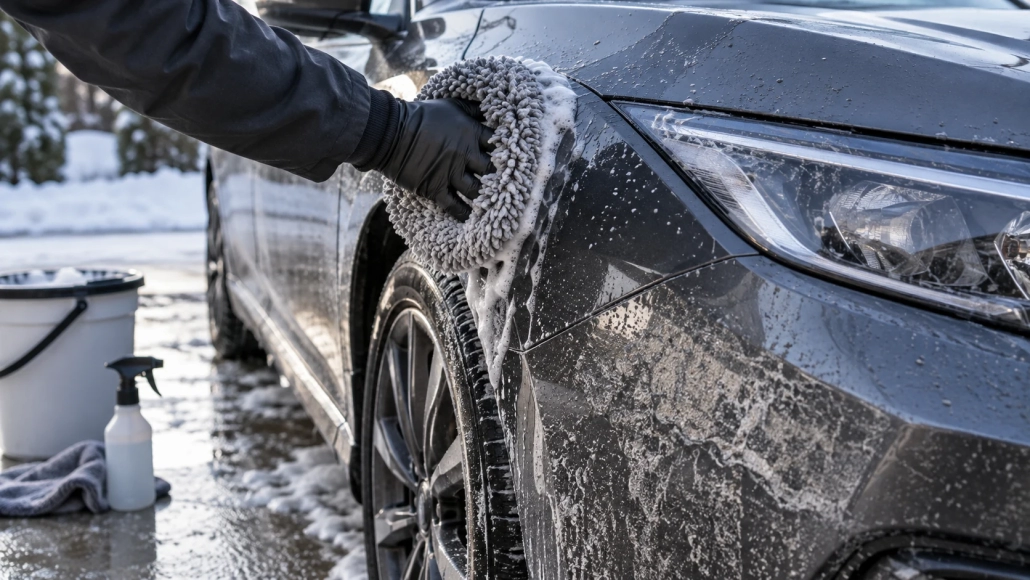
Winter driving can leave a mixture of traffic film, splash and grit on protected panels. The visible dirt may be concentrated on lower areas while seams retain residue after a quick rinse. PPF still needs a controlled cleaning process.
Inspect the cool vehicle and pre-rinse loose deposits. Use a cleaner suitable for the specific film, finish and any coating. Follow its dilution and dwell instructions instead of selecting stronger chemistry solely because the dirt is dark.
Keep brushes and wash media used on wheels separate from the film. Grit transferred from lower areas can mark a cleaner upper panel.
Allow the approved pre-cleaning stage to loosen contamination, then wash gently as instructed. Keep products from drying and rinse thoroughly. Pay attention to recesses without directing concentrated pressure underneath film edges.
If a film remains after drying, identify whether it is cleaner residue, persistent contamination or an appearance change. Repeat only the appropriate stage rather than stacking several unknown products.
Check for trapped residue, lifted edges or damage revealed by cleaning. Document concerns for the installer and avoid trying to reseal film with a coating or maintenance product.
Use PPF edge washing and ageing-film inspection. Where NANOLAB protection is installed, retain its compatible maintenance routine while accounting for the film’s separate care requirements.
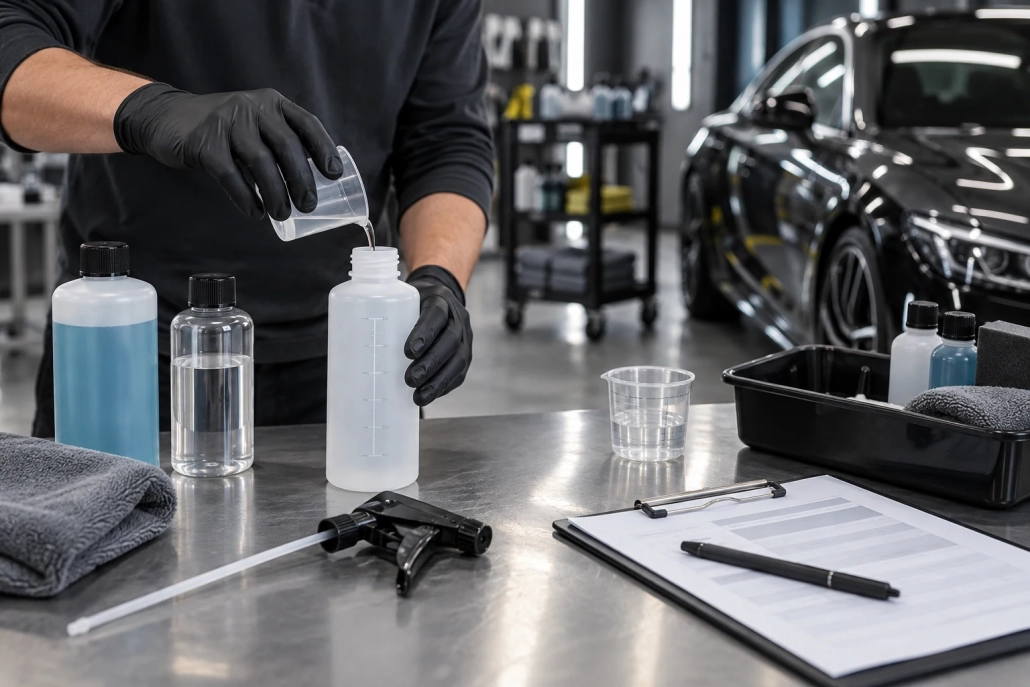
Read dilution ratios precisely, measure a repeatable working solution and avoid confusing product-to-water ratios with final-volume instructions.
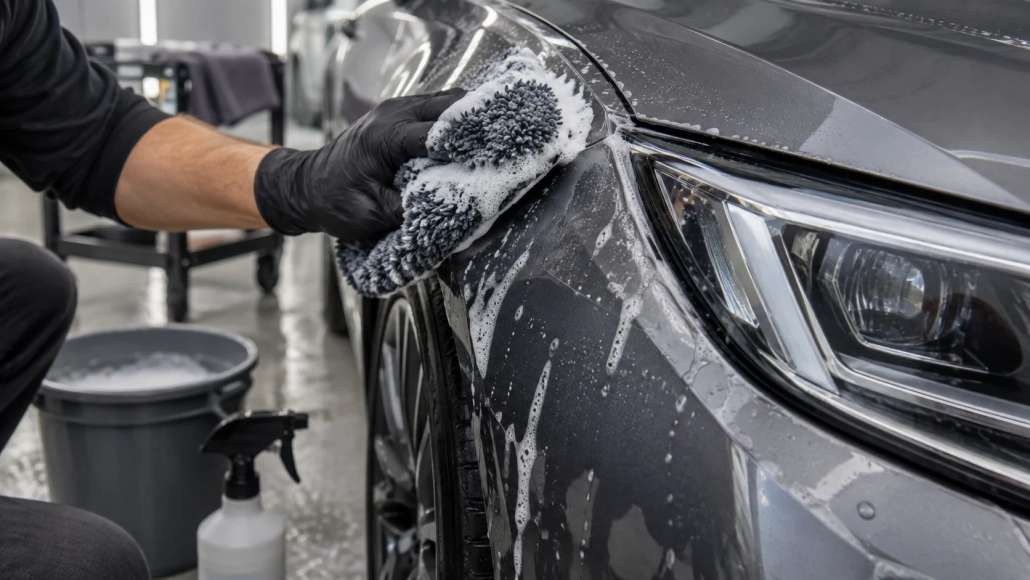
Clean around PPF seams and edges with controlled water direction, suitable wash media and inspection of any existing lifting.
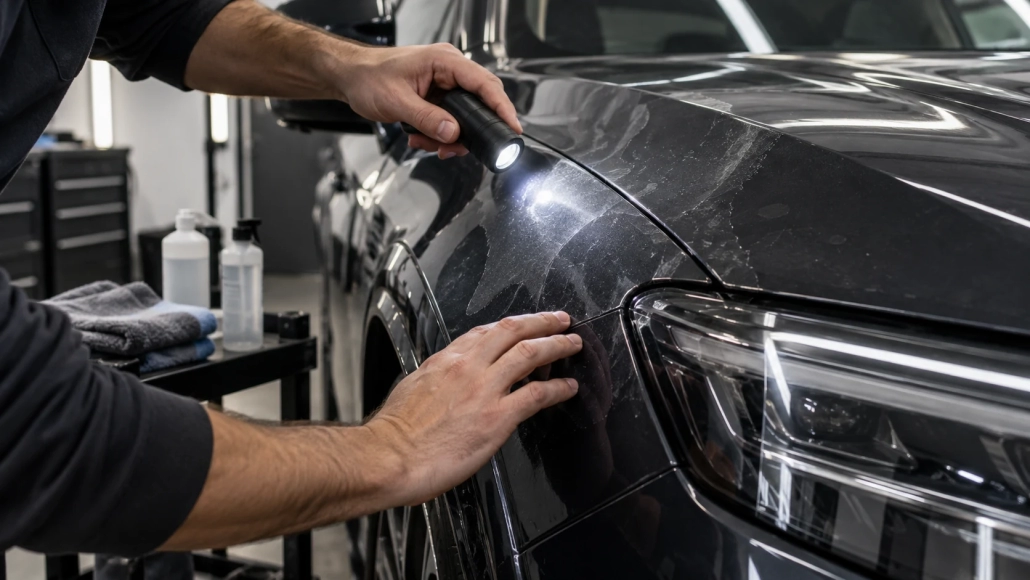
Assess older PPF for staining, lifting, cracking and finish changes before deciding whether cleaning, coating or film review is appropriate.

 A Practical PPF Care Kit for Road Trips