






A full polishing range.
From cutting and one-step correction to final finishing.
Specialist chemistry. Expert application.
 QUARTZ99 / CERAMIC BASE COAT
The foundation of your coating system.
A layerable quartz base coat designed for mechanical protection. Pair it with a suitable top coat to create the final finish.
For application by NANOLAB certified installers only.
Four formulas. Extended working time. Find the coating for your finish.
Explore the BEAST family of ceramic coatings.
Find the coating for each exterior surface.
 PPF & VINYLGLOSSProtection for glossy films and wraps.Discover
 MATTE & SATINMATTEProtection that respects the finish.Discover
 GLASSWINDOWSExplore dedicated glass protection.Discover
 WHEEL PROTECTIONWHEELSA dedicated coating for your wheels.Discover
 TRIM PROTECTIONPLASTICProtection for plastic surfaces.Discover
Dedicated care for the surfaces inside.
 LEATHER SURFACESLEATHERDiscover NANOLAB leather protection.Discover PLASTIC SURFACESPLASTICProtection for interior plastic surfaces.Discover TEXTILE SURFACESFABRICExplore the latest fabric formulation.Discover
Spray protection, maintenance and upcoming wash products.
 MAINTENANCEBEAST 365Explore the BEAST maintenance range.Discover
Next in washing, cleaning & care.
Ceramic protection for boats and yachts.
An easy-to-apply ceramic coating with an established track record on boats and yachts around the world.
Results vary with surface preparation, exposure and maintenance.
Read 50 MARINE guides →Explore MARINEProtection for the surfaces you live with.
A look at what we’re developing.
From cutting and one-step correction to final finishing.
A wider range for professional vehicle care.
Taking shape alongside BEAST & MATRIX.
Practical guidance for your next coating project.
Explore all guides →
Include resin-filled areas and repairs when testing a stone surface, because the filler may respond differently from the surrounding mineral.
Updated · NANOLAB Knowledge

A stone slab can contain mineral surfaces, resin-filled pores, repairs and previous treatments. A coating trial that touches only an unfilled area may miss the material most likely to limit the process.
Ask the stone supplier about filling, resin treatment, polishing and prior sealers. Mark visible repairs and filled veins on a sample photograph. Appearance alone may not reveal every treatment, so record unknown history as a limitation.
Use an offcut containing the same filler and finish where possible. Include a boundary between mineral and resin. Do not begin an aggressive compatibility test on the client’s finished installation when a representative spare is available.
| Area | Check |
|---|---|
| Stone | Colour, gloss and approved cleaning response |
| Filler | Appearance, softening or other change |
| Boundary | Uneven wetting, residue or visible contrast |
Follow supplier guidance for preparation, coating and later inspection. A successful result on one filled slab does not establish compatibility with every resin used in that stone variety. If the filler changes or remains unidentified, seek further confirmation before rollout. Record the accepted sample, process and observation times so the installer knows exactly which combination was evaluated.
Ask NANOLAB about your surface and intended use. For application and care, use the current instructions for the exact product.
Use clear checkpoints before application, after levelling and at handover to make coating work consistent and traceable.
Many household products arrive with their own protective or decorative finish.
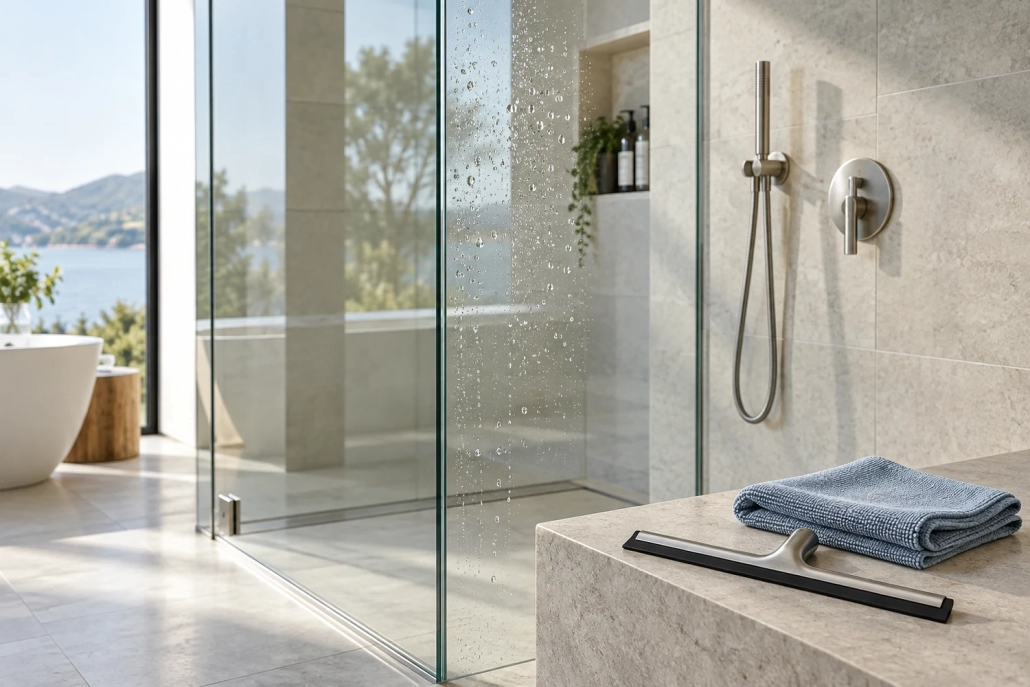
Trace irrigation overspray and water quality when glass balustrades repeatedly develop deposits, before changing the coating or cleaning routine.

 Glass Balustrades beside Irrigation: Trace the Water Source before Changing...