






A full polishing range.
From cutting and one-step correction to final finishing.
Specialist chemistry. Expert application.
 QUARTZ99 / CERAMIC BASE COAT
The foundation of your coating system.
A layerable quartz base coat designed for mechanical protection. Pair it with a suitable top coat to create the final finish.
For application by NANOLAB certified installers only.
Four formulas. Extended working time. Find the coating for your finish.
Explore the BEAST family of ceramic coatings.
Find the coating for each exterior surface.
 PPF & VINYLGLOSSProtection for glossy films and wraps.Discover
 MATTE & SATINMATTEProtection that respects the finish.Discover
 GLASSWINDOWSExplore dedicated glass protection.Discover
 WHEEL PROTECTIONWHEELSA dedicated coating for your wheels.Discover
 TRIM PROTECTIONPLASTICProtection for plastic surfaces.Discover
Dedicated care for the surfaces inside.
 LEATHER SURFACESLEATHERDiscover NANOLAB leather protection.Discover PLASTIC SURFACESPLASTICProtection for interior plastic surfaces.Discover TEXTILE SURFACESFABRICExplore the latest fabric formulation.Discover
Spray protection, maintenance and upcoming wash products.
 MAINTENANCEBEAST 365Explore the BEAST maintenance range.Discover
Next in washing, cleaning & care.
Ceramic protection for boats and yachts.
An easy-to-apply ceramic coating with an established track record on boats and yachts around the world.
Results vary with surface preparation, exposure and maintenance.
Read 50 MARINE guides →Explore MARINEProtection for the surfaces you live with.
A look at what we’re developing.
From cutting and one-step correction to final finishing.
A wider range for professional vehicle care.
Taking shape alongside BEAST & MATRIX.
Practical guidance for your next coating project.
Explore all guides →
Separate gloss-enhancing and finish-preserving coating requirements when planning private label products for paint, PPF and vinyl.
Updated · NANOLAB Knowledge
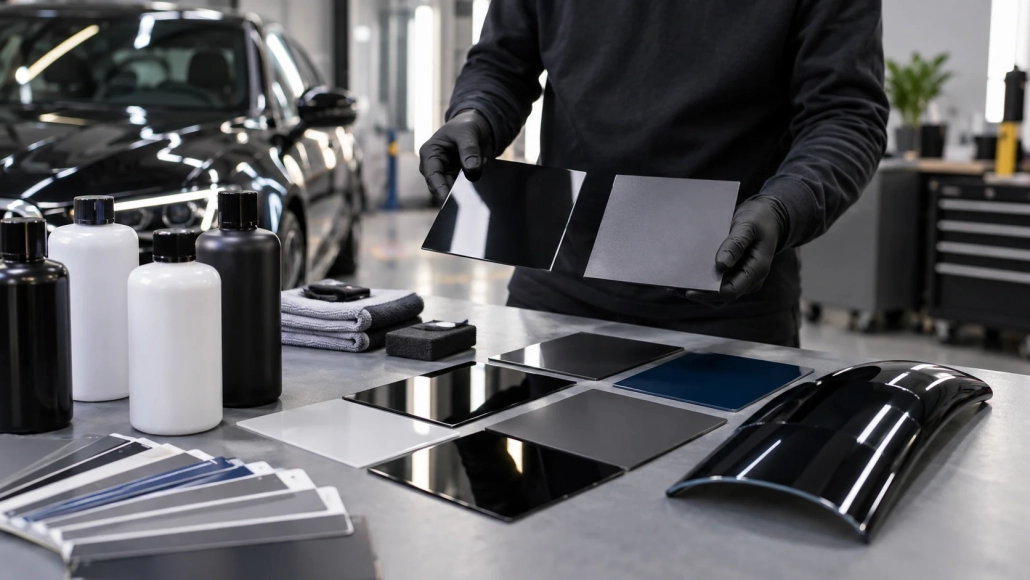
Gloss and matte customers are often seeking different visual results. A product range should make that difference obvious before application. A coating chosen to intensify reflections may be inappropriate for a customer who wants the original matte appearance preserved.
Record both the appearance and the substrate: glossy paint, matte paint, glossy PPF or matte vinyl, for example. Two matte-looking surfaces may have different compatibility requirements. Do not rely on the word "matte" alone as a complete technical specification.
NANOLAB’s public range includes GLOSS and MATTE for different finish requirements. Use these product roles as a discussion starting point, then confirm the exact private label formulation and approved applications.
Keep a suitable untreated reference and inspect the test under diffuse and directional lighting. Look for darkening, uneven sheen, streaks and local gloss changes. Assess appearance after the specified curing stage rather than judging only the wet application film.
Include the intended maintenance routine in the trial. A gloss-adding wash product can undermine a finish-preserving system even when the coating selection was appropriate.
Use readable surface instructions and a visible product distinction. Colour alone is insufficient when bottles are stored in poor lighting or artwork is reproduced in monochrome.
Create a separate acceptance record for each finish category and avoid generalising from one successful test. Discuss the proposed range through NANOLAB Private Label before approving claims or artwork.
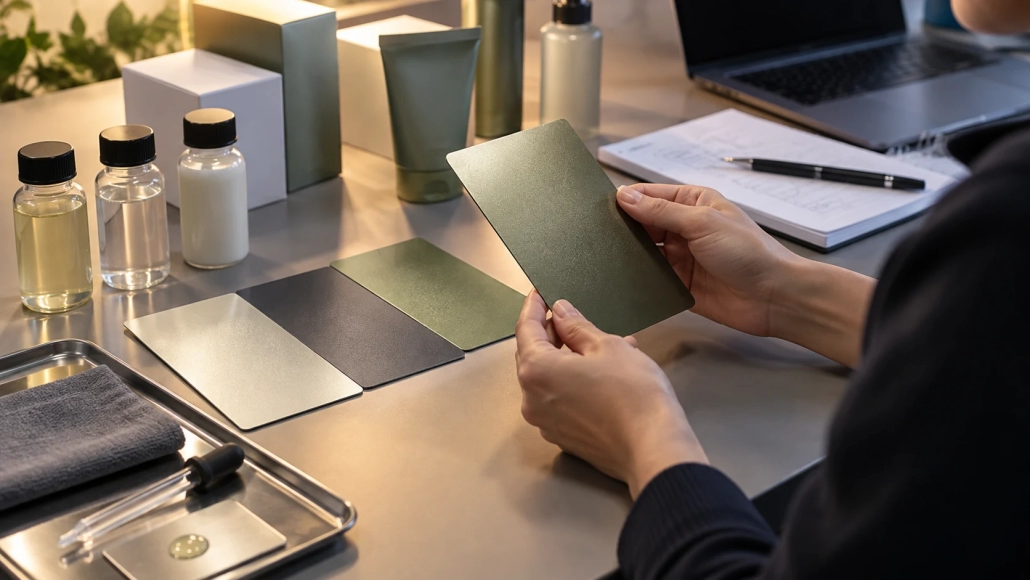
Create a clear private label sample approval record linking the selected coating, test conditions, packaging and unresolved questions.
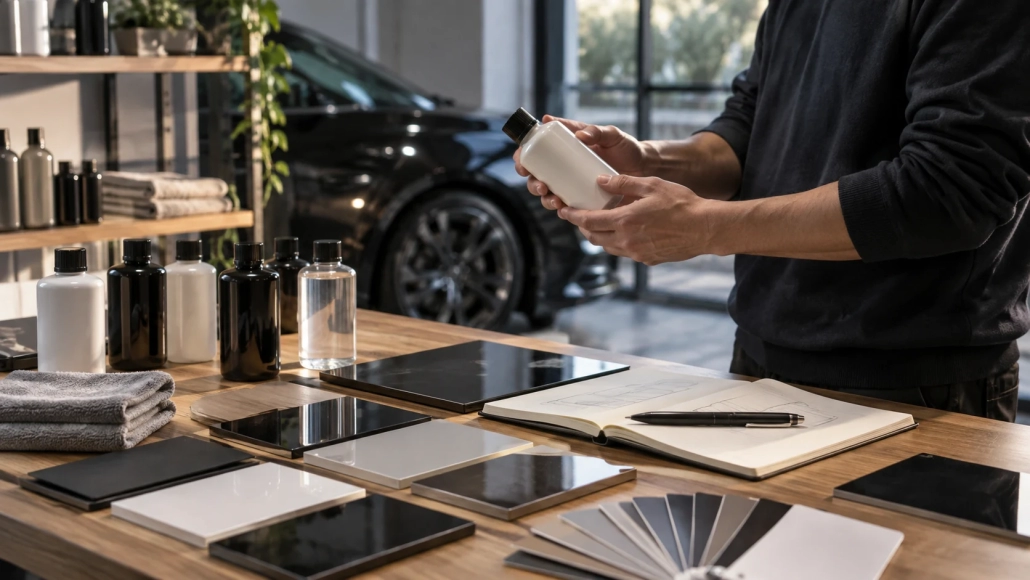
Build a focused private label coating range around distinct customer jobs, clear product roles and manageable support needs.
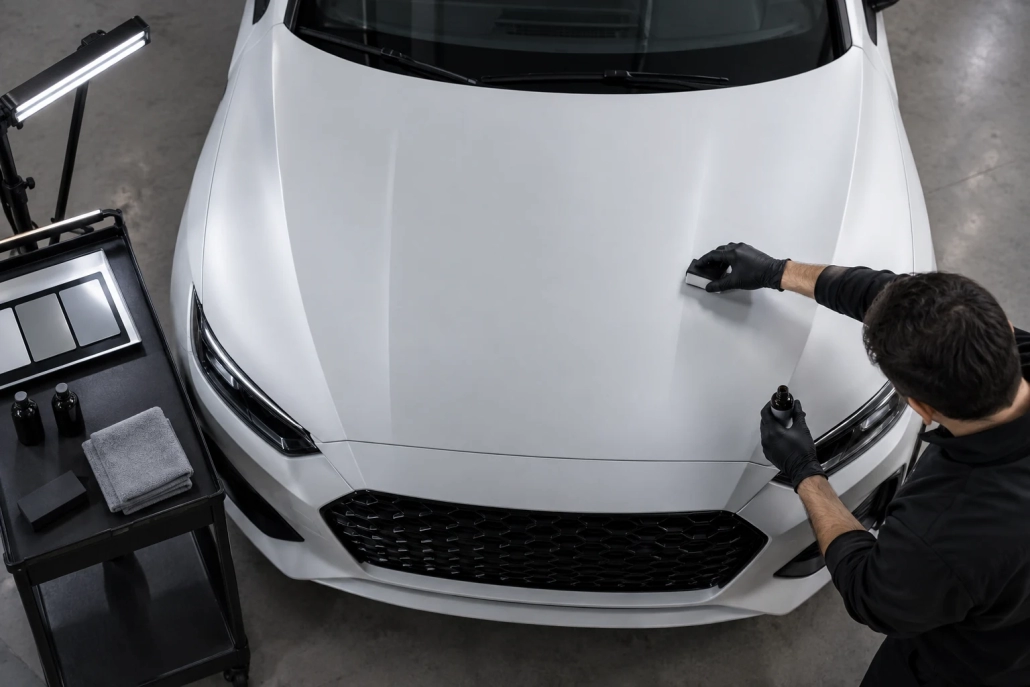
Choose a coating that preserves matte or satin appearance and avoid gloss-enhancing products or correction methods that change the sheen.
Use consistent product codes to distinguish coating formulas, pack sizes and kits across purchasing, storage and customer orders.

 Designing an Aftercare Card for a Private Label Coating