






A full polishing range.
From cutting and one-step correction to final finishing.
Specialist chemistry. Expert application.
 QUARTZ99 / CERAMIC BASE COAT
The foundation of your coating system.
A layerable quartz base coat designed for mechanical protection. Pair it with a suitable top coat to create the final finish.
For application by NANOLAB certified installers only.
Four formulas. Extended working time. Find the coating for your finish.
Explore the BEAST family of ceramic coatings.
Find the coating for each exterior surface.
 PPF & VINYLGLOSSProtection for glossy films and wraps.Discover
 MATTE & SATINMATTEProtection that respects the finish.Discover
 GLASSWINDOWSExplore dedicated glass protection.Discover
 WHEEL PROTECTIONWHEELSA dedicated coating for your wheels.Discover
 TRIM PROTECTIONPLASTICProtection for plastic surfaces.Discover
Dedicated care for the surfaces inside.
 LEATHER SURFACESLEATHERDiscover NANOLAB leather protection.Discover PLASTIC SURFACESPLASTICProtection for interior plastic surfaces.Discover TEXTILE SURFACESFABRICExplore the latest fabric formulation.Discover
Spray protection, maintenance and upcoming wash products.
 MAINTENANCEBEAST 365Explore the BEAST maintenance range.Discover
Next in washing, cleaning & care.
Ceramic protection for boats and yachts.
An easy-to-apply ceramic coating with an established track record on boats and yachts around the world.
Results vary with surface preparation, exposure and maintenance.
Read 50 MARINE guides →Explore MARINEProtection for the surfaces you live with.
A look at what we’re developing.
From cutting and one-step correction to final finishing.
A wider range for professional vehicle care.
Taking shape alongside BEAST & MATRIX.
Practical guidance for your next coating project.
Explore all guides →
Investigate one dull door on a coated vehicle by comparing repair, polishing, exposure and maintenance history at panel level.
Updated · NANOLAB Knowledge

When one door looks dull while the rest of a coated car looks good, the difference may originate before or after coating. Reconstruct that panel’s history before choosing a whole-vehicle correction.
| History | Questions |
|---|---|
| Paint and repair | Was the door repainted or replaced? |
| Preparation | Did it receive a different correction process? |
| Application | Was coating applied or reworked separately? |
| Use and care | Does it face different exposure or cleaning? |
Use invoices, photographs and service notes where available. An uncertain history should remain labelled uncertain rather than being filled with a plausible story.
Clean appropriately and compare the dry door with adjacent panels under several viewing angles. Panel curvature and factory texture can change reflected appearance. A difference in reflection does not automatically indicate missing coating.
Start with suitable maintenance and residue checks. If the appearance remains different, assess the paint and preparation history before polishing. A repainted door may have different texture, curing requirements or correction limits from the original finish.
For example, the door may have been locally polished after the original coating installation. That can explain a change in protection history, but the record should confirm the work rather than relying on beading alone.
If correction or coating renewal is appropriate, define the affected area and the expected match to neighbouring panels. Avoid promising that a coating will erase a difference caused by the underlying paint finish.
Record any new preparation, product and application date for the door separately. Give the owner care instructions that account for its fresh treatment while the rest of the car retains its previous history.
A panel-level investigation is usually more informative than treating the car as one uniform surface. It limits unnecessary work and gives future maintenance visits a reliable explanation for the difference.
Ask NANOLAB about your surface and intended use. For application and care, use the current instructions for the exact product.
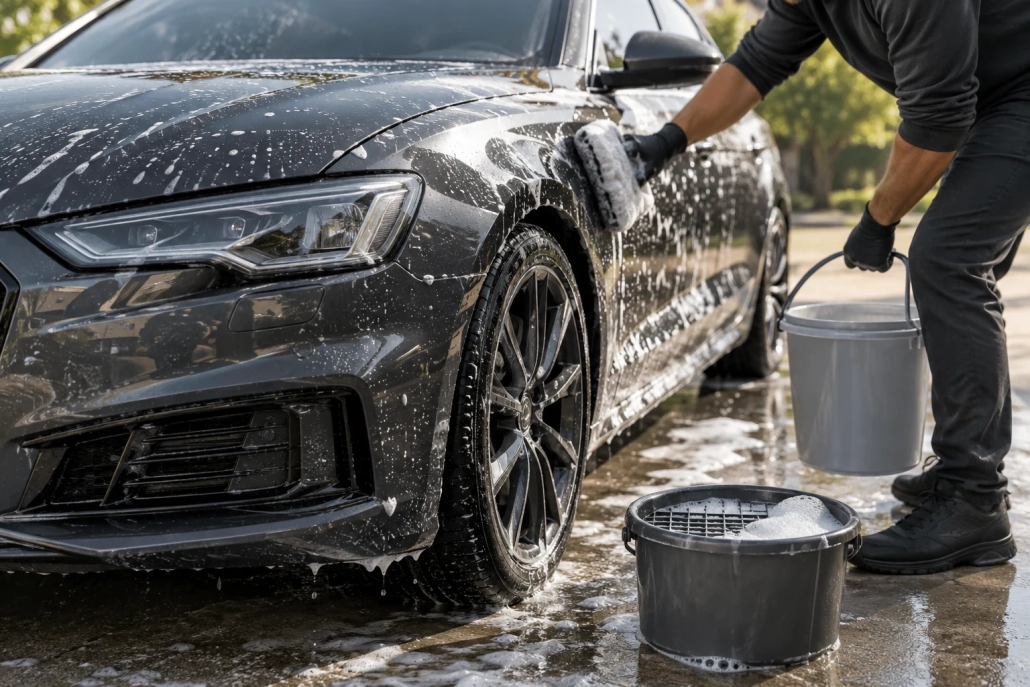
Build a gentle wash routine that removes loose grit before contact, keeps wheel tools separate and ends with careful rinsing and drying.
Storage changes exposure even when the vehicle is not driven. Parking conditions belong in the investigation.
Combine existing ceramic coating with newly installed bonnet PPF by updating compatibility, timing and panel-specific aftercare instructions.
 A Coated Car with New PPF on Only the Bonnet: Rebuild the Care Plan