






A full polishing range.
From cutting and one-step correction to final finishing.
Specialist chemistry. Expert application.
 QUARTZ99 / CERAMIC BASE COAT
The foundation of your coating system.
A layerable quartz base coat designed for mechanical protection. Pair it with a suitable top coat to create the final finish.
For application by NANOLAB certified installers only.
Four formulas. Extended working time. Find the coating for your finish.
Explore the BEAST family of ceramic coatings.
Find the coating for each exterior surface.
 PPF & VINYLGLOSSProtection for glossy films and wraps.Discover
 MATTE & SATINMATTEProtection that respects the finish.Discover
 GLASSWINDOWSExplore dedicated glass protection.Discover
 WHEEL PROTECTIONWHEELSA dedicated coating for your wheels.Discover
 TRIM PROTECTIONPLASTICProtection for plastic surfaces.Discover
Dedicated care for the surfaces inside.
 LEATHER SURFACESLEATHERDiscover NANOLAB leather protection.Discover PLASTIC SURFACESPLASTICProtection for interior plastic surfaces.Discover TEXTILE SURFACESFABRICExplore the latest fabric formulation.Discover
Spray protection, maintenance and upcoming wash products.
 MAINTENANCEBEAST 365Explore the BEAST maintenance range.Discover
Next in washing, cleaning & care.
Ceramic protection for boats and yachts.
An easy-to-apply ceramic coating with an established track record on boats and yachts around the world.
Results vary with surface preparation, exposure and maintenance.
Read 50 MARINE guides →Explore MARINEProtection for the surfaces you live with.
A look at what we’re developing.
From cutting and one-step correction to final finishing.
A wider range for professional vehicle care.
Taking shape alongside BEAST & MATRIX.
Practical guidance for your next coating project.
Explore all guides →
Plan coated-boat maintenance around limited fresh-water supply without replacing approved rinsing with abrasive or improvised methods.
Updated · NANOLAB Knowledge
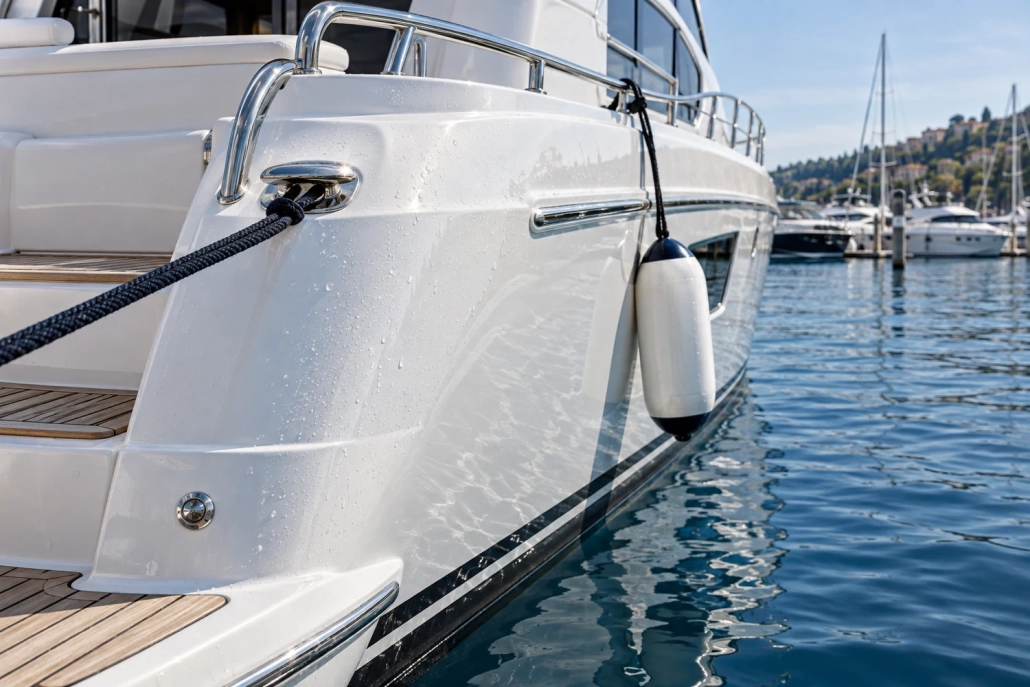
Limited fresh water changes maintenance logistics, but it does not automatically make a dry wipe or unapproved cleaner suitable for a salt-contaminated surface. The care plan should acknowledge the constraint and identify an approved workable process.
Record where fresh water is available, approximate supply per visit and the zones that can be reached safely. Distinguish a temporary shortage from the vessel’s normal operating pattern. Ask the coating and substrate suppliers which care options are appropriate under those conditions.
| Zone | Planning consideration |
|---|---|
| Frequent salt spray | Deposit load and approved removal method |
| Joints and fittings | Retention and access |
| Optical or safety-critical surfaces | Component-specific care requirements |
| Sheltered panels | Actual condition rather than assumed cleanliness |
A water-saving method should be evaluated for the actual contamination and surface system. Measure water use and inspect the cleaned, dry surface for residue or new marks. A smaller water volume is not an improvement if it leaves contamination that requires repeated corrective work.
Define when routine onboard care is insufficient and a suitable wash facility or professional service is needed. For example, accumulated deposits after several trips may exceed the conditions used to validate a light-maintenance method. Record that exception instead of forcing the same process onto every visit. Coating selection and care planning should fit the vessel’s real operating constraints from the beginning.
Ask NANOLAB about your surface and intended use. For application and care, use the current instructions for the exact product.
A pre-coating inspection prevents attractive results in one area from hiding unresolved problems elsewhere.
Ceramic coating does not remove the need to wash a boat exposed to salt.
Give charter crews a short, surface-specific turnaround brief that fits the available time and identifies when cleaning must be escalated.
 A Charter-Boat Turnaround Brief for Coated Exterior Surfaces