






A full polishing range.
From cutting and one-step correction to final finishing.
Specialist chemistry. Expert application.
 QUARTZ99 / CERAMIC BASE COAT
The foundation of your coating system.
A layerable quartz base coat designed for mechanical protection. Pair it with a suitable top coat to create the final finish.
For application by NANOLAB certified installers only.
Four formulas. Extended working time. Find the coating for your finish.
Explore the BEAST family of ceramic coatings.
Find the coating for each exterior surface.
 PPF & VINYLGLOSSProtection for glossy films and wraps.Discover
 MATTE & SATINMATTEProtection that respects the finish.Discover
 GLASSWINDOWSExplore dedicated glass protection.Discover
 WHEEL PROTECTIONWHEELSA dedicated coating for your wheels.Discover
 TRIM PROTECTIONPLASTICProtection for plastic surfaces.Discover
Dedicated care for the surfaces inside.
 LEATHER SURFACESLEATHERDiscover NANOLAB leather protection.Discover PLASTIC SURFACESPLASTICProtection for interior plastic surfaces.Discover TEXTILE SURFACESFABRICExplore the latest fabric formulation.Discover
Spray protection, maintenance and upcoming wash products.
 MAINTENANCEBEAST 365Explore the BEAST maintenance range.Discover
Next in washing, cleaning & care.
Ceramic protection for boats and yachts.
An easy-to-apply ceramic coating with an established track record on boats and yachts around the world.
Results vary with surface preparation, exposure and maintenance.
Read 50 MARINE guides →Explore MARINEProtection for the surfaces you live with.
A look at what we’re developing.
From cutting and one-step correction to final finishing.
A wider range for professional vehicle care.
Taking shape alongside BEAST & MATRIX.
Practical guidance for your next coating project.
Explore all guides →
Keep abrasive particles away from direct wiping and choose a cleaning process suited to the amount of dirt on the surface.
Updated · NANOLAB Knowledge
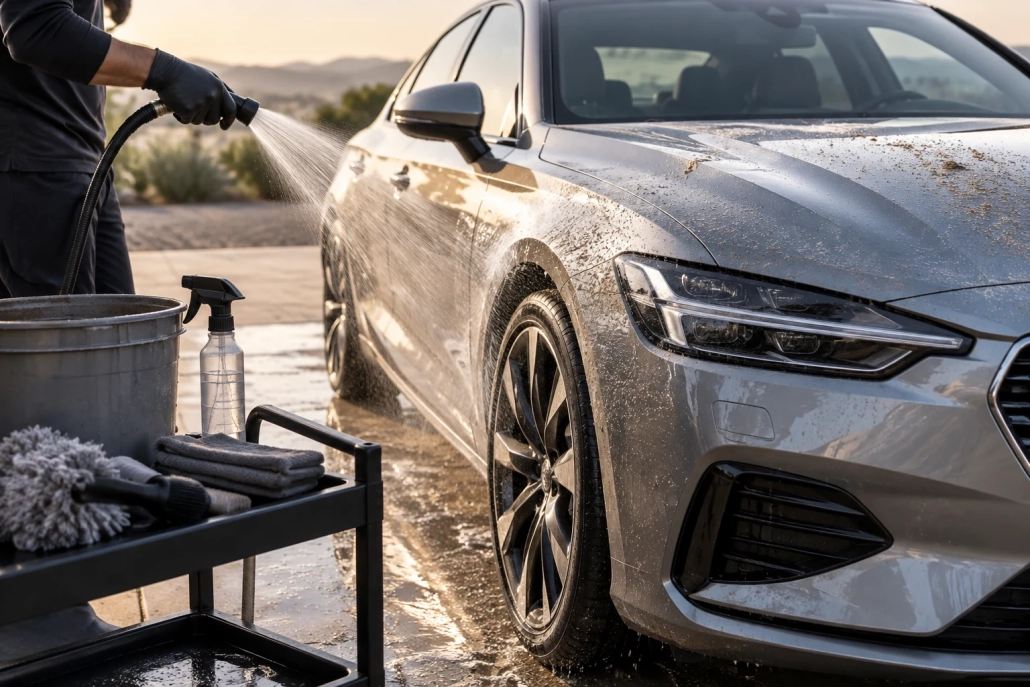
Dust and sand can contain abrasive particles. Dragging them across the surface with a towel, hand or brush can create marks despite the coating. A quick wipe to restore shine may cause more work than waiting for a suitable wash.
Assess the contamination load and follow a compatible pre-cleaning process. Heavy sand or mud requires controlled removal before contact washing.
Pre-rinse appropriately, then use clean wash tools with the stated shampoo dilution. Rinse or replace tools as they collect dirt. Separate lower-area and wheel equipment from the equipment used on cleaner upper paint.
Do not assume a thick foam layer has removed every particle. Inspect the rinse result and use the wash process to manage remaining contamination carefully.
Dry with clean equipment and look for marks or remaining roughness. Persistent bonded contamination may need targeted treatment; more wiping pressure is not a diagnosis. If the car regularly sits in dusty conditions, adjust parking and wash frequency. The most useful protection from wash marring is reducing abrasive contact, with the coating supporting easier cleaning within that routine.
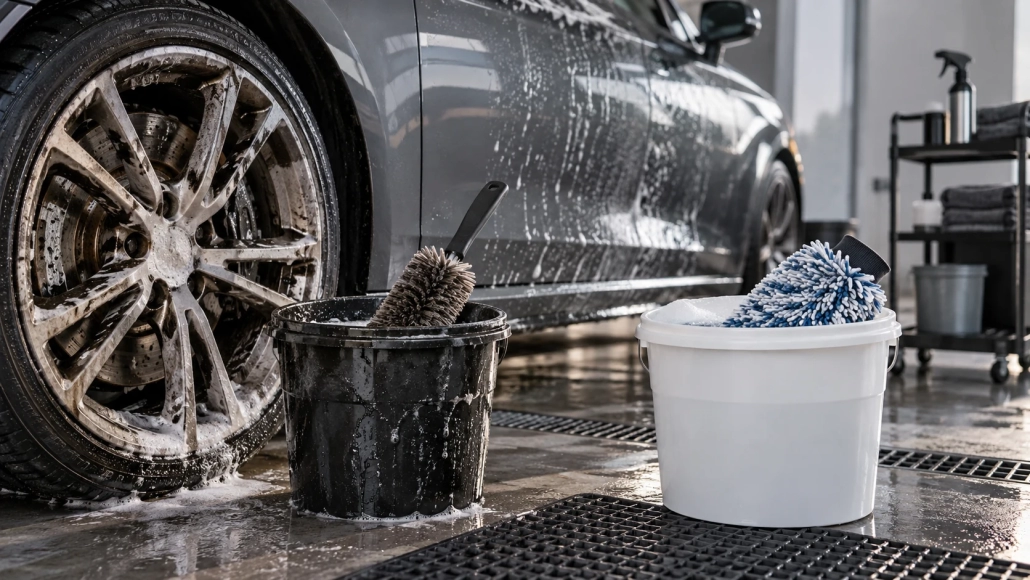
Prevent brake dust and road grit from moving onto coated paint by organising wheel brushes, buckets and towels separately.
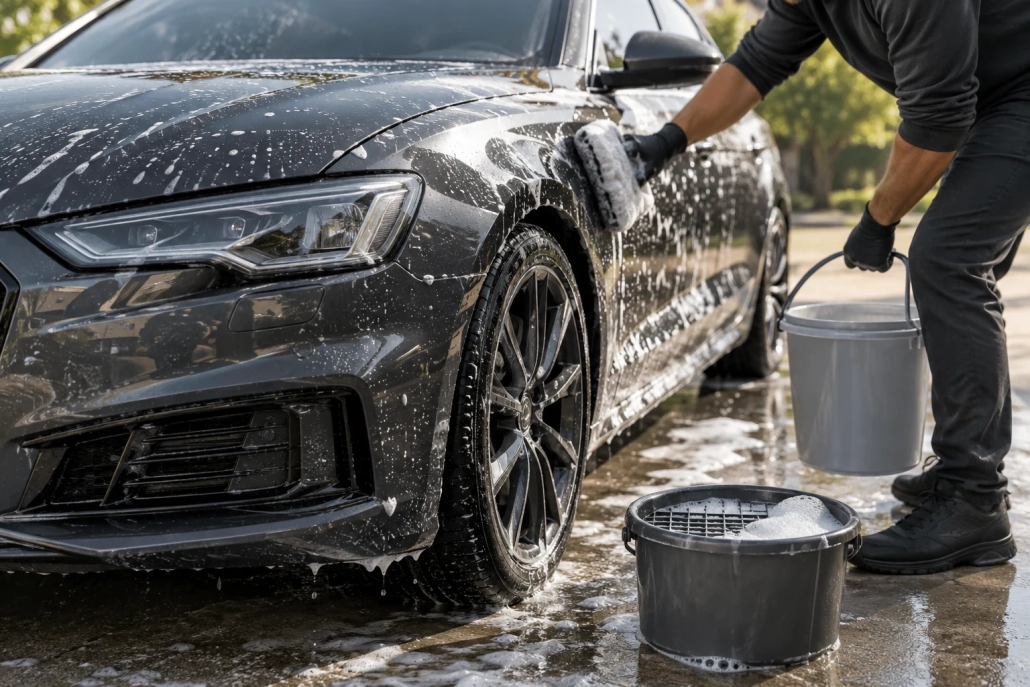
Build a gentle wash routine that removes loose grit before contact, keeps wheel tools separate and ends with careful rinsing and drying.
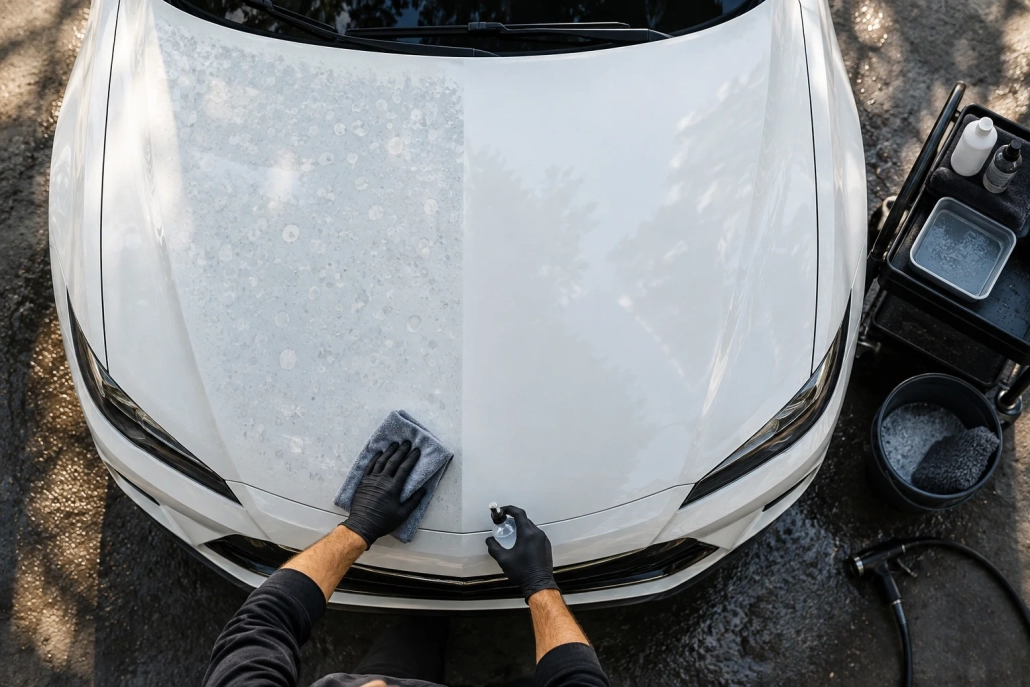
Understand why mineral-bearing water can mark a hydrophobic finish and how rinsing, drying and water management reduce repeated deposits.
Assess surface cleanliness and cure status before removing fingerprints so a small cosmetic mark does not become an unnecessary wiping problem.

 Lighting for Paint Correction and Ceramic Coating Inspection