






A full polishing range.
From cutting and one-step correction to final finishing.
Specialist chemistry. Expert application.
 QUARTZ99 / CERAMIC BASE COAT
The foundation of your coating system.
A layerable quartz base coat designed for mechanical protection. Pair it with a suitable top coat to create the final finish.
For application by NANOLAB certified installers only.
Four formulas. Extended working time. Find the coating for your finish.
Explore the BEAST family of ceramic coatings.
Find the coating for each exterior surface.
 PPF & VINYLGLOSSProtection for glossy films and wraps.Discover
 MATTE & SATINMATTEProtection that respects the finish.Discover
 GLASSWINDOWSExplore dedicated glass protection.Discover
 WHEEL PROTECTIONWHEELSA dedicated coating for your wheels.Discover
 TRIM PROTECTIONPLASTICProtection for plastic surfaces.Discover
Dedicated care for the surfaces inside.
 LEATHER SURFACESLEATHERDiscover NANOLAB leather protection.Discover PLASTIC SURFACESPLASTICProtection for interior plastic surfaces.Discover TEXTILE SURFACESFABRICExplore the latest fabric formulation.Discover
Spray protection, maintenance and upcoming wash products.
 MAINTENANCEBEAST 365Explore the BEAST maintenance range.Discover
Next in washing, cleaning & care.
Ceramic protection for boats and yachts.
An easy-to-apply ceramic coating with an established track record on boats and yachts around the world.
Results vary with surface preparation, exposure and maintenance.
Read 50 MARINE guides →Explore MARINEProtection for the surfaces you live with.
A look at what we’re developing.
From cutting and one-step correction to final finishing.
A wider range for professional vehicle care.
Taking shape alongside BEAST & MATRIX.
Practical guidance for your next coating project.
Explore all guides →
Some marks become visible only when the viewing direction changes relative to the application path. Inspect a suspected directional pattern from more than one orientation before deciding that the finish is uniform or diagnosing its cause.
Updated · NANOLAB Knowledge
Keep the initial observation and application history together. A pattern aligned with wiping may be useful evidence, but alignment alone does not prove a particular error. Lighting, substrate texture and pre-existing marks can also influence what appears. The inspection should reproduce the pattern without adding new treatment that could erase the evidence.
Illustrative example: a panel looks clear from one end of the bay but shows parallel marks from the other. A single release photograph would miss the concern. Recording both views gives technical support a more useful description than simply calling the coating cloudy.
Do not immediately polish or apply another layer to a customer surface. The correct response depends on the product, cure stage and confirmed cause. Follow the supplier's instructions and preserve the original observations before making an irreversible correction.
Ask NANOLAB about the exact product and intended use. Use the current product documentation for formulation-specific instructions.
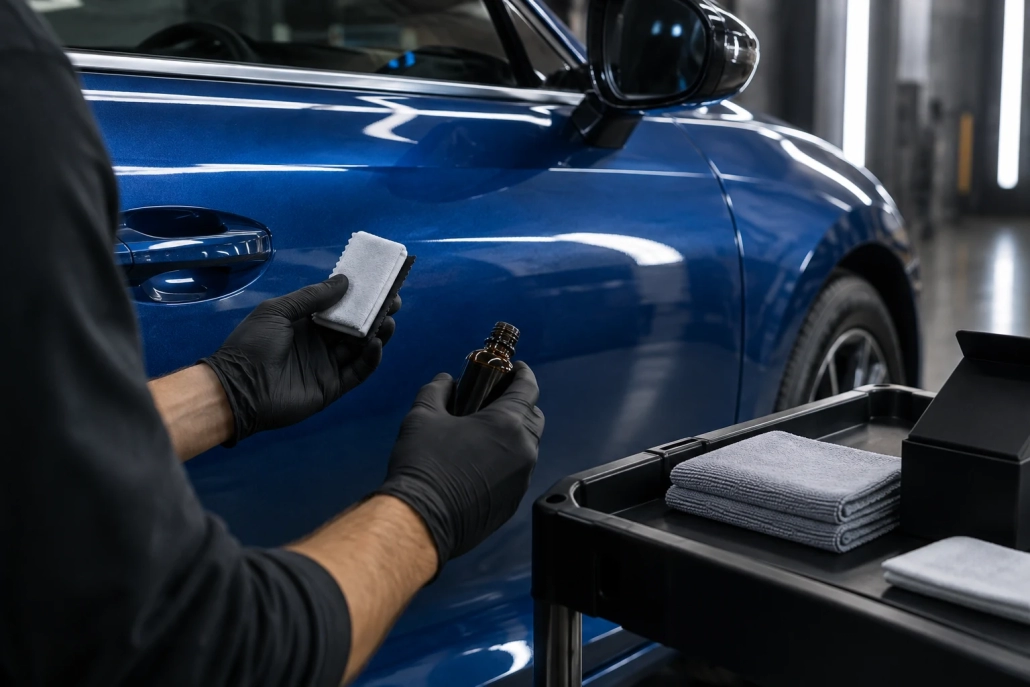
Investigate towel condition and application behaviour when fibres appear during coating work, while avoiding unnecessary contact with a curing section.
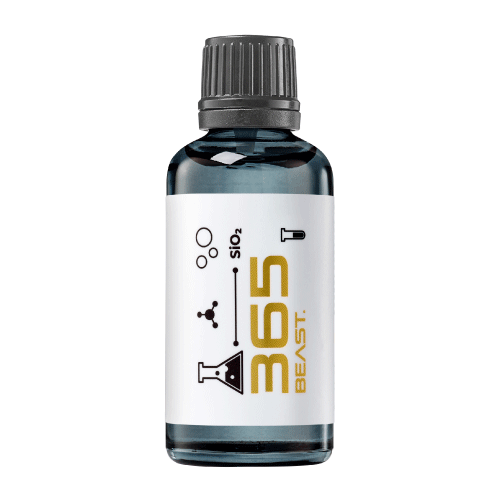
Water can temporarily change how a defect is seen. A mark disappearing when wet does not establish that it has been removed.
When a cleaning attempt does not resolve a mark, review what happened before repeating the treatment. Reapplication adds another exposure and should follow the product instructions and a clear understanding of the remaining problem.