






A full polishing range.
From cutting and one-step correction to final finishing.
Specialist chemistry. Expert application.
 QUARTZ99 / CERAMIC BASE COAT
The foundation of your coating system.
A layerable quartz base coat designed for mechanical protection. Pair it with a suitable top coat to create the final finish.
For application by NANOLAB certified installers only.
Four formulas. Extended working time. Find the coating for your finish.
Explore the BEAST family of ceramic coatings.
Find the coating for each exterior surface.
 PPF & VINYLGLOSSProtection for glossy films and wraps.Discover
 MATTE & SATINMATTEProtection that respects the finish.Discover
 GLASSWINDOWSExplore dedicated glass protection.Discover
 WHEEL PROTECTIONWHEELSA dedicated coating for your wheels.Discover
 TRIM PROTECTIONPLASTICProtection for plastic surfaces.Discover
Dedicated care for the surfaces inside.
 LEATHER SURFACESLEATHERDiscover NANOLAB leather protection.Discover PLASTIC SURFACESPLASTICProtection for interior plastic surfaces.Discover TEXTILE SURFACESFABRICExplore the latest fabric formulation.Discover
Spray protection, maintenance and upcoming wash products.
 MAINTENANCEBEAST 365Explore the BEAST maintenance range.Discover
Next in washing, cleaning & care.
Ceramic protection for boats and yachts.
An easy-to-apply ceramic coating with an established track record on boats and yachts around the world.
Results vary with surface preparation, exposure and maintenance.
Read 50 MARINE guides →Explore MARINEProtection for the surfaces you live with.
A look at what we’re developing.
From cutting and one-step correction to final finishing.
A wider range for professional vehicle care.
Taking shape alongside BEAST & MATRIX.
Practical guidance for your next coating project.
Explore all guides →
Combining material from several containers into one test sample changes the question being answered. A composite can describe the combined material while concealing differences between individual containers or locations.
Updated · NANOLAB Knowledge
The sampling plan should state whether the goal is a lot-level assessment, investigation of variation or diagnosis of a specific container. The laboratory or supplier should approve the collection method. Combining samples for convenience should not silently replace a plan intended to identify local problems.
Illustrative example: one container has an unusual appearance while others look normal. Mixing samples from all containers may dilute evidence of the unusual one. An investigation focused on that container needs a sampling approach that preserves the difference instead of averaging it away.
Do not mix coating products or batches without explicit technical authorization. This guide describes a sampling distinction, not a preparation instruction. A composite result cannot automatically be assigned to every source container, and a passing combined sample does not prove the absence of individual variation.
Ask NANOLAB about the exact product and intended use. Use the current product documentation for formulation-specific instructions.
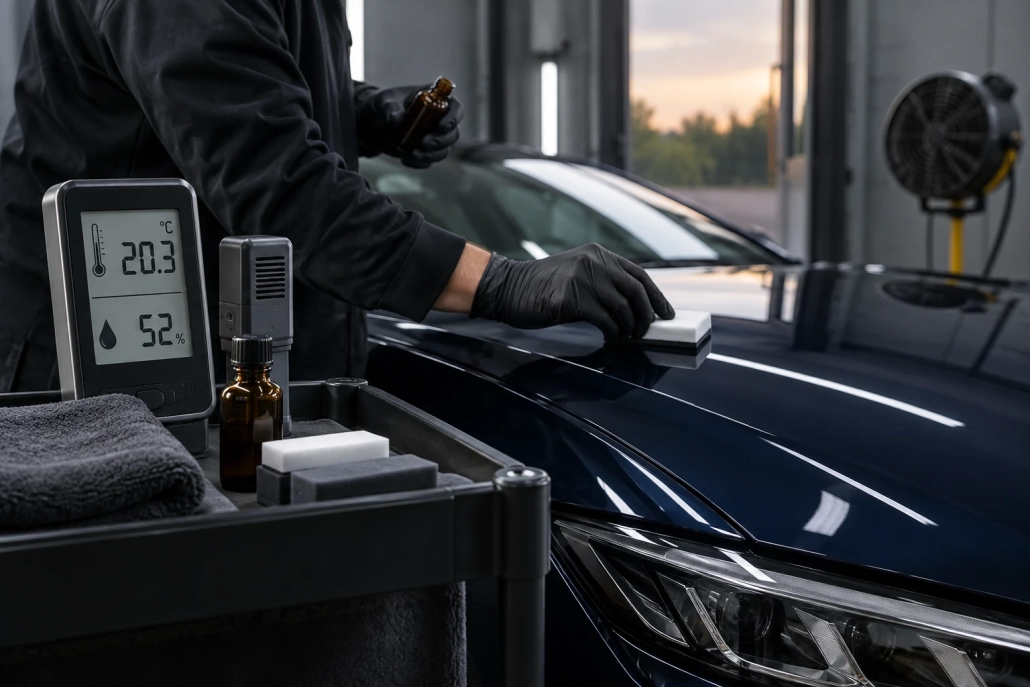
Review humidity and condensation test claims for nano coatings by checking the exposure cycle, specimen system and observations after conditioning.
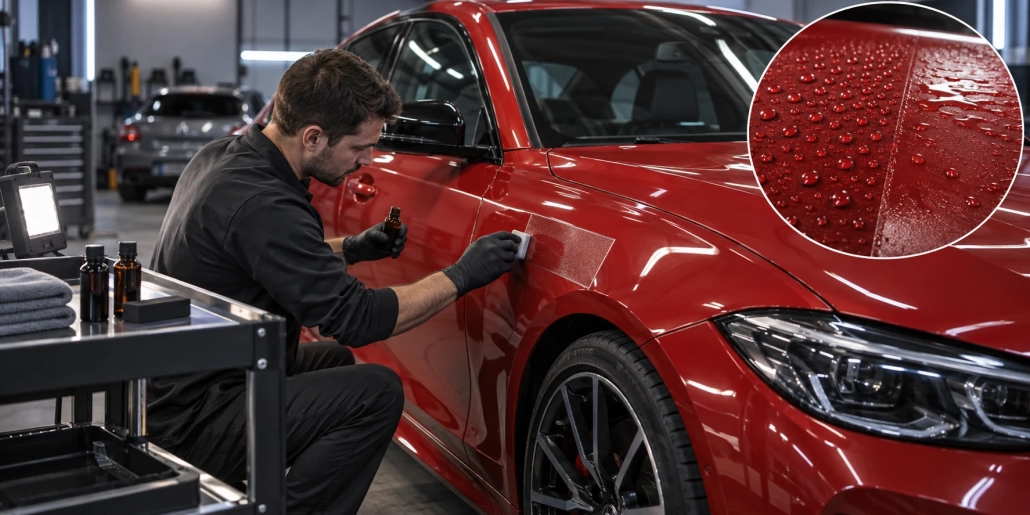
Plan repeat samples and a clear trial objective before drawing broad conclusions from ceramic coating tests.

Combining groups with different difficulty can reverse an apparent coating comparison. Review relevant group composition before treating an overall acceptance rate as a product effect.