






A full polishing range.
From cutting and one-step correction to final finishing.
Specialist chemistry. Expert application.
 QUARTZ99 / CERAMIC BASE COAT
The foundation of your coating system.
A layerable quartz base coat designed for mechanical protection. Pair it with a suitable top coat to create the final finish.
For application by NANOLAB certified installers only.
Four formulas. Extended working time. Find the coating for your finish.
Explore the BEAST family of ceramic coatings.
Find the coating for each exterior surface.
 PPF & VINYLGLOSSProtection for glossy films and wraps.Discover
 MATTE & SATINMATTEProtection that respects the finish.Discover
 GLASSWINDOWSExplore dedicated glass protection.Discover
 WHEEL PROTECTIONWHEELSA dedicated coating for your wheels.Discover
 TRIM PROTECTIONPLASTICProtection for plastic surfaces.Discover
Dedicated care for the surfaces inside.
 LEATHER SURFACESLEATHERDiscover NANOLAB leather protection.Discover PLASTIC SURFACESPLASTICProtection for interior plastic surfaces.Discover TEXTILE SURFACESFABRICExplore the latest fabric formulation.Discover
Spray protection, maintenance and upcoming wash products.
 MAINTENANCEBEAST 365Explore the BEAST maintenance range.Discover
Next in washing, cleaning & care.
Ceramic protection for boats and yachts.
An easy-to-apply ceramic coating with an established track record on boats and yachts around the world.
Results vary with surface preparation, exposure and maintenance.
Read 50 MARINE guides →Explore MARINEProtection for the surfaces you live with.
A look at what we’re developing.
From cutting and one-step correction to final finishing.
A wider range for professional vehicle care.
Taking shape alongside BEAST & MATRIX.
Practical guidance for your next coating project.
Explore all guides →
Evaluate practical working steps and support requirements rather than marketing rankings.
Updated · NANOLAB Knowledge
Comparing ceramic coatings by application workflow can reveal practical differences that a headline specification misses. The question is how the exact product fits the intended user's working process. A fair comparison follows each candidate's current instructions rather than imposing one arbitrary procedure on all of them.
Identify the surfaces, operator experience and available environment. State which tasks matter to the buyer, such as preparation requirements, inspection steps or the clarity of instructions. Keep confirmed product requirements separate from workshop preferences.
Record product identity, preparation, application observations and the finished appearance. Note deviations and questions as they arise. For example, a short demonstration of one stage may not reveal the effort required for the full approved process. Avoid ranking products only by the most visually impressive moment.
Ask which candidate the team can use consistently within its actual operating conditions. Identify training or technical clarification required before adoption. A workflow that suits an experienced studio may need a different evaluation for occasional users. Keep trial limitations visible and avoid turning a small comparison into a universal quality ranking. The final recommendation should explain the fit between product, user and process, supported by observations rather than a simple fastest-or-slowest label.
Map each proposed system from final preparation through application, inspection, release and first maintenance. Record the product-specific requirements and distinguish hands-on work from elapsed time. Note which stages require a particular environment or technician capability.
A longer stated working window may help a particular workshop, but it is not the only factor in the complete service. Assess the supported process with your actual staffing, surfaces and inspection method. Do not force different systems into identical timing to make a comparison simpler. The useful result is a workflow that the team can repeat reliably, with its assumptions and limitations visible before a product is selected.
Ask NANOLAB about the identified surfaces. For supporting information, review the current product documentation and the coating selection guides.
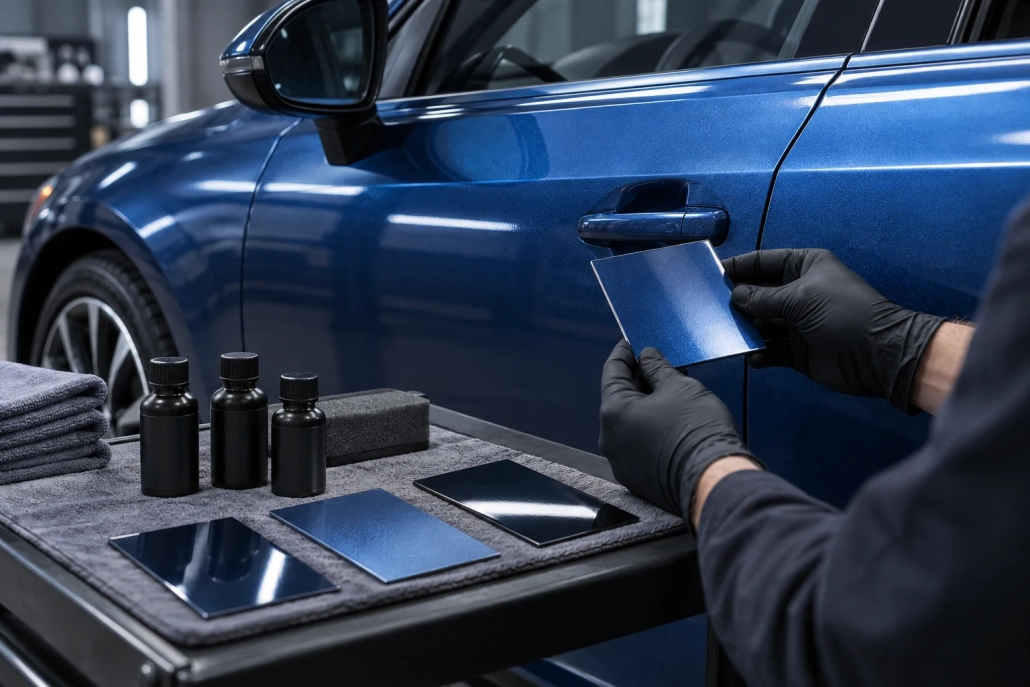
Use surface type, desired finish, installation conditions and maintenance needs to narrow the choice to a suitable NANOLAB coating.
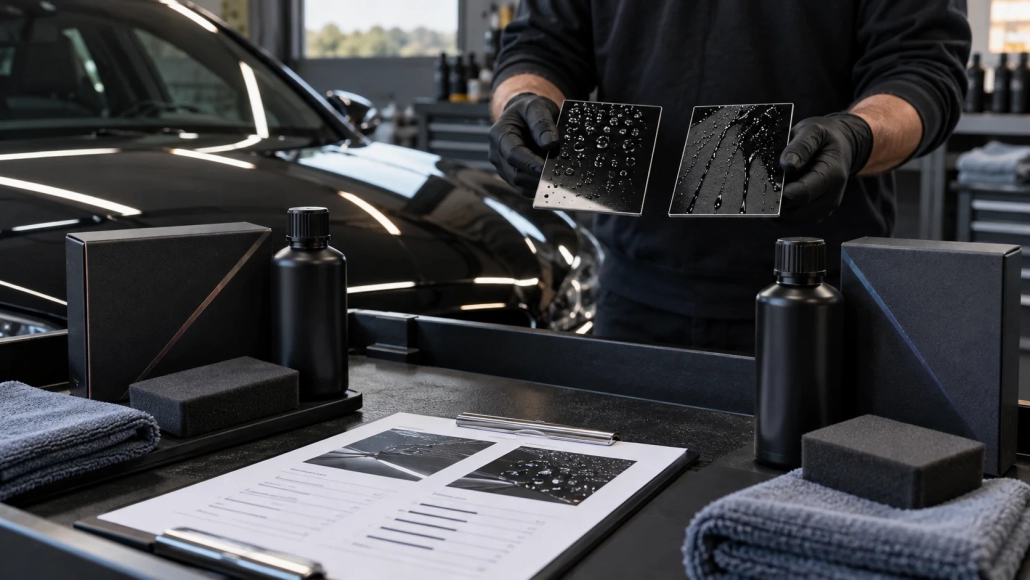
Compare NANOLAB coating families by surface compatibility, application workflow and installer requirements rather than treating the names as interchangeable.

Gather refinish-system information and approved timing instead of applying a universal waiting rule.