






A full polishing range.
From cutting and one-step correction to final finishing.
Specialist chemistry. Expert application.
 QUARTZ99 / CERAMIC BASE COAT
The foundation of your coating system.
A layerable quartz base coat designed for mechanical protection. Pair it with a suitable top coat to create the final finish.
For application by NANOLAB certified installers only.
Four formulas. Extended working time. Find the coating for your finish.
Explore the BEAST family of ceramic coatings.
Find the coating for each exterior surface.
 PPF & VINYLGLOSSProtection for glossy films and wraps.Discover
 MATTE & SATINMATTEProtection that respects the finish.Discover
 GLASSWINDOWSExplore dedicated glass protection.Discover
 WHEEL PROTECTIONWHEELSA dedicated coating for your wheels.Discover
 TRIM PROTECTIONPLASTICProtection for plastic surfaces.Discover
Dedicated care for the surfaces inside.
 LEATHER SURFACESLEATHERDiscover NANOLAB leather protection.Discover PLASTIC SURFACESPLASTICProtection for interior plastic surfaces.Discover TEXTILE SURFACESFABRICExplore the latest fabric formulation.Discover
Spray protection, maintenance and upcoming wash products.
 MAINTENANCEBEAST 365Explore the BEAST maintenance range.Discover
Next in washing, cleaning & care.
Ceramic protection for boats and yachts.
An easy-to-apply ceramic coating with an established track record on boats and yachts around the world.
Results vary with surface preparation, exposure and maintenance.
Read 50 MARINE guides →Explore MARINEProtection for the surfaces you live with.
A look at what we’re developing.
From cutting and one-step correction to final finishing.
A wider range for professional vehicle care.
Taking shape alongside BEAST & MATRIX.
Practical guidance for your next coating project.
Explore all guides →
Two dirty panels may look similar while carrying different soils or exposure histories. A cleaner comparison should control or document those differences before attributing the outcome solely to the products being tested.
Updated · NANOLAB Knowledge
Soil type, amount, age and prior treatment can affect what a trial actually measures. The test plan should define a representative challenge and a consistent assessment method. A convenient comparison between unrelated vehicles may be informative as an observation, but it should not be presented as a controlled product ranking.
Illustrative example: one cleaner is used on fresh contamination and another on a deposit that has remained through several weather cycles. A faster result on the first panel does not establish that the first cleaner is universally stronger. The trial needs comparable conditions or a narrower conclusion.
Do not create hazardous test soils or apply unapproved chemicals to customer property. This guide concerns study design and does not prescribe a contamination recipe. Any public claim should reflect the actual challenge, surfaces, product concentrations and method used in the comparison.
Ask NANOLAB about the exact product and intended use. Use the current product documentation for formulation-specific instructions.
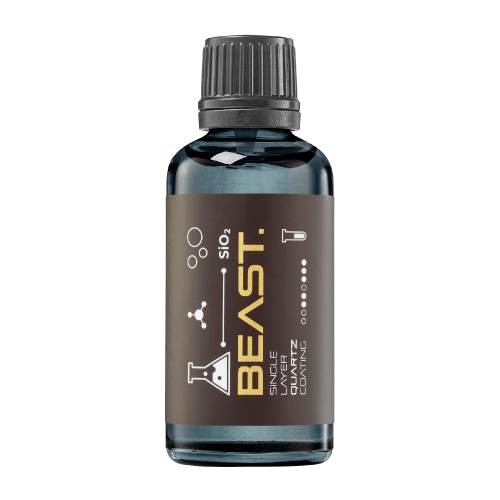
Plan representative trial areas and comparable observations without turning one test into a universal ranking.
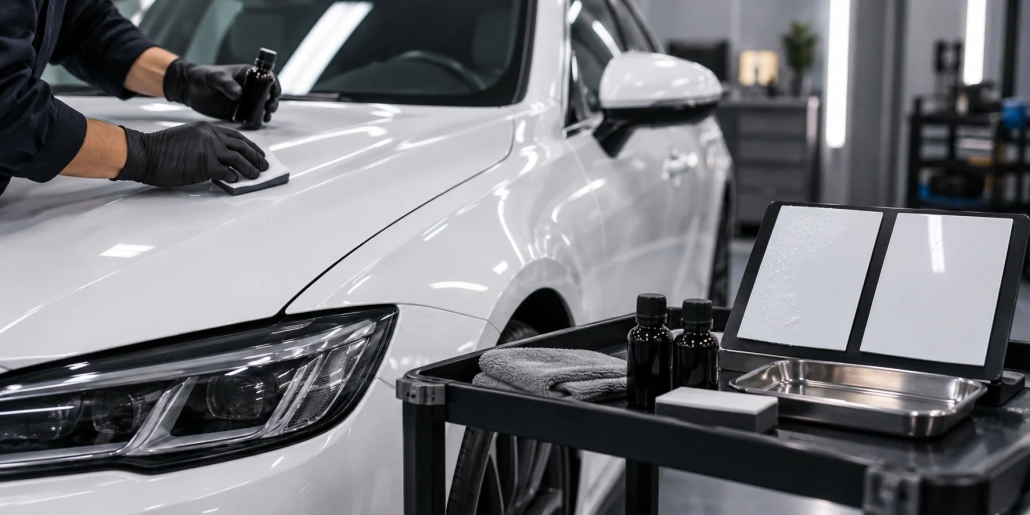
Inspect contamination, residue and finish quality on white paint, where subtle defects can be harder to see during preparation and coating.
Ready-to-use and concentrated cleaners create different preparation and handling requirements. Compare them for a defined cleaning task, using the manufacturer's approved dilution and surface instructions rather than assuming the concentrated option is always more economical.