






A full polishing range.
From cutting and one-step correction to final finishing.
Specialist chemistry. Expert application.
 QUARTZ99 / CERAMIC BASE COAT
The foundation of your coating system.
A layerable quartz base coat designed for mechanical protection. Pair it with a suitable top coat to create the final finish.
For application by NANOLAB certified installers only.
Four formulas. Extended working time. Find the coating for your finish.
Explore the BEAST family of ceramic coatings.
Find the coating for each exterior surface.
 PPF & VINYLGLOSSProtection for glossy films and wraps.Discover
 MATTE & SATINMATTEProtection that respects the finish.Discover
 GLASSWINDOWSExplore dedicated glass protection.Discover
 WHEEL PROTECTIONWHEELSA dedicated coating for your wheels.Discover
 TRIM PROTECTIONPLASTICProtection for plastic surfaces.Discover
Dedicated care for the surfaces inside.
 LEATHER SURFACESLEATHERDiscover NANOLAB leather protection.Discover PLASTIC SURFACESPLASTICProtection for interior plastic surfaces.Discover TEXTILE SURFACESFABRICExplore the latest fabric formulation.Discover
Spray protection, maintenance and upcoming wash products.
 MAINTENANCEBEAST 365Explore the BEAST maintenance range.Discover
Next in washing, cleaning & care.
Ceramic protection for boats and yachts.
An easy-to-apply ceramic coating with an established track record on boats and yachts around the world.
Results vary with surface preparation, exposure and maintenance.
Read 50 MARINE guides →Explore MARINEProtection for the surfaces you live with.
A look at what we’re developing.
From cutting and one-step correction to final finishing.
A wider range for professional vehicle care.
Taking shape alongside BEAST & MATRIX.
Practical guidance for your next coating project.
Explore all guides →
Plan a ceramic shampoo wash in cold conditions using the product’s temperature limits, suitable access and a realistic rinse and drying process.
Updated · NANOLAB Knowledge
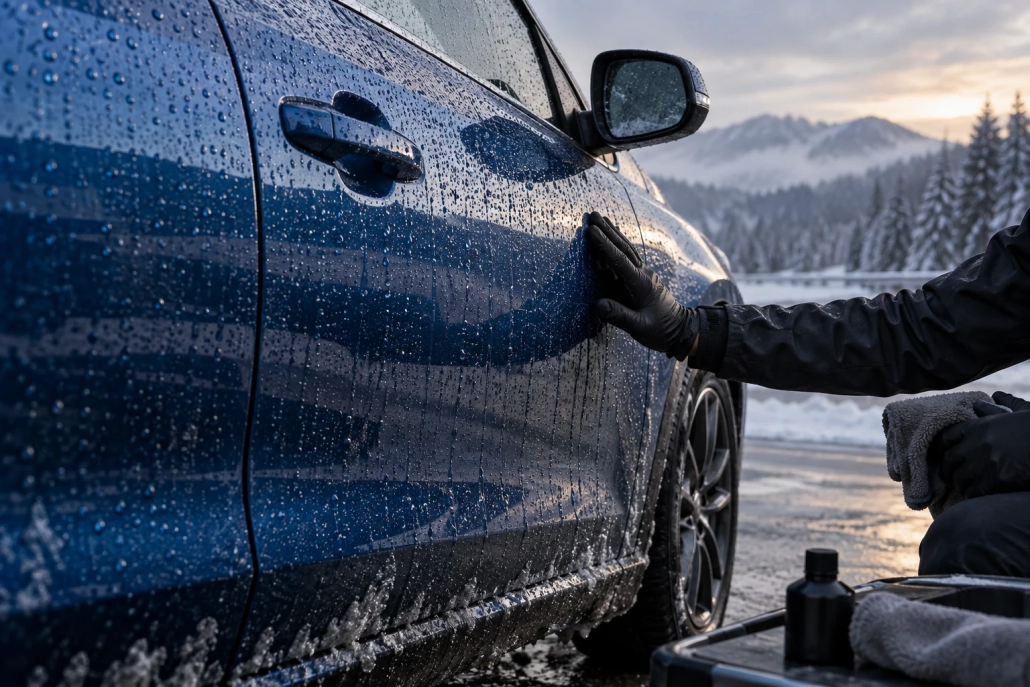
Cold-weather washing requires a practical decision about whether the conditions allow the entire process to be completed. A ceramic shampoo’s name does not establish a universal minimum temperature. Use the product instructions and consider the vehicle, equipment and wash location together.
Read the temperature guidance for the shampoo and any installed coating. Consider surface temperature as well as the air reading. A vehicle arriving from a cold storage area may not match the surrounding workshop conditions immediately.
If the surface is frozen or the process would leave water freezing around the vehicle or walking area, choose a suitable controlled location or postpone. Do not use hot water as an improvised shortcut without the vehicle and product guidance.
Confirm water supply, drainage, lighting and drying equipment before starting. Plan access to mirror housings, trim seams and other areas that retain liquid. Keep the process within the product’s instructions instead of extending dwell time because evaporation seems slow.
Cold conditions may also make it harder to inspect residue under poor light. Arrange an inspection position where the dry finish can be seen clearly.
Check whether the shampoo was stored within its documented conditions. A bottle that may have been frozen or otherwise mishandled should be assessed according to supplier instructions, not assumed acceptable after warming. Record uncertainty honestly.
Use measured dilution and avoid changing concentration to compensate for the weather unless the product provides that option.
After the main drying pass, inspect places where retained water can emerge later. Follow the vehicle’s care guidance for seals, locks and moving parts. Judge the shampoo by cleaning and dry appearance after a properly completed process. The most effective cold-weather adjustment may be a different wash location or time, rather than a stronger mix or another protective layer.
Explore NANOLAB coatings and maintenance products, and check the current product instructions for your selected system.
Manage road film, wet conditions and seasonal contamination with a suitable wash routine and proper drying whenever conditions allow.
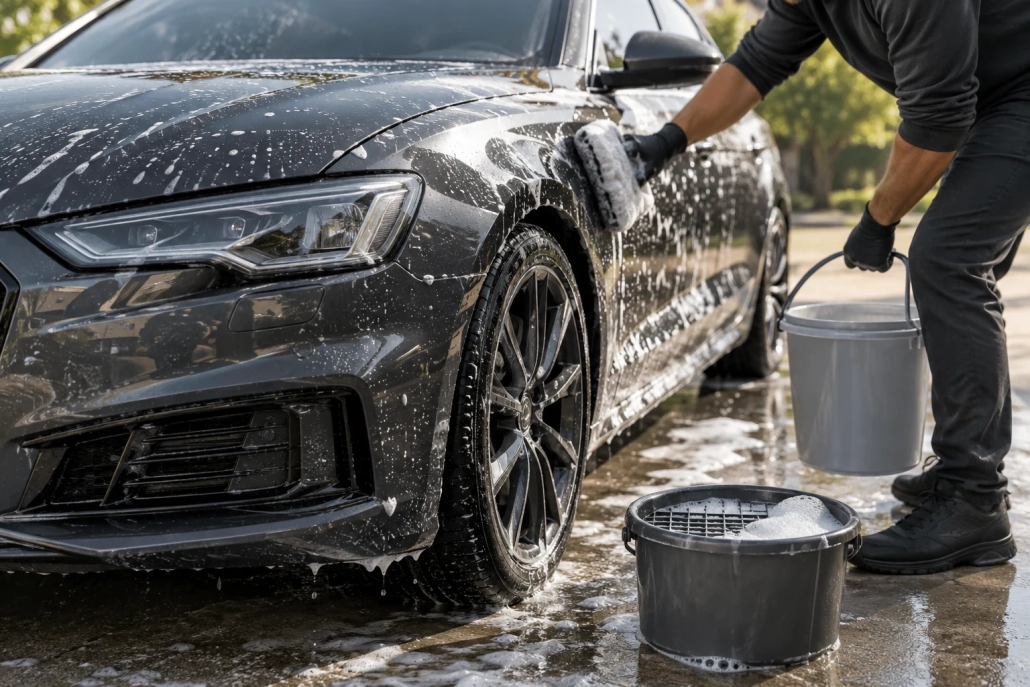
Consider panel temperature, cleaning instructions and rapid drying when choosing water conditions for washing a ceramic-coated vehicle.
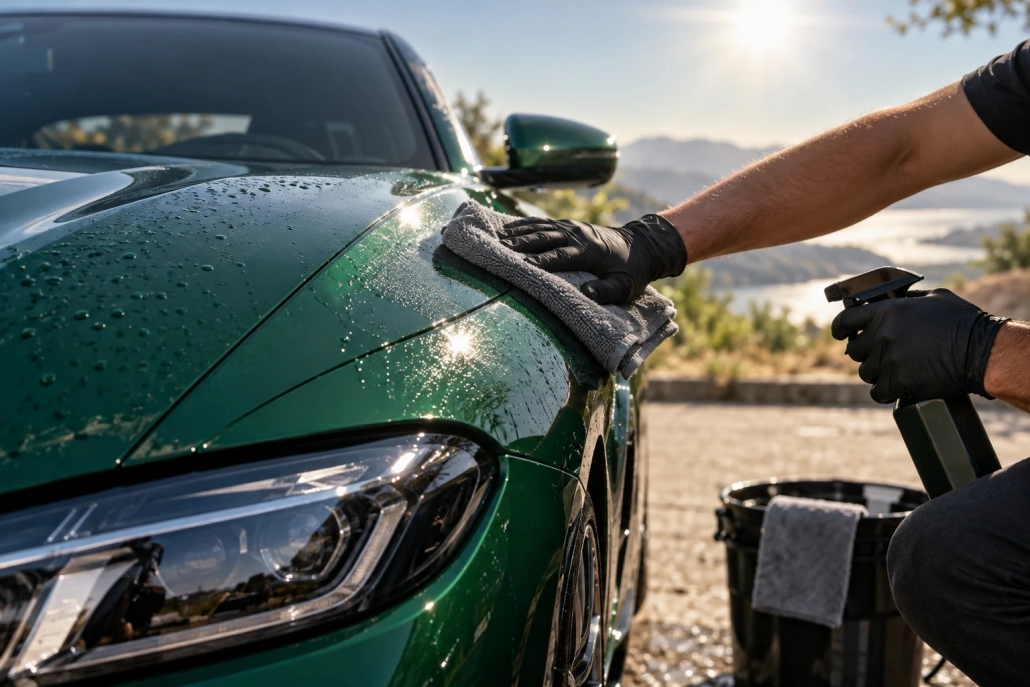
Plan ceramic shampoo use in hot conditions with suitable surface temperature, manageable sections and a rinse-and-dry process that follows the exact product.

 Ceramic Shampoo in Hot Climates: Prevent Product Drying