






A full polishing range.
From cutting and one-step correction to final finishing.
Specialist chemistry. Expert application.
 QUARTZ99 / CERAMIC BASE COAT
The foundation of your coating system.
A layerable quartz base coat designed for mechanical protection. Pair it with a suitable top coat to create the final finish.
For application by NANOLAB certified installers only.
Four formulas. Extended working time. Find the coating for your finish.
Explore the BEAST family of ceramic coatings.
Find the coating for each exterior surface.
 PPF & VINYLGLOSSProtection for glossy films and wraps.Discover
 MATTE & SATINMATTEProtection that respects the finish.Discover
 GLASSWINDOWSExplore dedicated glass protection.Discover
 WHEEL PROTECTIONWHEELSA dedicated coating for your wheels.Discover
 TRIM PROTECTIONPLASTICProtection for plastic surfaces.Discover
Dedicated care for the surfaces inside.
 LEATHER SURFACESLEATHERDiscover NANOLAB leather protection.Discover PLASTIC SURFACESPLASTICProtection for interior plastic surfaces.Discover TEXTILE SURFACESFABRICExplore the latest fabric formulation.Discover
Spray protection, maintenance and upcoming wash products.
 MAINTENANCEBEAST 365Explore the BEAST maintenance range.Discover
Next in washing, cleaning & care.
Ceramic protection for boats and yachts.
An easy-to-apply ceramic coating with an established track record on boats and yachts around the world.
Results vary with surface preparation, exposure and maintenance.
Read 50 MARINE guides →Explore MARINEProtection for the surfaces you live with.
A look at what we’re developing.
From cutting and one-step correction to final finishing.
A wider range for professional vehicle care.
Taking shape alongside BEAST & MATRIX.
Practical guidance for your next coating project.
Explore all guides →
Assess a replacement mirror cover's finish, preparation and local coating boundary without treating the whole mirror assembly as one surface.
Updated · NANOLAB Knowledge
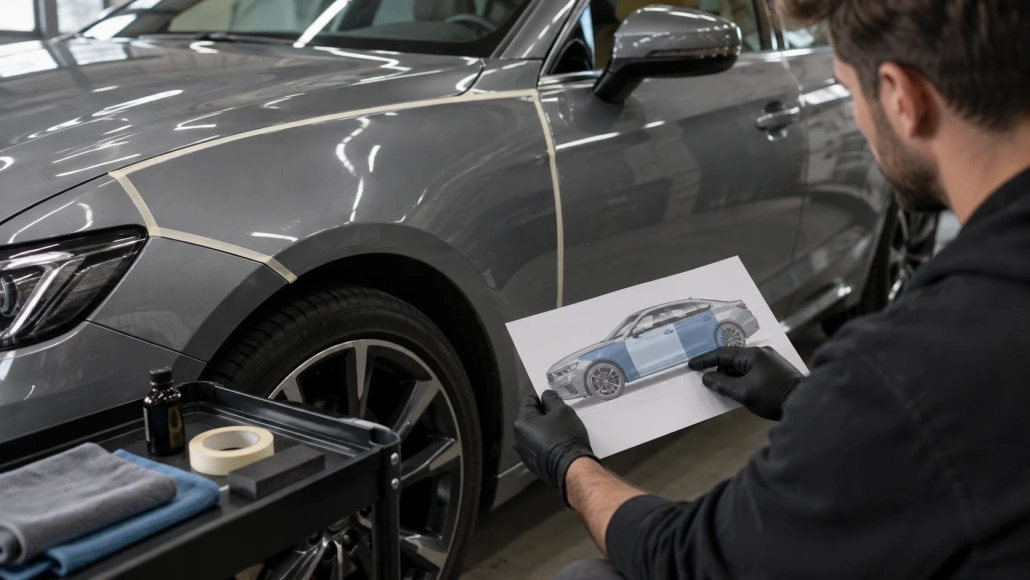
A replacement mirror cover may arrive painted, primed, wrapped or moulded in a finished plastic. Ceramic coating suitability follows that actual finish. The small size of the part does not eliminate the need for a clear preparation and curing plan.
Ask whether the cover was recently painted and obtain the paint system’s readiness guidance before applying protection. Factory-finished replacement parts and freshly refinished parts may not share the same timeline. Check for handling marks, adhesive residue and fitting damage after installation.
Keep mirror glass, cameras, lighting, seals and moving mechanisms distinct from the cover. Approval for a painted cap does not authorise coating the complete assembly. Record any area excluded because compatibility or access is uncertain.
Clean and assess the part before deciding on polishing. Curves and edges make aggressive correction difficult to control, so use a conservative test-based approach and suitable tools. Avoid transferring polish or final-preparation residue into joints.
Dry accessible seams carefully. Water can emerge after the mirror is folded or the vehicle moves; carry out the relevant checks before the final coating stage. Do not operate or dismantle components outside the manufacturer’s permitted procedure.
For supported glossy paint, MATRIX PRO is one coating option to evaluate. If the rest of the vehicle has another known system, agree whether matching that system or using a compatible local treatment best serves maintenance.
Inspect the curved cover from several angles after levelling, particularly its underside and perimeter. Record the replacement date, coating and affected part. Give the owner the new curing instructions even when the rest of the vehicle’s coating is already mature; a small freshly treated component still needs its prescribed care.
Define coating coverage, boundaries, preparation and aftercare when only selected panels or surfaces are being treated.
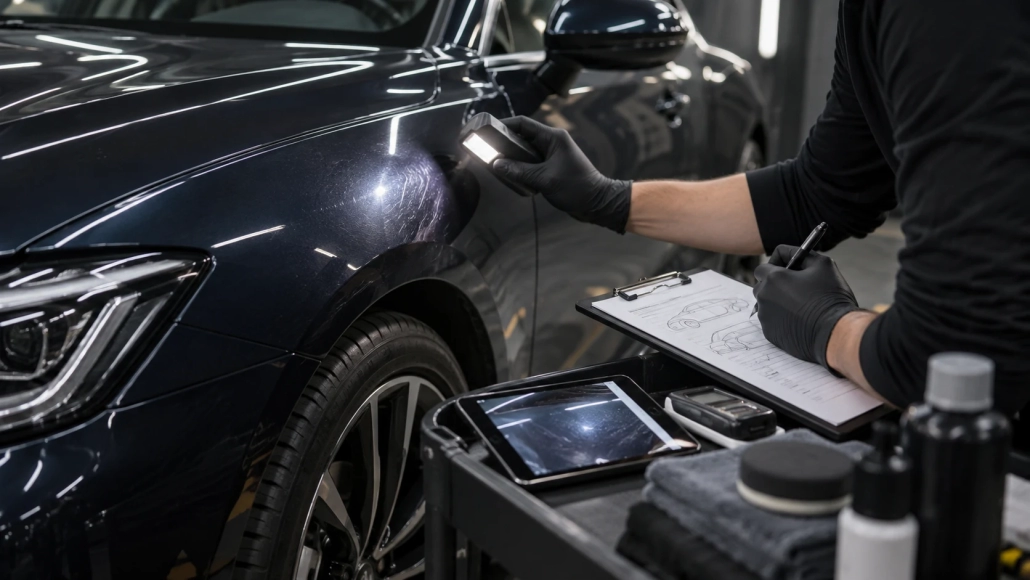
Check paint condition, handling residue and the treatment boundary before coating a panel following paintless dent repair.
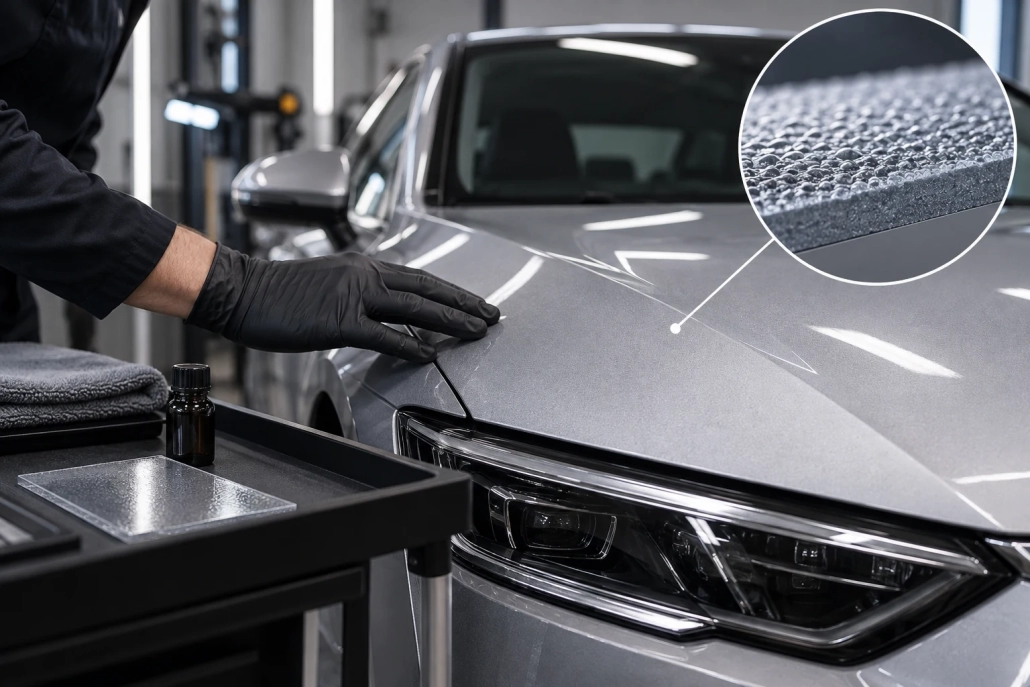
Reassess paint and existing protection after overspray removal before deciding whether local correction or a new ceramic coating is appropriate.

 Ceramic Coating Preparation: When a Towel Falls on the Floor