






A full polishing range.
From cutting and one-step correction to final finishing.
Specialist chemistry. Expert application.
 QUARTZ99 / CERAMIC BASE COAT
The foundation of your coating system.
A layerable quartz base coat designed for mechanical protection. Pair it with a suitable top coat to create the final finish.
For application by NANOLAB certified installers only.
Four formulas. Extended working time. Find the coating for your finish.
Explore the BEAST family of ceramic coatings.
Find the coating for each exterior surface.
 PPF & VINYLGLOSSProtection for glossy films and wraps.Discover
 MATTE & SATINMATTEProtection that respects the finish.Discover
 GLASSWINDOWSExplore dedicated glass protection.Discover
 WHEEL PROTECTIONWHEELSA dedicated coating for your wheels.Discover
 TRIM PROTECTIONPLASTICProtection for plastic surfaces.Discover
Dedicated care for the surfaces inside.
 LEATHER SURFACESLEATHERDiscover NANOLAB leather protection.Discover PLASTIC SURFACESPLASTICProtection for interior plastic surfaces.Discover TEXTILE SURFACESFABRICExplore the latest fabric formulation.Discover
Spray protection, maintenance and upcoming wash products.
 MAINTENANCEBEAST 365Explore the BEAST maintenance range.Discover
Next in washing, cleaning & care.
Ceramic protection for boats and yachts.
An easy-to-apply ceramic coating with an established track record on boats and yachts around the world.
Results vary with surface preparation, exposure and maintenance.
Read 50 MARINE guides →Explore MARINEProtection for the surfaces you live with.
A look at what we’re developing.
From cutting and one-step correction to final finishing.
A wider range for professional vehicle care.
Taking shape alongside BEAST & MATRIX.
Practical guidance for your next coating project.
Explore all guides →
Remove bugs from PPF with compatible cleaners, controlled dwell and gentle contact. Protect film edges and know when a persistent mark needs inspection.
Updated · NANOLAB Knowledge
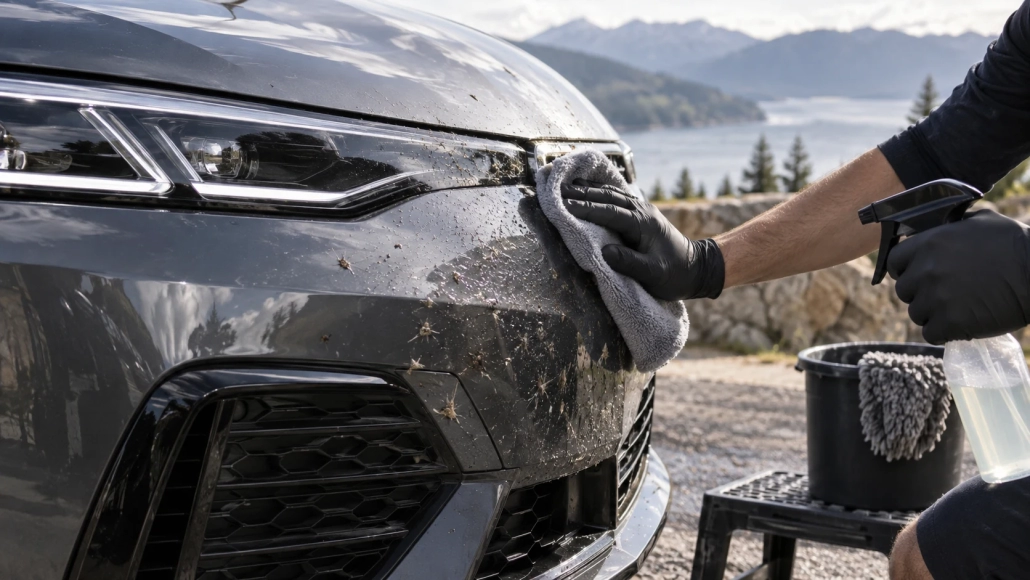
To remove bugs from paint protection film (PPF), work on a cool surface, rinse away loose grit, soften the residue with a film-compatible cleaner and use gentle contact only as directed. Keep the cleaner from drying and protect film edges. If a mark remains after the approved cleaning process, stop and ask the installer to assess it.
The right method depends on the film brand, gloss or matte finish, any ceramic coating and how recently the system was installed. Follow the film and coating instructions together; a product suitable for painted metal is not automatically suitable for every PPF finish.
For product preparation, see diluting detailing products correctly. For a matte surface, also read washing matte PPF.
See washing around PPF edges for seam and edge care. Do not add solvents, polishing or heat to the process without instructions for the exact film and coating.
Contact the installer if an edge is lifting, the finish has changed, or an insect-shaped mark remains after appropriate cleaning. Share the film and coating names, how long the residue was present, the products used and a clear photo. This helps distinguish a cleaning problem from a film or finish problem.
Inspect the front bumper, mirrors and other exposed areas after trips. Deal with contamination promptly using the approved process. If a proper wash is not available, avoid dry wiping road grit with a travel towel; plan cleaning with adequate liquid and clean materials.
Prepare a PPF road-trip care kit. A compatible NANOLAB coating for glossy or matte PPF can support maintenance, but it does not make dried contamination harmless indefinitely.
No. Confirm compatibility with the exact film, finish and coating, then follow the product’s dilution and dwell instructions.
No. Reassess the approved softening process. If the mark persists, ask the installer before escalating the method.
Yes. Follow the maintenance instructions for both layers. A coating is not permission to leave insect residue on the film indefinitely.
For NANOLAB coating compatibility, consult the product documentation or ask NANOLAB. The film manufacturer’s care requirements remain relevant.
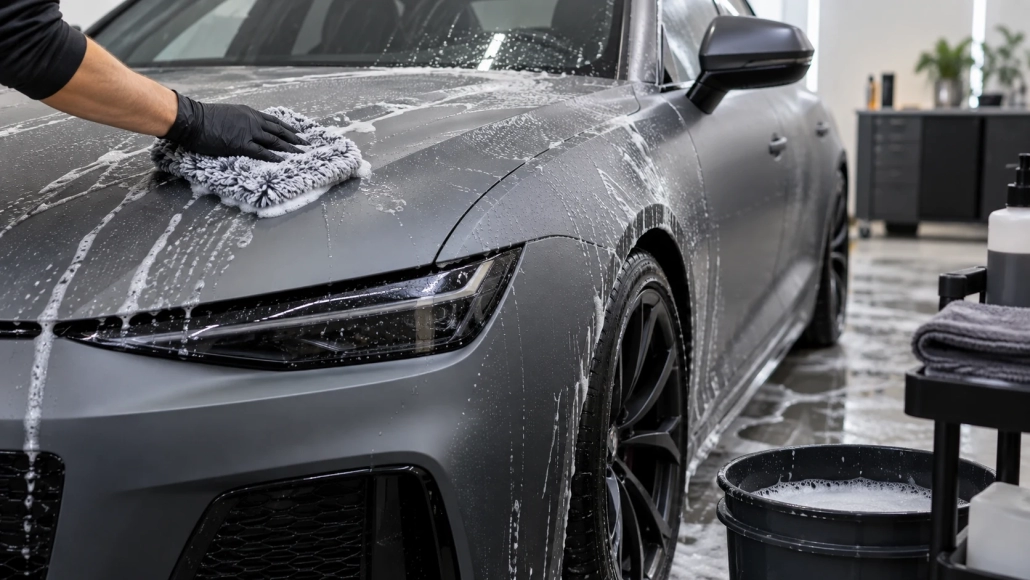
Maintain matte PPF with compatible cleaners and gentle tools while avoiding gloss-adding products and abrasive spot treatment.
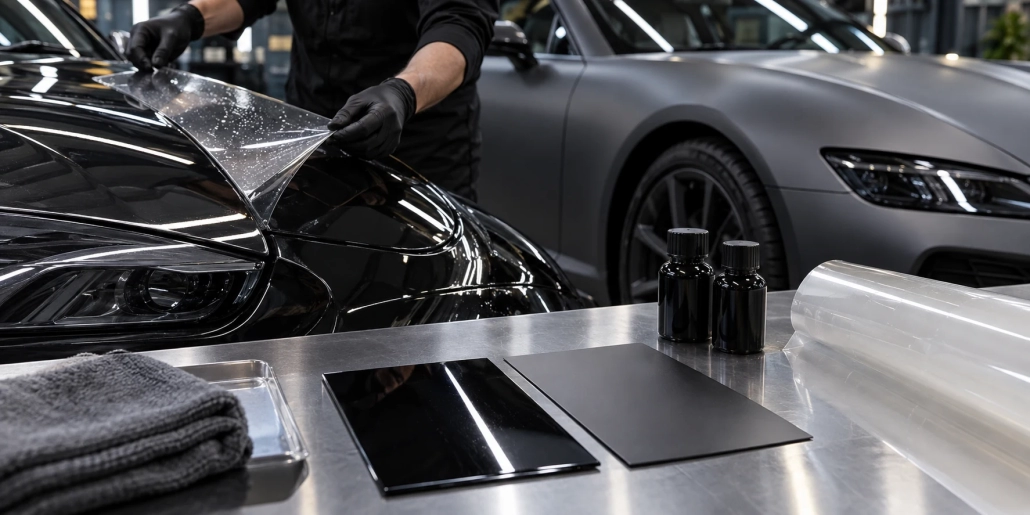
Compare finish requirements and product roles when protecting PPF, with careful attention to MATRIX PRO's glossy-only restriction.
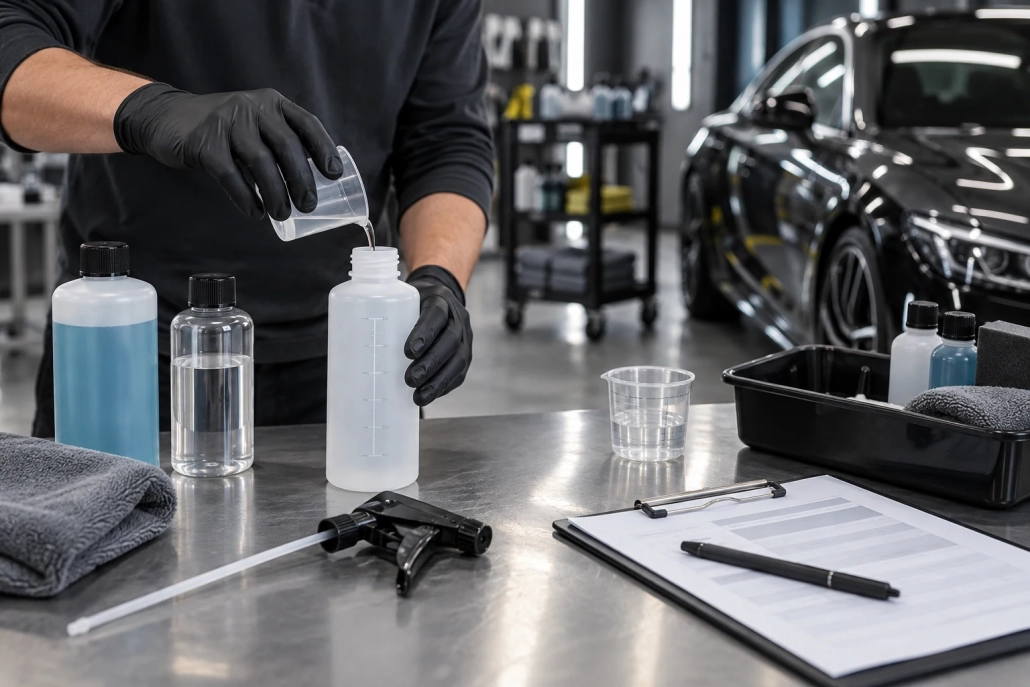
Read dilution ratios precisely, measure a repeatable working solution and avoid confusing product-to-water ratios with final-volume instructions.

 Washing Matte PPF While Preserving Its Appearance