






A full polishing range.
From cutting and one-step correction to final finishing.
Specialist chemistry. Expert application.
 QUARTZ99 / CERAMIC BASE COAT
The foundation of your coating system.
A layerable quartz base coat designed for mechanical protection. Pair it with a suitable top coat to create the final finish.
For application by NANOLAB certified installers only.
Four formulas. Extended working time. Find the coating for your finish.
Explore the BEAST family of ceramic coatings.
Find the coating for each exterior surface.
 PPF & VINYLGLOSSProtection for glossy films and wraps.Discover
 MATTE & SATINMATTEProtection that respects the finish.Discover
 GLASSWINDOWSExplore dedicated glass protection.Discover
 WHEEL PROTECTIONWHEELSA dedicated coating for your wheels.Discover
 TRIM PROTECTIONPLASTICProtection for plastic surfaces.Discover
Dedicated care for the surfaces inside.
 LEATHER SURFACESLEATHERDiscover NANOLAB leather protection.Discover PLASTIC SURFACESPLASTICProtection for interior plastic surfaces.Discover TEXTILE SURFACESFABRICExplore the latest fabric formulation.Discover
Spray protection, maintenance and upcoming wash products.
 MAINTENANCEBEAST 365Explore the BEAST maintenance range.Discover
Next in washing, cleaning & care.
Ceramic protection for boats and yachts.
An easy-to-apply ceramic coating with an established track record on boats and yachts around the world.
Results vary with surface preparation, exposure and maintenance.
Read 50 MARINE guides →Explore MARINEProtection for the surfaces you live with.
A look at what we’re developing.
From cutting and one-step correction to final finishing.
A wider range for professional vehicle care.
Taking shape alongside BEAST & MATRIX.
Practical guidance for your next coating project.
Explore all guides →
Coordinate acrylic solid-surface countertop protection with the existing finish, approved care and future refinishing options.
Updated · NANOLAB Knowledge
Acrylic solid-surface countertops can have a different repair and finishing process from natural stone, laminate or engineered quartz. Before adding a protective treatment, consider how it will interact with the installed finish and any future approved refinishing work.
Use the product manufacturer's documentation to confirm the surface and finish. Corian's care guidance, for example, describes material-specific cleaning, heat precautions and refinishing considerations. A matte finish and a polished finish should not automatically receive the same abrasive maintenance procedure.
Inspect the dry surface for mineral residue, scratches and uneven sheen. A blotchy appearance may need an approved cleaning or refinishing process rather than a coating intended to hide it.
Complete necessary restoration through the appropriate method before assessing an additional treatment. A coating should not be presented as repair for heat damage, cracks or deep cuts. Nor should a small polished spot be allowed to create a different sheen from the rest of the counter.
If a treatment is proposed, ask how it would be removed or managed during future refinishing. Record its identity in the handover so a later technician does not encounter an unknown layer.
Evaluate appearance, cleaning compatibility and relevant kitchen-use requirements separately. A hydrophobic effect does not establish resistance to hot cookware or suitability for direct food contact. Continue the surface manufacturer's heat and cutting precautions regardless of an added treatment.
For a NANOLAB inquiry, provide the solid-surface product name, finish and maintenance process. Use an approved representative sample only after compatibility has been established. A useful protection plan should preserve both everyday care and the material's intended repair options, rather than complicating future maintenance with an undocumented surface layer.
Technical references: Corian: Solid Surface use and care.
For product-specific application instructions, consult NANOLAB technical documentation or ask about your surface and intended use.
A simple survey can prevent unsuitable products being applied during a home coating project.
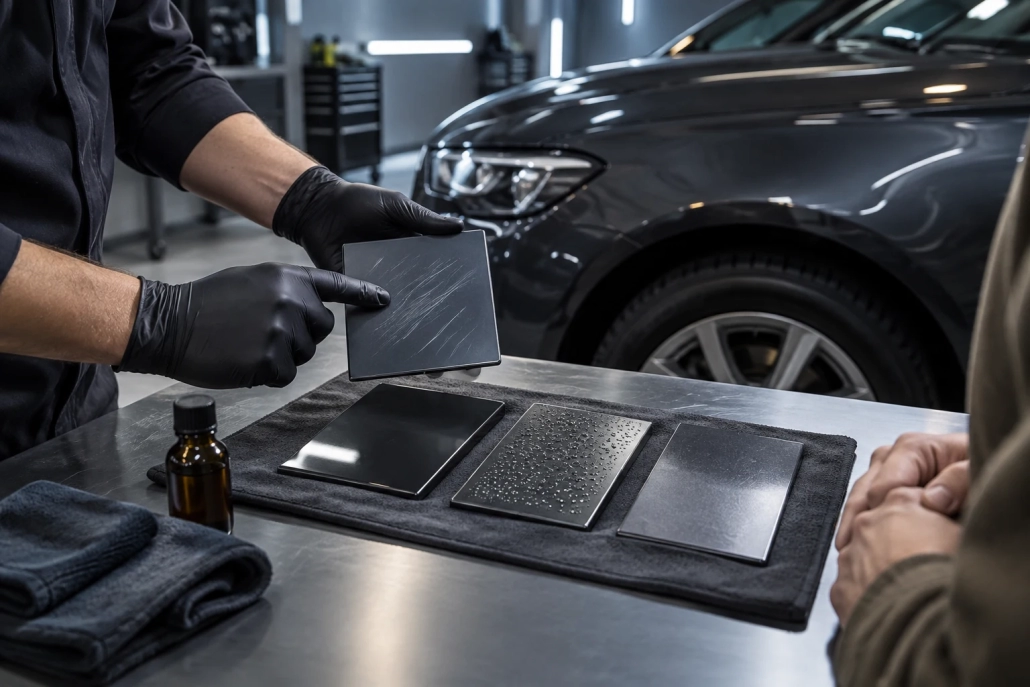
Check whether a laboratory report actually supports a nano coating claim by reviewing sample identity, method, scope, results and the connection to the sold product.
Define compatible bicycle-frame coating areas while excluding braking, gripping and clamping interfaces from unsupported treatment.