






A full polishing range.
From cutting and one-step correction to final finishing.
Specialist chemistry. Expert application.
 QUARTZ99 / CERAMIC BASE COAT
The foundation of your coating system.
A layerable quartz base coat designed for mechanical protection. Pair it with a suitable top coat to create the final finish.
For application by NANOLAB certified installers only.
Four formulas. Extended working time. Find the coating for your finish.
Explore the BEAST family of ceramic coatings.
Find the coating for each exterior surface.
 PPF & VINYLGLOSSProtection for glossy films and wraps.Discover
 MATTE & SATINMATTEProtection that respects the finish.Discover
 GLASSWINDOWSExplore dedicated glass protection.Discover
 WHEEL PROTECTIONWHEELSA dedicated coating for your wheels.Discover
 TRIM PROTECTIONPLASTICProtection for plastic surfaces.Discover
Dedicated care for the surfaces inside.
 LEATHER SURFACESLEATHERDiscover NANOLAB leather protection.Discover PLASTIC SURFACESPLASTICProtection for interior plastic surfaces.Discover TEXTILE SURFACESFABRICExplore the latest fabric formulation.Discover
Spray protection, maintenance and upcoming wash products.
 MAINTENANCEBEAST 365Explore the BEAST maintenance range.Discover
Next in washing, cleaning & care.
Ceramic protection for boats and yachts.
An easy-to-apply ceramic coating with an established track record on boats and yachts around the world.
Results vary with surface preparation, exposure and maintenance.
Read 50 MARINE guides →Explore MARINEProtection for the surfaces you live with.
A look at what we’re developing.
From cutting and one-step correction to final finishing.
A wider range for professional vehicle care.
Taking shape alongside BEAST & MATRIX.
Practical guidance for your next coating project.
Explore all guides →
Design separate coating tests for accidental cleaner splashes and sustained exposure, with controlled conditions and suitable laboratory handling.
Updated · NANOLAB Knowledge

A brief cleaner splash and a prolonged soak are different exposure scenarios. A coating result from one should not be presented as proof of the other. Define the real-use event before choosing the test arrangement.
Record the exact cleaner, working concentration, temperature, contact duration, application method and removal sequence. pH alone does not describe the full chemical challenge. Use appropriate laboratory or professional procedures and the relevant safety documentation.
| Scenario | Test question |
|---|---|
| Accidental splash promptly removed | What happens under that brief event? |
| Normal cleaning contact | Does the approved routine preserve the required finish? |
| Sustained contact | What changes under the specified longer exposure? |
Match substrate, preparation and cure stage to the intended claim. Include an appropriate untreated or reference system where useful. Do not conduct aggressive chemical trials on customer vehicles or installed household surfaces.
Record appearance, colour or gloss where relevant, water behaviour and any physical change. Inspect at defined times after the removal procedure. A temporarily wet surface can conceal a mark, while a single beading observation may miss an optical failure.
A sample may remain acceptable after a brief approved cleaning event but change during sustained exposure. That is not contradictory. The result identifies a boundary of the tested system under the specified conditions.
Conversely, surviving a strong short exposure does not automatically establish performance under repeated milder cleaning. Repetition, drying and mechanical action create a different programme.
Report the tested chemical and exposure rather than a broad statement such as “chemical-proof.” Do not convert a pH range into unrestricted permission to use every cleaner within that range.
The practical value of chemical-resistance testing is a usable compatibility and exposure statement. It should help installers and owners choose appropriate care, not encourage them to challenge the coating with unnecessary chemical extremes.
Ask NANOLAB about your surface and intended use. For application and care, use the current instructions for the exact product.
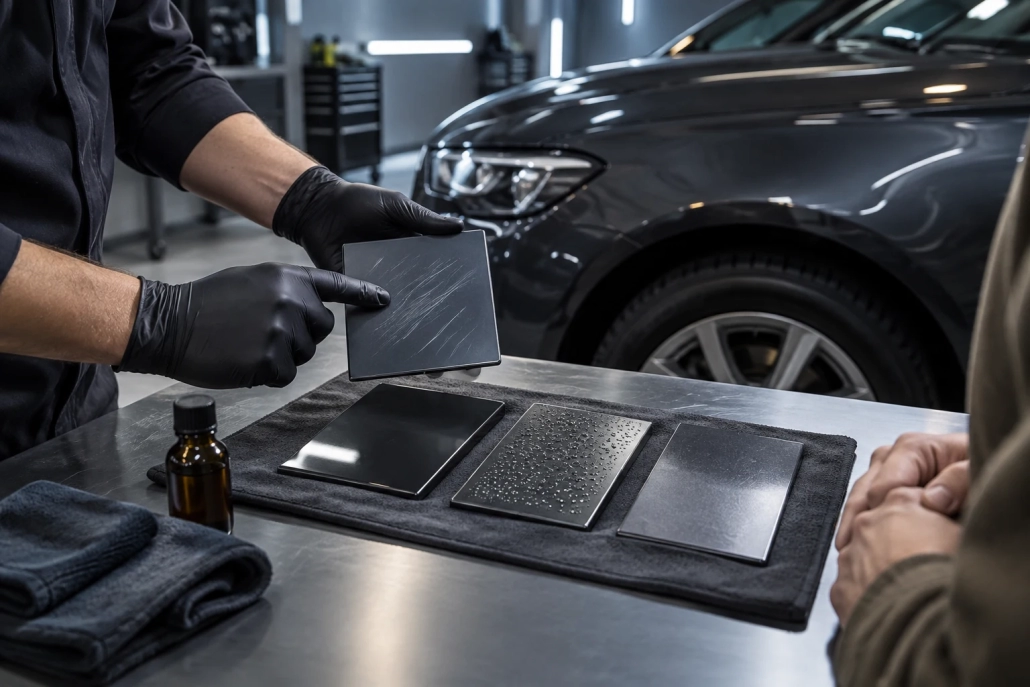
Keep coating performance statements connected to their product version, test method and limitations before using them in sales material.
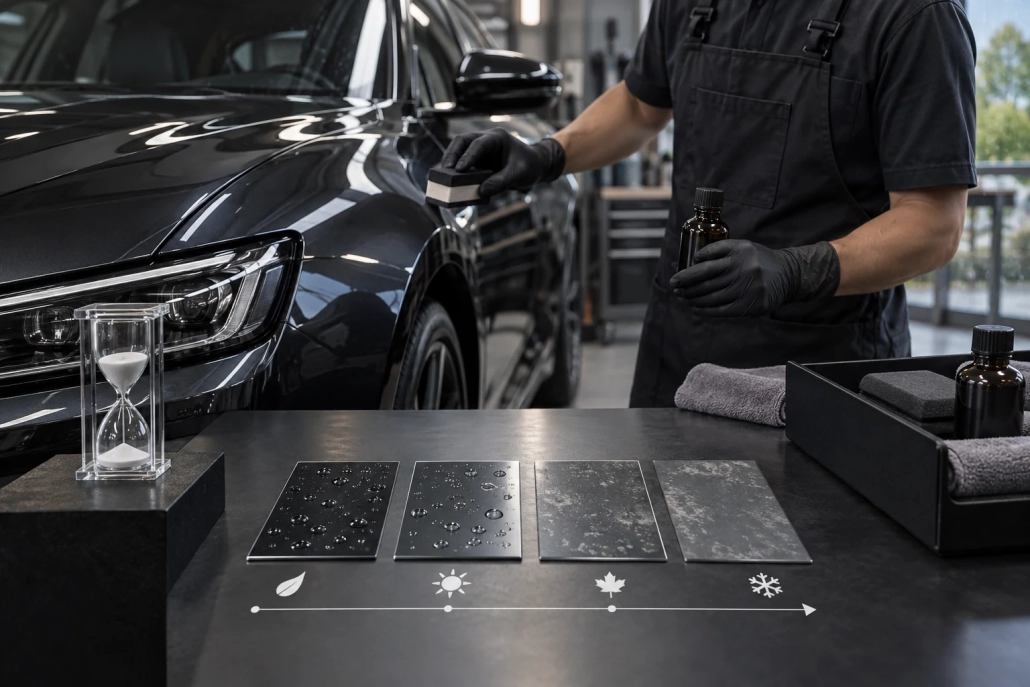
Understand the difference between coating lifespan, visible water behaviour and warranty terms, and how use and maintenance affect the result.
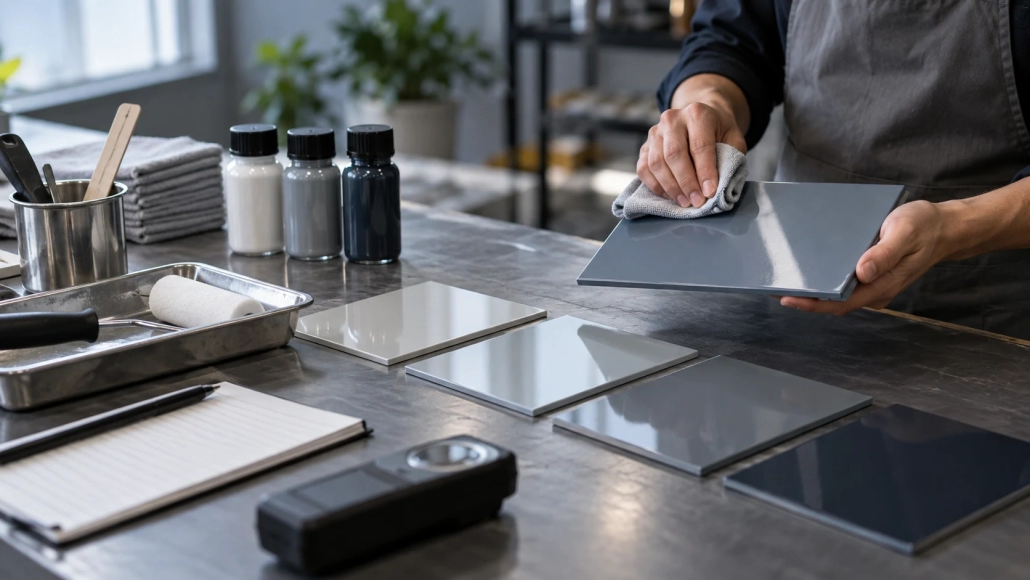
Build a coating performance dashboard that separates application, appearance, maintenance and packaging outcomes instead of hiding them in one score.

 A Coating Performance Dashboard That Keeps Failure Modes Separate