






A full polishing range.
From cutting and one-step correction to final finishing.
Specialist chemistry. Expert application.
 QUARTZ99 / CERAMIC BASE COAT
The foundation of your coating system.
A layerable quartz base coat designed for mechanical protection. Pair it with a suitable top coat to create the final finish.
For application by NANOLAB certified installers only.
Four formulas. Extended working time. Find the coating for your finish.
Explore the BEAST family of ceramic coatings.
Find the coating for each exterior surface.
 PPF & VINYLGLOSSProtection for glossy films and wraps.Discover
 MATTE & SATINMATTEProtection that respects the finish.Discover
 GLASSWINDOWSExplore dedicated glass protection.Discover
 WHEEL PROTECTIONWHEELSA dedicated coating for your wheels.Discover
 TRIM PROTECTIONPLASTICProtection for plastic surfaces.Discover
Dedicated care for the surfaces inside.
 LEATHER SURFACESLEATHERDiscover NANOLAB leather protection.Discover PLASTIC SURFACESPLASTICProtection for interior plastic surfaces.Discover TEXTILE SURFACESFABRICExplore the latest fabric formulation.Discover
Spray protection, maintenance and upcoming wash products.
 MAINTENANCEBEAST 365Explore the BEAST maintenance range.Discover
Next in washing, cleaning & care.
Ceramic protection for boats and yachts.
An easy-to-apply ceramic coating with an established track record on boats and yachts around the world.
Results vary with surface preparation, exposure and maintenance.
Read 50 MARINE guides →Explore MARINEProtection for the surfaces you live with.
A look at what we’re developing.
From cutting and one-step correction to final finishing.
A wider range for professional vehicle care.
Taking shape alongside BEAST & MATRIX.
Practical guidance for your next coating project.
Explore all guides →
Evaluate transparent coated samples with separate transmission, haze and reflection checks so a good-looking reflection does not conceal reduced clarity.
Updated · NANOLAB Knowledge

A transparent coated sample may produce a crisp reflection while an object viewed through it appears hazy. Those observations are not contradictory: reflected appearance and transmitted clarity describe different optical paths. A project that cares about both must specify both.
Ask whether the surface is meant to provide a clear view, a glossy reflection, privacy, colour consistency or a combination. A shower screen, display cover and decorative panel may have different priorities. Write the acceptance criteria around the intended use rather than around whichever instrument happens to be available.
BYK’s guidance on transparent products distinguishes appearance characteristics including gloss and transmission-related properties. A gloss result should not be substituted for a transmission-haze result or vice versa.
Record the substrate, thickness, coated face, opposite-face condition and any backing. Clean and handle the specimen using the approved method. Fingerprints, scratches or residue on the reverse side can affect an optical assessment and be incorrectly attributed to the new coating.
| Assessment | Main question | Control |
|---|---|---|
| Transmitted view | How clearly can the intended object be seen? | Lighting, target and viewing geometry |
| Transmission haze measurement | How does the defined instrument quantify scattering? | Method, calibration and specimen position |
| Reflected appearance | How does the surface reflect the scene or light? | Viewing angle, background and opposite surface |
| Colour or tint | Has the intended appearance changed? | Suitable reference and measurement conditions |
Retain untreated samples from the same relevant material supply. Where a before-and-after measurement is practical, keep the same location and orientation while documenting any preparation between readings. Use an appropriate fixture and the instrument supplier’s method for transparent samples, including any required control of rear-surface reflections.
Do not improvise a dark backing for one specimen and compare it with an unbacked specimen without understanding the method. A change in setup can dominate the apparent difference.
An illustrative sample may look excellent under front lighting but show a diffuse veil against a high-contrast target behind it. Record both views and investigate whether the effect arises from the coating, residue, substrate or opposite face. A front-lit image alone would miss the service question.
Photographs can document the observation, but numerical haze and gloss values require appropriate calibrated methods. Avoid assigning a percentage to a visual impression or comparing values from unrelated geometries as though they were interchangeable.
Report each agreed endpoint separately and identify any trade-off. If a project requires transparency and an unchanged decorative appearance, passing gloss alone is insufficient. Keep instrument details, raw results and reference images with the approval so future batches can be compared using the same basis.
The result is a clearer product decision: the coating is assessed for the actual optical job, rather than for the single property that happens to look best.
These sources support the identified technical concepts. The planning examples in this guide are illustrative and are not NANOLAB performance test results.
Discuss your surface and intended use with NANOLAB. Follow the current instructions for the exact product when planning application and care.
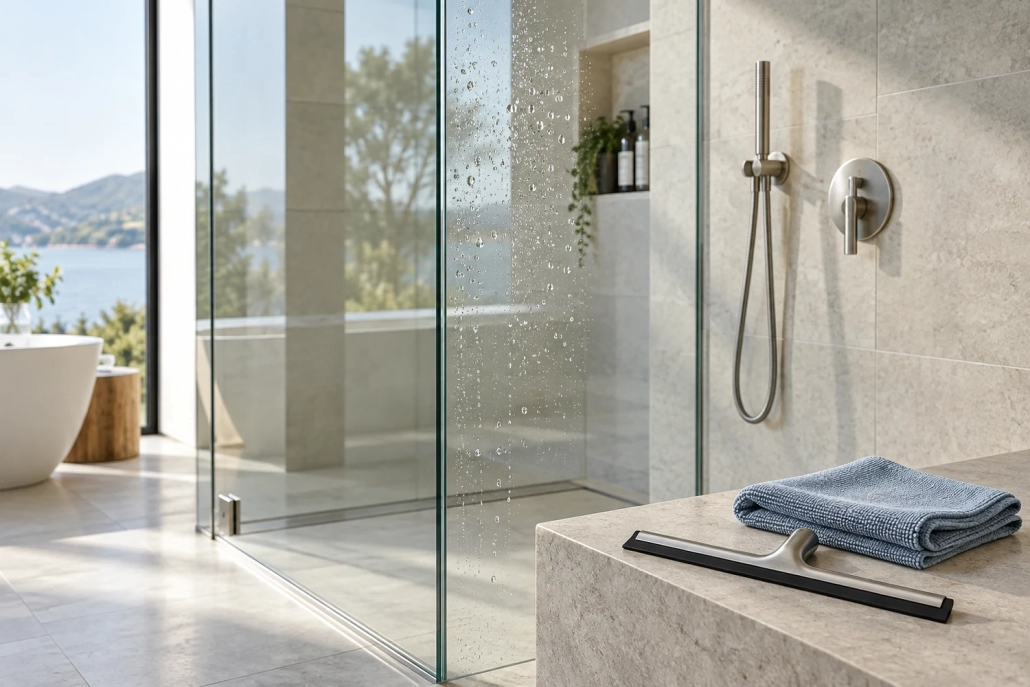
Evaluate a clear coating on glass using transmitted and reflected views, because a shiny reflection does not prove optical clarity.

Evaluate a nano coating’s appearance beyond gloss alone, distinguishing reflected-image clarity, haze and the underlying surface texture.

 Coating Test Panel Edge Effects: Define the Scored Area before Exposure