






A full polishing range.
From cutting and one-step correction to final finishing.
Specialist chemistry. Expert application.
 QUARTZ99 / CERAMIC BASE COAT
The foundation of your coating system.
A layerable quartz base coat designed for mechanical protection. Pair it with a suitable top coat to create the final finish.
For application by NANOLAB certified installers only.
Four formulas. Extended working time. Find the coating for your finish.
Explore the BEAST family of ceramic coatings.
Find the coating for each exterior surface.
 PPF & VINYLGLOSSProtection for glossy films and wraps.Discover
 MATTE & SATINMATTEProtection that respects the finish.Discover
 GLASSWINDOWSExplore dedicated glass protection.Discover
 WHEEL PROTECTIONWHEELSA dedicated coating for your wheels.Discover
 TRIM PROTECTIONPLASTICProtection for plastic surfaces.Discover
Dedicated care for the surfaces inside.
 LEATHER SURFACESLEATHERDiscover NANOLAB leather protection.Discover PLASTIC SURFACESPLASTICProtection for interior plastic surfaces.Discover TEXTILE SURFACESFABRICExplore the latest fabric formulation.Discover
Spray protection, maintenance and upcoming wash products.
 MAINTENANCEBEAST 365Explore the BEAST maintenance range.Discover
Next in washing, cleaning & care.
Ceramic protection for boats and yachts.
An easy-to-apply ceramic coating with an established track record on boats and yachts around the world.
Results vary with surface preparation, exposure and maintenance.
Read 50 MARINE guides →Explore MARINEProtection for the surfaces you live with.
A look at what we’re developing.
From cutting and one-step correction to final finishing.
A wider range for professional vehicle care.
Taking shape alongside BEAST & MATRIX.
Practical guidance for your next coating project.
Explore all guides →
Evaluate a clear coating on glass using transmitted and reflected views, because a shiny reflection does not prove optical clarity.
Updated · NANOLAB Knowledge
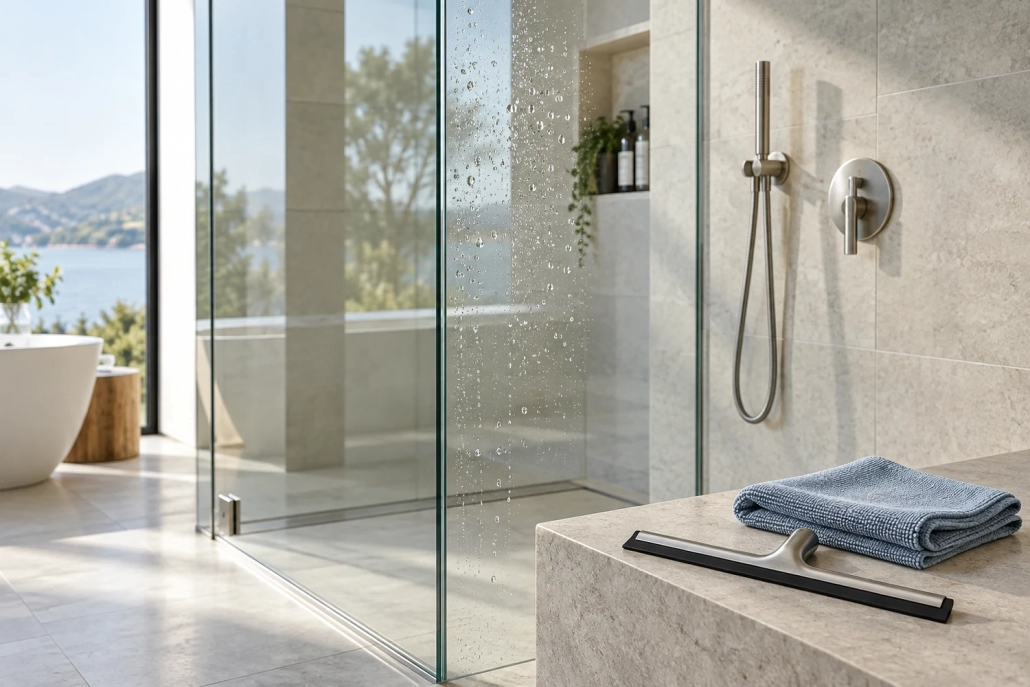
Glass can reflect a sharp light source while still looking cloudy when viewed through. A transparent coating assessment therefore needs more than a glossy photograph. Separate the view through the glass from the appearance of reflected light.
Transmission concerns light passing through the sample. Reflection concerns light returned toward the observer. Haze and image clarity describe additional aspects of appearance; they should not be replaced by a single generic “clarity” score without explaining the method.
| View | Practical observation |
|---|---|
| Through glass toward a fixed target | Visibility, cloudiness and distortion |
| Reflected light on the treated face | Streaks and local unevenness |
| Oblique view across the surface | Application boundaries and residue |
Use representative glass with the same thickness and existing surface treatments. Clean both faces appropriately and record which face receives the coating. Keep background, target distance, light position and viewing geometry consistent. A darker background can make a defect more visible without the glass itself changing.
Record the interval after application and follow the product’s inspection guidance. Do not compare a freshly levelled sample with one that has completed its specified cure and assume the difference is permanent.
In an illustrative review, both samples show bright reflections, but one blurs a printed target viewed through the glass. That observation warrants a transmission-focused assessment. It cannot be resolved by showing a second photograph with a brighter reflected lamp.
A visual screening board is useful for selecting samples and locating defects. Quantitative transmission or haze claims require a suitable instrument, method and sample geometry. Record the actual metric instead of converting a visual rating into a laboratory percentage.
Keep optical acceptance separate from water repellency. A sample that beads strongly can still be unsuitable if its appearance is unacceptable. For shower glazing, the practical goal is an appropriate combination of clear appearance and maintainability on the specified glass.
The sources below support the stated concepts or describe their own methods. The worked scenarios are editorial examples, not NANOLAB test results.
Discuss a shower-glass coating project. For application and care, use the current instructions for the exact product.

Use clear checkpoints before application, after levelling and at handover to make coating work consistent and traceable.
Explain why assessing existing surface condition is a different task from selecting protection.
Create a matte-finish reference board that reveals darkening, sheen changes and application boundaries before coating a full surface.
 Testing Matte Coating Appearance with a Multi-Angle Reference Board