






A full polishing range.
From cutting and one-step correction to final finishing.
Specialist chemistry. Expert application.
 QUARTZ99 / CERAMIC BASE COAT
The foundation of your coating system.
A layerable quartz base coat designed for mechanical protection. Pair it with a suitable top coat to create the final finish.
For application by NANOLAB certified installers only.
Four formulas. Extended working time. Find the coating for your finish.
Explore the BEAST family of ceramic coatings.
Find the coating for each exterior surface.
 PPF & VINYLGLOSSProtection for glossy films and wraps.Discover
 MATTE & SATINMATTEProtection that respects the finish.Discover
 GLASSWINDOWSExplore dedicated glass protection.Discover
 WHEEL PROTECTIONWHEELSA dedicated coating for your wheels.Discover
 TRIM PROTECTIONPLASTICProtection for plastic surfaces.Discover
Dedicated care for the surfaces inside.
 LEATHER SURFACESLEATHERDiscover NANOLAB leather protection.Discover PLASTIC SURFACESPLASTICProtection for interior plastic surfaces.Discover TEXTILE SURFACESFABRICExplore the latest fabric formulation.Discover
Spray protection, maintenance and upcoming wash products.
 MAINTENANCEBEAST 365Explore the BEAST maintenance range.Discover
Next in washing, cleaning & care.
Ceramic protection for boats and yachts.
An easy-to-apply ceramic coating with an established track record on boats and yachts around the world.
Results vary with surface preparation, exposure and maintenance.
Read 50 MARINE guides →Explore MARINEProtection for the surfaces you live with.
A look at what we’re developing.
From cutting and one-step correction to final finishing.
A wider range for professional vehicle care.
Taking shape alongside BEAST & MATRIX.
Practical guidance for your next coating project.
Explore all guides →
Avoid confounding coating performance with a boat's mooring and exposure by placing comparable treatment areas on both port and starboard.
Updated · NANOLAB Knowledge
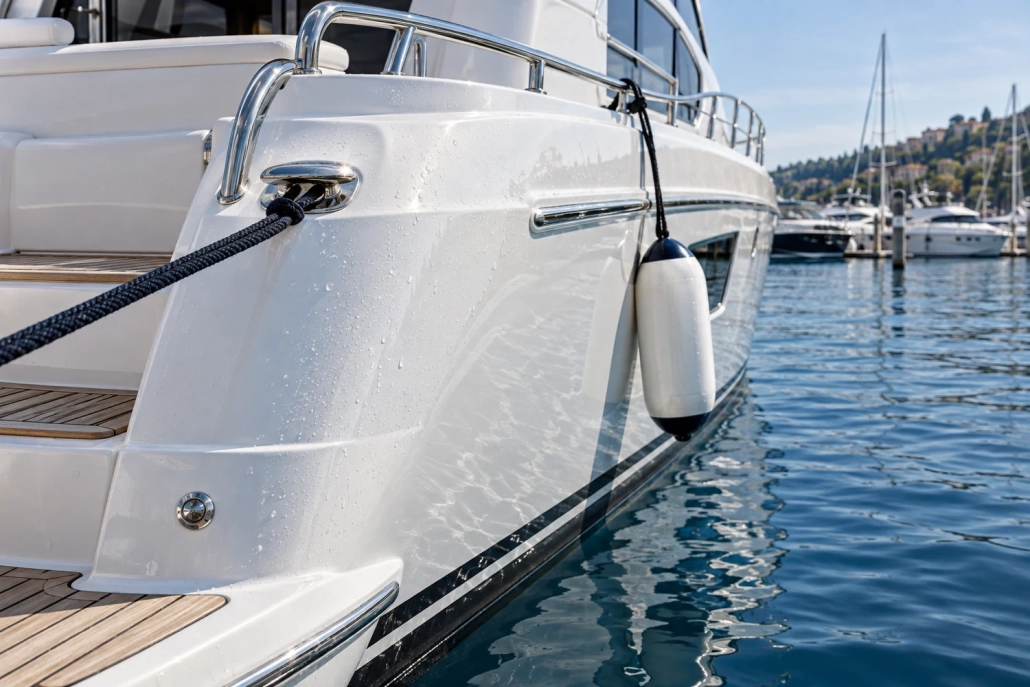
Putting coating A on the port side and coating B on starboard seems convenient. It can also make product and exposure impossible to separate. A vessel may spend long periods with one side facing a dock, prevailing spray or stronger sunlight. Better planning preserves the practical advantages of an onboard trial without relying on a single left-versus-right comparison.
Record the usual mooring orientation, operating pattern, shading, fender contact and cleaning access. Identify differences in surface material and condition. A painted section should not be treated as interchangeable with a differently aged gelcoat section simply because they sit opposite each other.
Keep the project within the supported cosmetic application scope. This plan does not authorise application to submerged areas, walking surfaces, safety equipment or other excluded zones.
Where suitable, create comparable approved test areas for both candidates on each side. Assign positions before application and balance the layout so one candidate is not always nearer a runoff source or frequently handled fitting. Randomise the local order where practical.
| Exposure group | Illustrative allocation |
|---|---|
| Port, comparable upper cosmetic areas | Both A and B in recorded positions |
| Starboard, comparable upper cosmetic areas | Both A and B in recorded positions |
| Reference condition | A suitable documented control where the project permits it |
This is an application of balanced comparison and blocking concepts, not a complete statistical protocol. NIST’s design guidance is useful background when planning a formal study.
Record the product, applicator, preparation and cure conditions for each area. Use the agreed care routine and log deviations. If one side is washed more frequently because it is easier to reach from the dock, that difference belongs in the trial record.
Record changes in berth or vessel use. A mooring change halfway through the pilot may alter the exposure pattern and can explain a trend that would otherwise be attributed to product age.
In an illustrative outcome, both candidates remain cleaner on the sheltered side while both collect more residue on the exposed side. A simple port-versus-starboard allocation would have risked declaring the sheltered-side product the winner. Having both candidates in both positions makes the exposure pattern visible.
If A performs differently from B within each group, investigate whether the difference is consistent across independent areas and visits. Repeated photographs of the same patch are useful follow-up records but do not create independent vessels.
State the number of vessels, areas, observation periods and relevant deviations. Describe what the pilot supports on the tested surfaces and what further exposure is needed. A disciplined onboard trial can guide product selection and maintenance planning while avoiding a durability claim based mainly on which side faced the dock.
These sources support the identified technical concepts. The planning examples in this guide are illustrative and are not NANOLAB performance test results.
Discuss your surface and intended use with NANOLAB. Follow the current instructions for the exact product when planning application and care.
Compare marine coatings within similar exposure zones instead of treating shaded hull sides, horizontal surfaces and contact areas as equivalent.
Marine paint identity matters when selecting preparation and protection. A successful gelcoat trial does not automatically qualify a painted hull.

 Boat Cleaning between Two Contractors: Prevent Conflicting Products and Han...