






A full polishing range.
From cutting and one-step correction to final finishing.
Specialist chemistry. Expert application.
 QUARTZ99 / CERAMIC BASE COAT
The foundation of your coating system.
A layerable quartz base coat designed for mechanical protection. Pair it with a suitable top coat to create the final finish.
For application by NANOLAB certified installers only.
Four formulas. Extended working time. Find the coating for your finish.
Explore the BEAST family of ceramic coatings.
Find the coating for each exterior surface.
 PPF & VINYLGLOSSProtection for glossy films and wraps.Discover
 MATTE & SATINMATTEProtection that respects the finish.Discover
 GLASSWINDOWSExplore dedicated glass protection.Discover
 WHEEL PROTECTIONWHEELSA dedicated coating for your wheels.Discover
 TRIM PROTECTIONPLASTICProtection for plastic surfaces.Discover
Dedicated care for the surfaces inside.
 LEATHER SURFACESLEATHERDiscover NANOLAB leather protection.Discover PLASTIC SURFACESPLASTICProtection for interior plastic surfaces.Discover TEXTILE SURFACESFABRICExplore the latest fabric formulation.Discover
Spray protection, maintenance and upcoming wash products.
 MAINTENANCEBEAST 365Explore the BEAST maintenance range.Discover
Next in washing, cleaning & care.
Ceramic protection for boats and yachts.
An easy-to-apply ceramic coating with an established track record on boats and yachts around the world.
Results vary with surface preparation, exposure and maintenance.
Read 50 MARINE guides →Explore MARINEProtection for the surfaces you live with.
A look at what we’re developing.
From cutting and one-step correction to final finishing.
A wider range for professional vehicle care.
Taking shape alongside BEAST & MATRIX.
Practical guidance for your next coating project.
Explore all guides →
Trace water spots that return after driving by checking runoff paths, retained wash water and parking exposure before changing the coating treatment.
Updated · NANOLAB Knowledge

The car leaves the wash bay dry, then develops spots after its first drive. Repeatedly treating those marks without identifying their water source can create unnecessary chemical work. First reconstruct where the water travelled and when the surface became wet.
Photograph the dry car in context and close up. Mark the starting points of trails, flow direction and affected panels. Note whether the car was parked, driven, exposed to rain or washed again between drying and the complaint. Several cleaning attempts can otherwise erase the most useful evidence.
| Pattern | Question |
|---|---|
| Trails below mirrors or trim | Was wash water retained in those assemblies? |
| Marks following an upper seam | Did movement or a new parking angle release water? |
| Spots on one side after parking | Was there irrigation, building runoff or another local source? |
| Residue across several panels | Did rinse water or a maintenance product affect the whole area? |
Use a surface-compatible method for existing marks. If the deposit does not respond as expected, reassess before escalating. Investigate the water source separately. Cosmetic residue may be a detailing issue, while suspected drainage or sealing faults may require a vehicle repairer.
Do not push tools into drain openings or force water out with uncontrolled pressure. Follow the vehicle’s care guidance and use suitable drying methods. Preventing another wetting event should not damage seals, electronics, film edges or trim.
After an appropriate wash and dry, inspect the known starting points before release. Record the method and visible water. If the next drive creates the same trail, photograph it before another wash. A repeated location is more informative than a general statement that the coating “makes spots.”
For example, a door may be clear at collection but show a narrow trail below its mirror after driving. Recoating the door would not explain the recurring water release. Check the drying and runoff route, then assess the mark with a compatible method.
A fresh topper can change water movement and residue appearance. Record any product introduced during diagnosis. Otherwise a change in drying technique may be incorrectly credited to the new coating, or a different residue pattern may be mistaken for deterioration.
Compare equivalent conditions where practical. A dry-day drive after one wash and an overnight outdoor stay after another are not identical follow-ups. The owner need not run a laboratory experiment, but the record should disclose obvious differences.
Give the owner a short record showing the zone, suspected water route, treatment and condition to watch for. Describe an unconfirmed source as a hypothesis. If the pattern returns despite source control, revisit the evidence instead of repeating an ineffective treatment.
A coating changes surface behaviour; it does not remove dissolved material from water or prevent every deposit after drying. Addressing the water route makes the care plan more useful than treating each spot as an independent product failure.
Discuss your surface and intended use with NANOLAB. Follow the current instructions for the exact product when planning application and care.
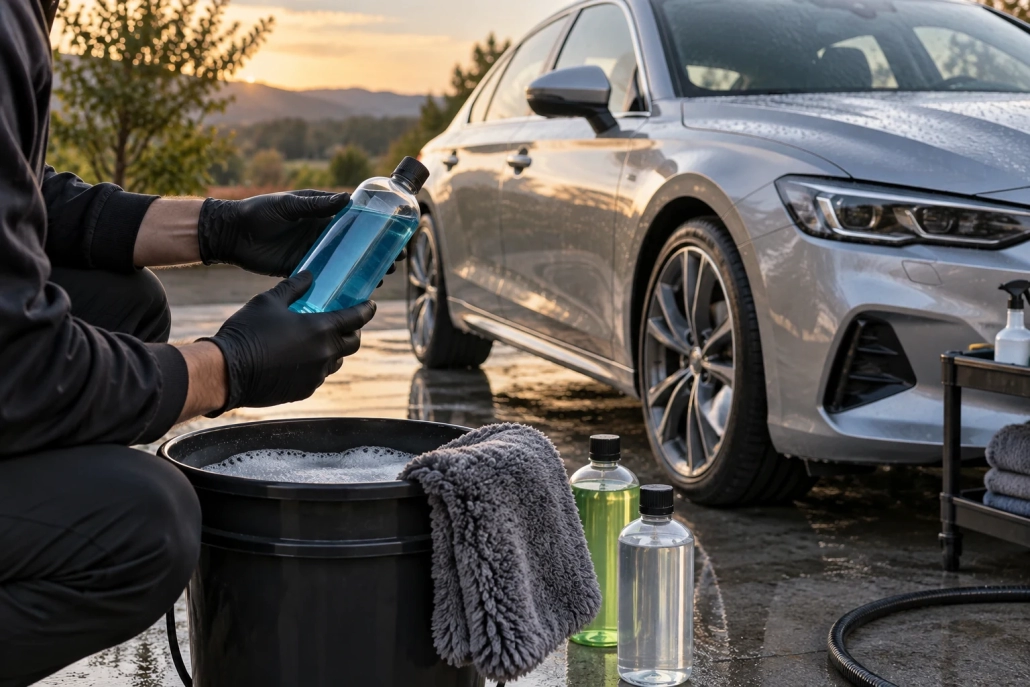
Include delayed water release from mirrors and trim in the drying routine so trapped rinse water does not create fresh deposits on finished panels.
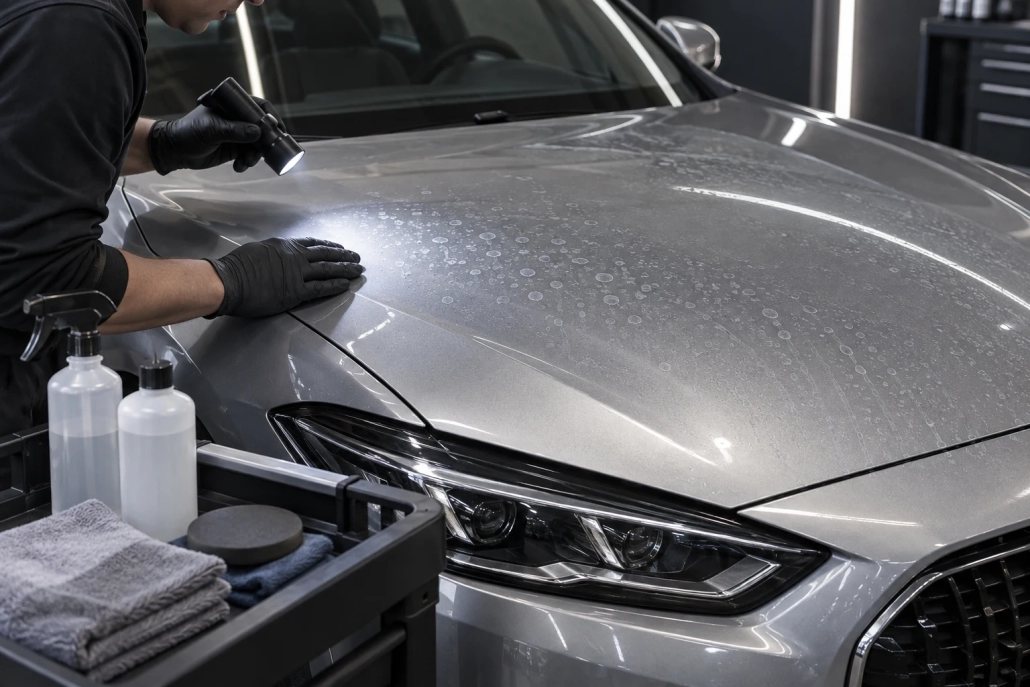
Distinguish mineral deposits from etched damage and choose a compatible response before considering polishing or coating renewal.
 Reusing Glass Test Coupons: Separate Cleaning from Surface Regeneration