






A full polishing range.
From cutting and one-step correction to final finishing.
Specialist chemistry. Expert application.
 QUARTZ99 / CERAMIC BASE COAT
The foundation of your coating system.
A layerable quartz base coat designed for mechanical protection. Pair it with a suitable top coat to create the final finish.
For application by NANOLAB certified installers only.
Four formulas. Extended working time. Find the coating for your finish.
Explore the BEAST family of ceramic coatings.
Find the coating for each exterior surface.
 PPF & VINYLGLOSSProtection for glossy films and wraps.Discover
 MATTE & SATINMATTEProtection that respects the finish.Discover
 GLASSWINDOWSExplore dedicated glass protection.Discover
 WHEEL PROTECTIONWHEELSA dedicated coating for your wheels.Discover
 TRIM PROTECTIONPLASTICProtection for plastic surfaces.Discover
Dedicated care for the surfaces inside.
 LEATHER SURFACESLEATHERDiscover NANOLAB leather protection.Discover PLASTIC SURFACESPLASTICProtection for interior plastic surfaces.Discover TEXTILE SURFACESFABRICExplore the latest fabric formulation.Discover
Spray protection, maintenance and upcoming wash products.
 MAINTENANCEBEAST 365Explore the BEAST maintenance range.Discover
Next in washing, cleaning & care.
Ceramic protection for boats and yachts.
An easy-to-apply ceramic coating with an established track record on boats and yachts around the world.
Results vary with surface preparation, exposure and maintenance.
Read 50 MARINE guides →Explore MARINEProtection for the surfaces you live with.
A look at what we’re developing.
From cutting and one-step correction to final finishing.
A wider range for professional vehicle care.
Taking shape alongside BEAST & MATRIX.
Practical guidance for your next coating project.
Explore all guides →
Use the improvement from each compounding set to decide when further work has diminishing value, while respecting the paint’s correction limits.
Updated · NANOLAB Knowledge
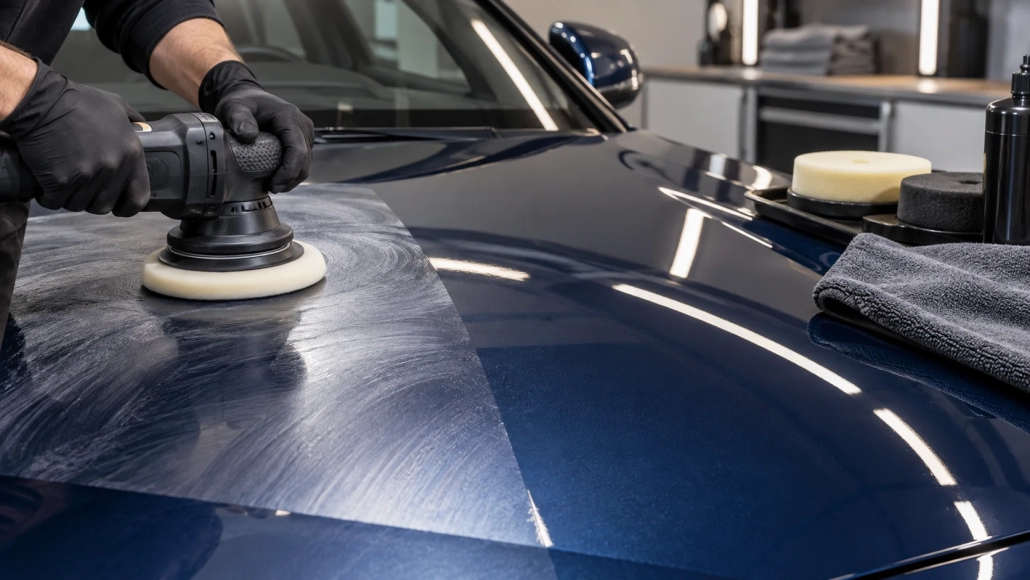
Another compounding set may remove more defects, but the improvement can become small while time and surface exposure continue to accumulate. Establish the stopping logic before chasing the last visible mark.
Agree which defects are intended for correction and which remain outside the safe or authorised scope. Use appropriate paint assessment and the supported machine, pad and compound system. A thickness reading alone does not establish how much clear coat can safely be removed.
Keep lighting, residue removal and viewing conditions consistent. Record whether the targeted defects actually changed. Do not judge progress from a surface still carrying polishing residue.
| Stage | Observation | Decision |
|---|---|---|
| First set | Major improvement | Assess remaining target defects |
| Second set | Small additional improvement | Review risk and scope |
| Further set | No meaningful change | Stop and reassess |
The remaining feature may be deeper damage, texture, a different paint condition or an inspection artefact. Increasing aggressiveness automatically can turn a cosmetic limitation into permanent damage.
A more aggressive stage may require extra refinement. Compare the total accepted process, not just the apparent removal rate during cutting.
A professional stopping point is supported by the agreed target, surface condition and observed progress. Leaving a documented defect can be the correct result when further removal is unjustified; repeated polishing is not proof of better workmanship.
Ask NANOLAB about your surface and intended use. For application and care, use the current instructions for the exact product.
Choose a polishing process by testing defect removal, finishing quality and clear-coat preservation rather than counting steps alone.
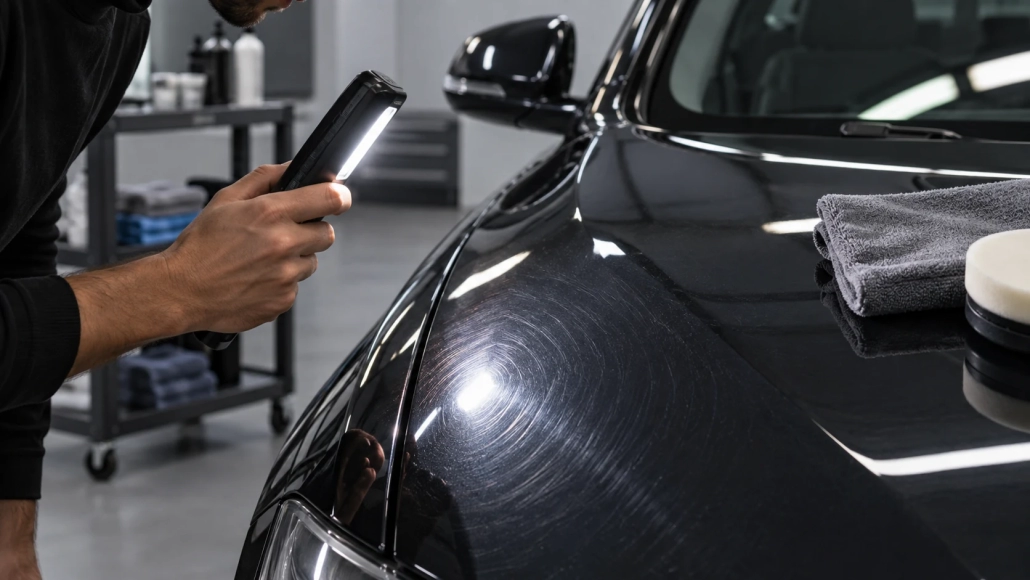
Evaluate jeweling as an optional refinement process and use a controlled comparison to decide whether it adds visible value to the finish.
Recheck a polishing system on representative curves because pad contact and machine behaviour can differ from a flat test spot.
 Curved Panels and Partial Pad Contact: Why a Flat Test Spot May Mislead