






A full polishing range.
From cutting and one-step correction to final finishing.
Specialist chemistry. Expert application.
 QUARTZ99 / CERAMIC BASE COAT
The foundation of your coating system.
A layerable quartz base coat designed for mechanical protection. Pair it with a suitable top coat to create the final finish.
For application by NANOLAB certified installers only.
Four formulas. Extended working time. Find the coating for your finish.
Explore the BEAST family of ceramic coatings.
Find the coating for each exterior surface.
 PPF & VINYLGLOSSProtection for glossy films and wraps.Discover
 MATTE & SATINMATTEProtection that respects the finish.Discover
 GLASSWINDOWSExplore dedicated glass protection.Discover
 WHEEL PROTECTIONWHEELSA dedicated coating for your wheels.Discover
 TRIM PROTECTIONPLASTICProtection for plastic surfaces.Discover
Dedicated care for the surfaces inside.
 LEATHER SURFACESLEATHERDiscover NANOLAB leather protection.Discover PLASTIC SURFACESPLASTICProtection for interior plastic surfaces.Discover TEXTILE SURFACESFABRICExplore the latest fabric formulation.Discover
Spray protection, maintenance and upcoming wash products.
 MAINTENANCEBEAST 365Explore the BEAST maintenance range.Discover
Next in washing, cleaning & care.
Ceramic protection for boats and yachts.
An easy-to-apply ceramic coating with an established track record on boats and yachts around the world.
Results vary with surface preparation, exposure and maintenance.
Read 50 MARINE guides →Explore MARINEProtection for the surfaces you live with.
A look at what we’re developing.
From cutting and one-step correction to final finishing.
A wider range for professional vehicle care.
Taking shape alongside BEAST & MATRIX.
Practical guidance for your next coating project.
Explore all guides →
Control initial pad loading when comparing polishing systems so a fresh dry pad and a heavily loaded pad do not create an unfair trial.
Updated · NANOLAB Knowledge
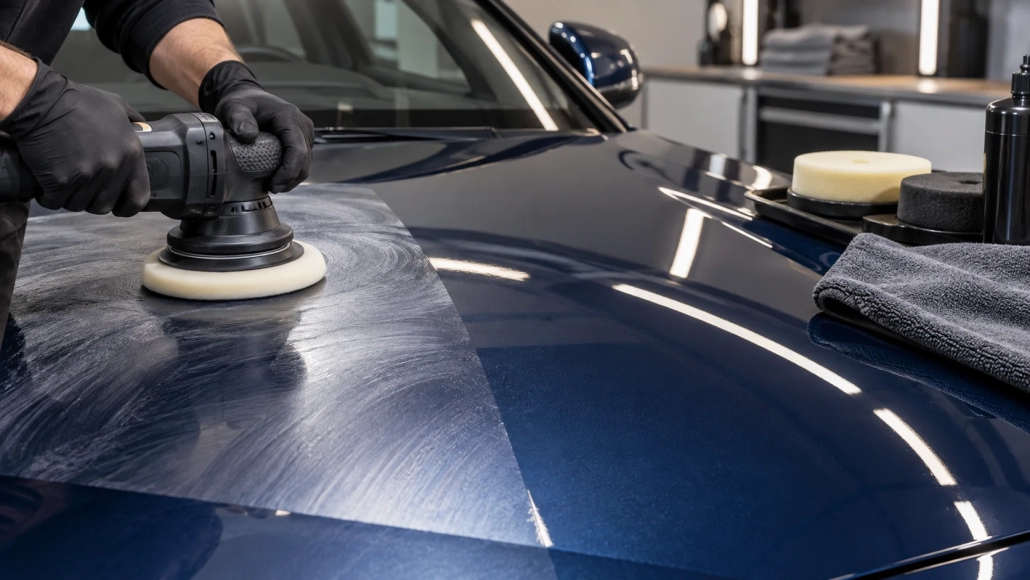
The starting condition of a polishing pad influences the first test area. Comparing a newly prepared pad with one already saturated by earlier work mixes product performance with pad history.
Use the pad, machine and compound manufacturers’ compatible procedure. Record the initial product amount and distribution method where they can be measured reliably. Do not invent a universal priming quantity for every pad size or material.
Inspect both the initial area and subsequent comparable areas. Record replenishment, cleaning and pad changes. A system may behave differently during the first section without showing the same difference during stable work.
| Trial field | Purpose |
|---|---|
| Pad identity and condition | Defines the tool |
| Initial loading | Controls the starting point |
| Replenishment | Tracks the continuing process |
| Accepted finish | Confirms useful output |
If compound A is tested with a fresh supported setup and compound B with a pad carrying residue from A, the result cannot isolate the compounds. Use separate matched pads or the validated changeover method.
Evaluate correction, final appearance, residue removal and any further polishing required. More initial product may change working behaviour while creating additional cleanup; less may not deliver the supported process.
The objective is a reproducible complete polishing system. A short loading record helps another operator repeat the trial and prevents a product decision from resting on a pad condition that was never documented.
Ask NANOLAB about your surface and intended use. For application and care, use the current instructions for the exact product.
Choose a polishing process by testing defect removal, finishing quality and clear-coat preservation rather than counting steps alone.
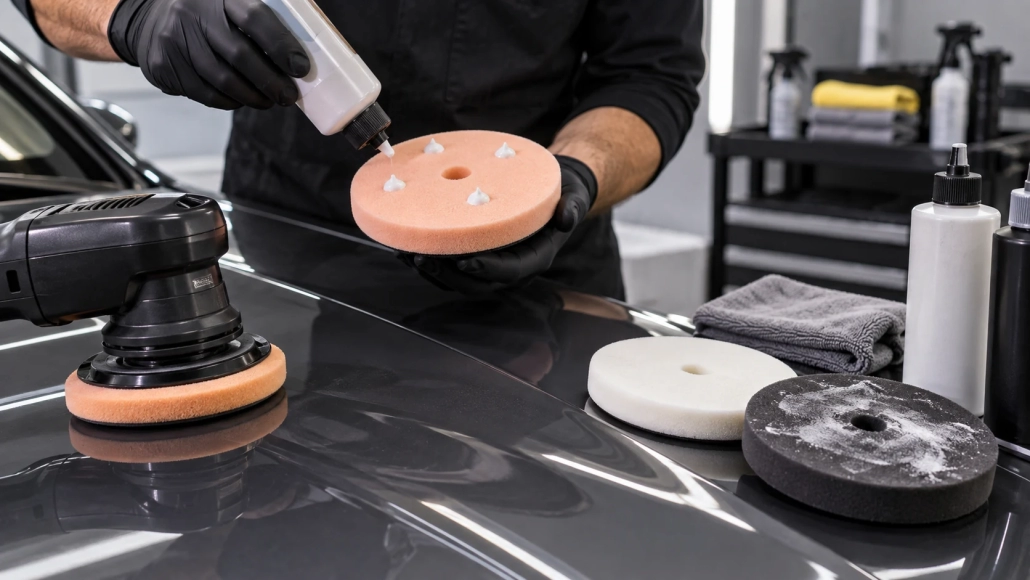
Understand pad priming and product loading so polishing starts evenly without dry contact, excessive residue or inconsistent performance.
Use the improvement from each compounding set to decide when further work has diminishing value, while respecting the paint’s correction limits.

 Diminishing Returns during Compounding: Decide When Another Set Is Not Wort...