






A full polishing range.
From cutting and one-step correction to final finishing.
Specialist chemistry. Expert application.
 QUARTZ99 / CERAMIC BASE COAT
The foundation of your coating system.
A layerable quartz base coat designed for mechanical protection. Pair it with a suitable top coat to create the final finish.
For application by NANOLAB certified installers only.
Four formulas. Extended working time. Find the coating for your finish.
Explore the BEAST family of ceramic coatings.
Find the coating for each exterior surface.
 PPF & VINYLGLOSSProtection for glossy films and wraps.Discover
 MATTE & SATINMATTEProtection that respects the finish.Discover
 GLASSWINDOWSExplore dedicated glass protection.Discover
 WHEEL PROTECTIONWHEELSA dedicated coating for your wheels.Discover
 TRIM PROTECTIONPLASTICProtection for plastic surfaces.Discover
Dedicated care for the surfaces inside.
 LEATHER SURFACESLEATHERDiscover NANOLAB leather protection.Discover PLASTIC SURFACESPLASTICProtection for interior plastic surfaces.Discover TEXTILE SURFACESFABRICExplore the latest fabric formulation.Discover
Spray protection, maintenance and upcoming wash products.
 MAINTENANCEBEAST 365Explore the BEAST maintenance range.Discover
Next in washing, cleaning & care.
Ceramic protection for boats and yachts.
An easy-to-apply ceramic coating with an established track record on boats and yachts around the world.
Results vary with surface preparation, exposure and maintenance.
Read 50 MARINE guides →Explore MARINEProtection for the surfaces you live with.
A look at what we’re developing.
From cutting and one-step correction to final finishing.
A wider range for professional vehicle care.
Taking shape alongside BEAST & MATRIX.
Practical guidance for your next coating project.
Explore all guides →
Set wash-mitt changes from contamination and task conditions rather than assuming every panel places the same load on the tool.
Updated · NANOLAB Knowledge
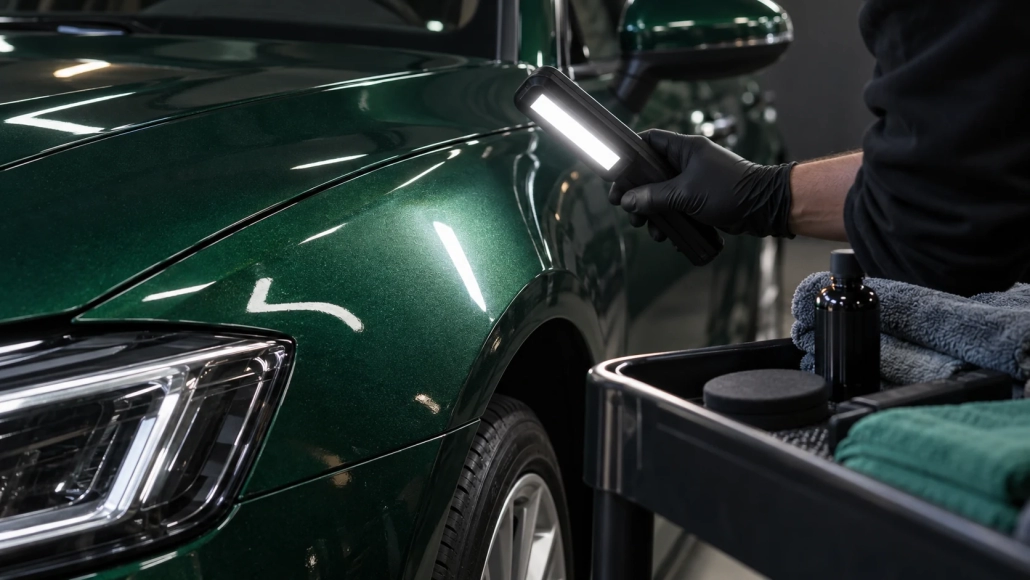
A roof with light dust and a lower door with heavy road film do not place the same soil load on a wash mitt. A fixed rule based only on panel count can hide that difference.
Prepare enough suitable mitts for the supported wash method and keep unused ones protected. Establish where used tools go so they cannot be mistaken for clean stock. Keep tools used on wheels or heavily contaminated areas separate where the procedure requires it.
| Condition | Action within the wash procedure |
|---|---|
| Unexpected heavy soil | Reassess pretreatment and tool change |
| Tool dropped or misused | Remove it from the clean-paint task |
| Visible contamination remains | Do not continue as if rinsing made it clean |
Record vehicle condition, approximate area and number of mitt changes alongside the accepted finish. This helps establish stock and laundry needs without pretending that a universal number suits every vehicle.
If a revised routine uses more mitts but reduces repeated wiping or marring-related correction, include both effects. The cost per mitt alone is not the cost of the wash process.
Use compatible shampoo, tools and contact practices. A ceramic coating does not make trapped grit harmless or remove the need to inspect wash media.
The useful rule is a controlled response to the actual task. Panel count may help scheduling, but contamination and supported tool condition should determine whether the mitt is ready for the next area.
Ask NANOLAB about your surface and intended use. For application and care, use the current instructions for the exact product.
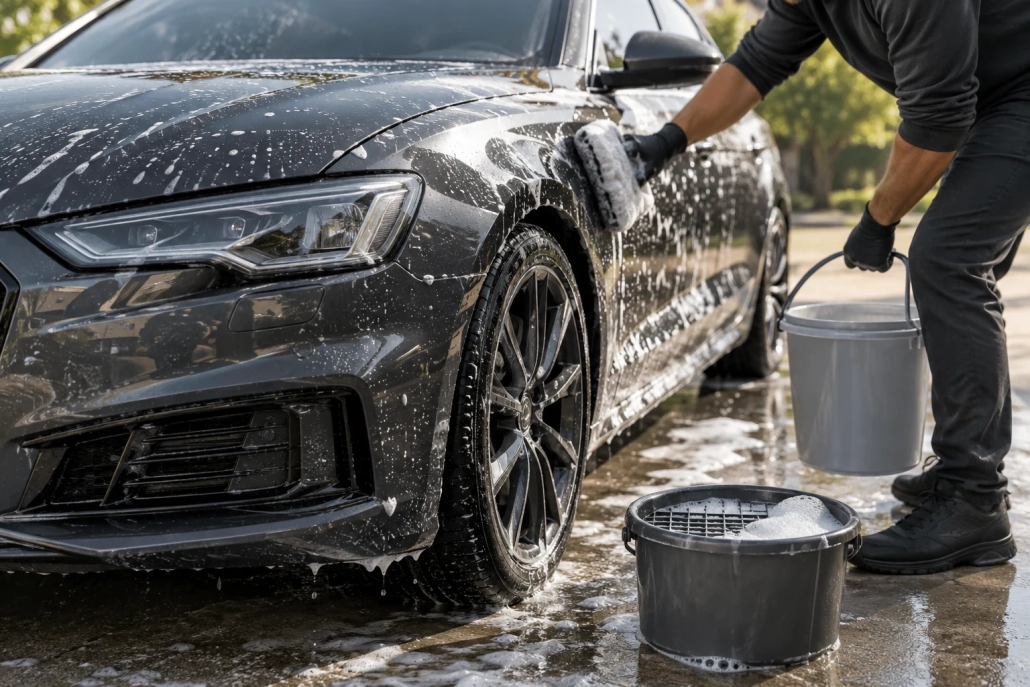
Build a gentle wash routine that removes loose grit before contact, keeps wheel tools separate and ends with careful rinsing and drying.
A scale can appear stable at zero while giving unsuitable results at the actual bottle load. Verification should cover the range used in the process.
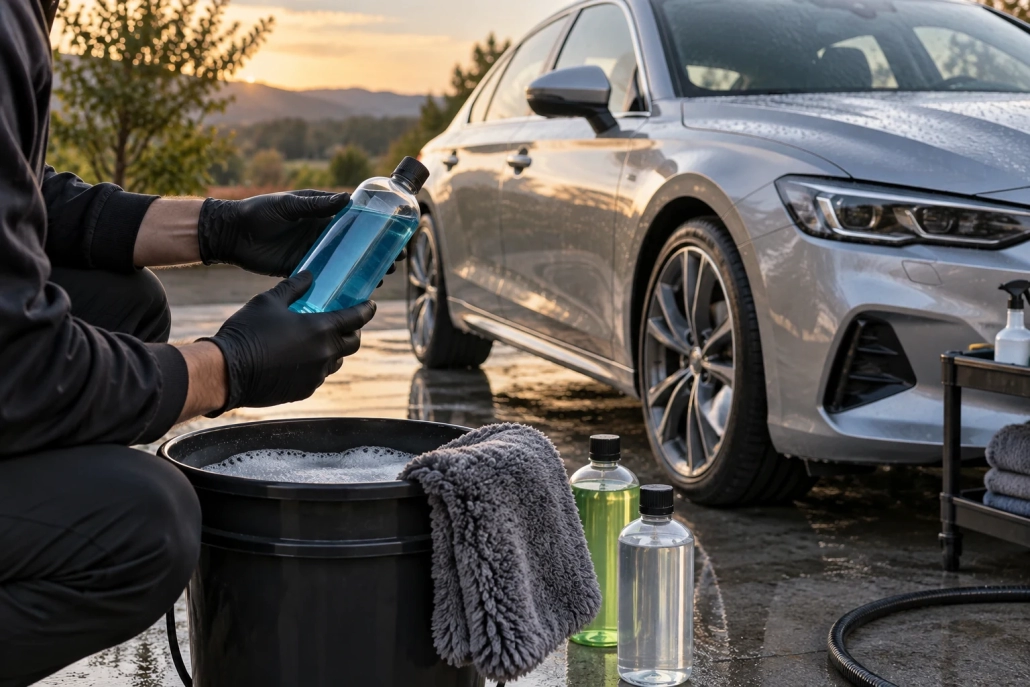
Include delayed water release from mirrors and trim in the drying routine so trapped rinse water does not create fresh deposits on finished panels.
 Water Released from Mirrors during Drying: Prevent a Second Deposit Cycle