






A full polishing range.
From cutting and one-step correction to final finishing.
Specialist chemistry. Expert application.
 QUARTZ99 / CERAMIC BASE COAT
The foundation of your coating system.
A layerable quartz base coat designed for mechanical protection. Pair it with a suitable top coat to create the final finish.
For application by NANOLAB certified installers only.
Four formulas. Extended working time. Find the coating for your finish.
Explore the BEAST family of ceramic coatings.
Find the coating for each exterior surface.
 PPF & VINYLGLOSSProtection for glossy films and wraps.Discover
 MATTE & SATINMATTEProtection that respects the finish.Discover
 GLASSWINDOWSExplore dedicated glass protection.Discover
 WHEEL PROTECTIONWHEELSA dedicated coating for your wheels.Discover
 TRIM PROTECTIONPLASTICProtection for plastic surfaces.Discover
Dedicated care for the surfaces inside.
 LEATHER SURFACESLEATHERDiscover NANOLAB leather protection.Discover PLASTIC SURFACESPLASTICProtection for interior plastic surfaces.Discover TEXTILE SURFACESFABRICExplore the latest fabric formulation.Discover
Spray protection, maintenance and upcoming wash products.
 MAINTENANCEBEAST 365Explore the BEAST maintenance range.Discover
Next in washing, cleaning & care.
Ceramic protection for boats and yachts.
An easy-to-apply ceramic coating with an established track record on boats and yachts around the world.
Results vary with surface preparation, exposure and maintenance.
Read 50 MARINE guides →Explore MARINEProtection for the surfaces you live with.
A look at what we’re developing.
From cutting and one-step correction to final finishing.
A wider range for professional vehicle care.
Taking shape alongside BEAST & MATRIX.
Practical guidance for your next coating project.
Explore all guides →
Keep shower-door drainage features functional and refer hardware blockages to the installer instead of treating every retained-water mark as a coating issue.
Updated · NANOLAB Knowledge
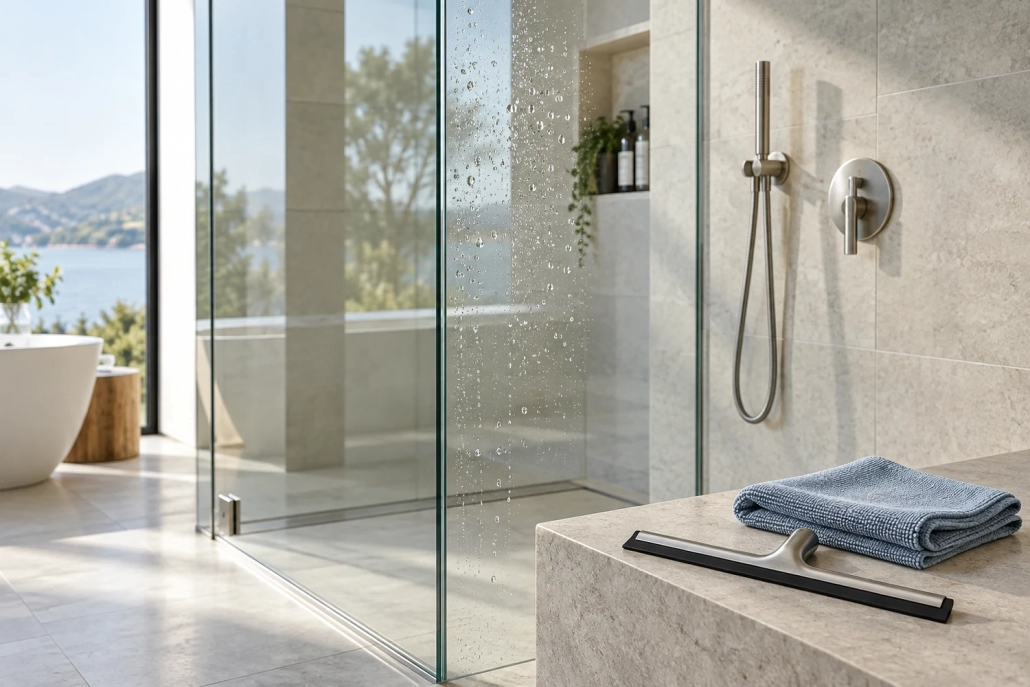
Drainage openings and channels belong to the enclosure’s water-management design. Deposits near them may reflect restricted flow or retained cleaner. A coating treatment should not obscure those features or be presented as their repair.
Consult the enclosure documentation or installer. Do not assume that every gap is a drain or that every opening should be sealed. Photograph the relevant component and the path of water during normal use.
Use only the supported cleaning method for accessible surfaces. Avoid sharp tools, high-pressure flushing or chemical soaking that could damage seals, finishes or the coating. Uncertain blockages and dismantling belong with the responsible technician.
| Finding | Response |
|---|---|
| Visible accessible residue | Supported routine cleaning |
| Unclear drainage function | Check the assembly instructions |
| Persistent retained water | Installer assessment |
Follow the exact product and assembly requirements around channels, seals and moving parts. Do not deliberately fill openings with a surface treatment. Where exclusions are required, record them in the job scope.
Clean the receiving glass under its care instructions and compare the final dry appearance. If the mark stops recurring after drainage service, retain both interventions in the record rather than crediting the coating alone.
A useful handover tells the owner which areas they may clean and when to call the installer. Clear responsibility reduces repeated chemical treatment of a symptom while a mechanical water-retention problem remains unresolved.
Discuss a shower-glass coating project. For application and care, use the current instructions for the exact product.
A test patch should represent the actual enclosure, including its existing finish and maintenance needs.
A cloudy mark can be material sitting on the glass or a change in the glass surface itself.
Restart coated-shower maintenance after a long vacancy by documenting the condition, checking the enclosure and using a staged cleaning assessment.
 Restarting Shower Maintenance in a Holiday Home after Months of Inactivity