






A full polishing range.
From cutting and one-step correction to final finishing.
Specialist chemistry. Expert application.
 QUARTZ99 / CERAMIC BASE COAT
The foundation of your coating system.
A layerable quartz base coat designed for mechanical protection. Pair it with a suitable top coat to create the final finish.
For application by NANOLAB certified installers only.
Four formulas. Extended working time. Find the coating for your finish.
Explore the BEAST family of ceramic coatings.
Find the coating for each exterior surface.
 PPF & VINYLGLOSSProtection for glossy films and wraps.Discover
 MATTE & SATINMATTEProtection that respects the finish.Discover
 GLASSWINDOWSExplore dedicated glass protection.Discover
 WHEEL PROTECTIONWHEELSA dedicated coating for your wheels.Discover
 TRIM PROTECTIONPLASTICProtection for plastic surfaces.Discover
Dedicated care for the surfaces inside.
 LEATHER SURFACESLEATHERDiscover NANOLAB leather protection.Discover PLASTIC SURFACESPLASTICProtection for interior plastic surfaces.Discover TEXTILE SURFACESFABRICExplore the latest fabric formulation.Discover
Spray protection, maintenance and upcoming wash products.
 MAINTENANCEBEAST 365Explore the BEAST maintenance range.Discover
Next in washing, cleaning & care.
Ceramic protection for boats and yachts.
An easy-to-apply ceramic coating with an established track record on boats and yachts around the world.
Results vary with surface preparation, exposure and maintenance.
Read 50 MARINE guides →Explore MARINEProtection for the surfaces you live with.
A look at what we’re developing.
From cutting and one-step correction to final finishing.
A wider range for professional vehicle care.
Taking shape alongside BEAST & MATRIX.
Practical guidance for your next coating project.
Explore all guides →
Evaluate chelating ingredients at the shampoo’s working dilution and actual water conditions instead of treating an ingredient name as a performance guarantee.
Updated · NANOLAB Knowledge
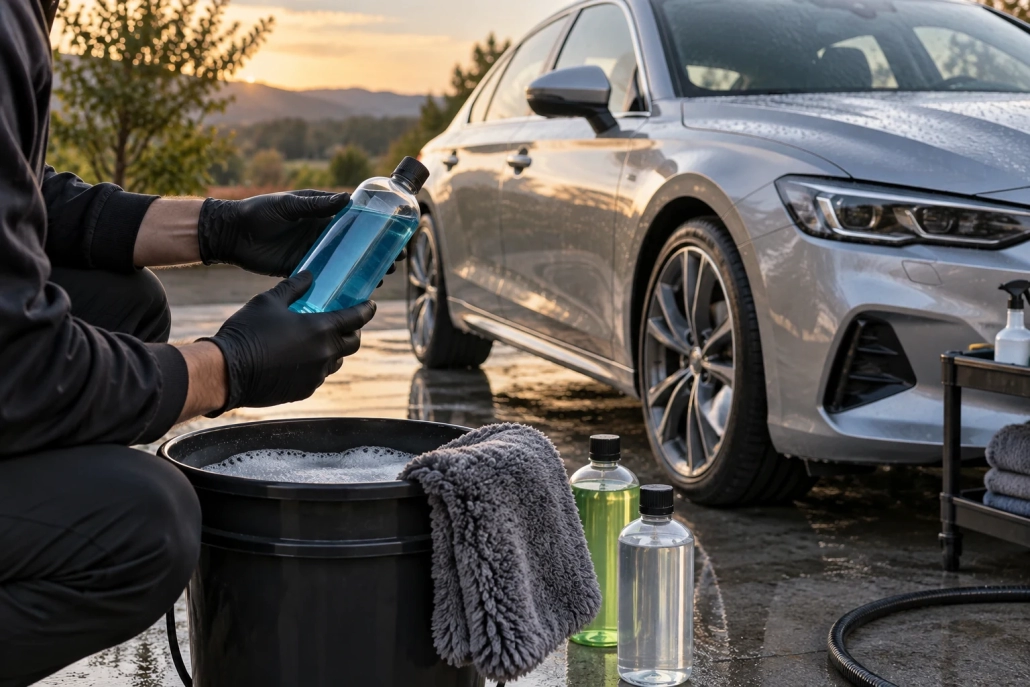
A shampoo can contain a chelating ingredient and still perform differently in two water supplies. The ingredient’s presence is only one part of the formulation. Its effective amount at working dilution and the ions it encounters also matter.
Chelating agents bind metal ions under conditions determined by their chemistry. BASF describes their use in cleaning formulations, particularly for managing hard-water interference. That principle does not establish the performance of an unidentified finished shampoo.
For a product comparison, use the instructed dilution and document how it is expressed. Do not compare two concentrates at the same bottle volume if their use instructions specify different doses.
| Trial factor | Keep visible |
|---|---|
| Water | Source and relevant analysis |
| Shampoo | Exact product and working dose |
| Soil | Comparable type and loading |
| Outcome | Cleaning, rinsing and final dry appearance |
If one shampoo performs better in the harder-water condition, the finished formulation may be better suited to that test. Without a controlled formulation study, the result cannot be assigned exclusively to its chelant.
Adding a raw chelating ingredient to a commercial shampoo changes its formulation and can affect stability, pH and compatibility. Request a suitable finished product or a formulator-led development study instead.
The practical purchasing question is whether the shampoo delivers acceptable cleaning and rinsing at its supported dose in the workshop’s water. Ingredient lists can guide questions, but a controlled use trial provides the relevant decision evidence.
The sources below support the stated concepts or describe their own methods. The worked scenarios are editorial examples, not NANOLAB test results.
Ask NANOLAB about your surface and intended use. For application and care, use the current instructions for the exact product.
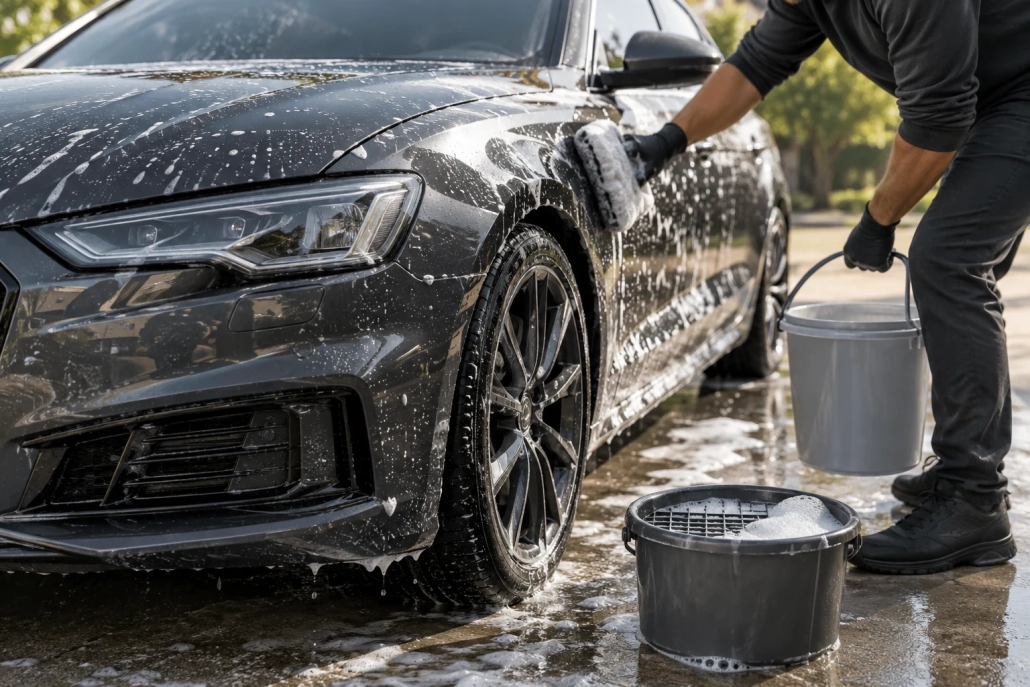
Build a gentle wash routine that removes loose grit before contact, keeps wheel tools separate and ends with careful rinsing and drying.
Understand the difference between a shampoo that maintains a ceramic coating and a ceramic shampoo designed to leave a protective effect after washing.
Compare foam-cannon output using liquid delivery and cleaning results, since foam height alone does not show how much shampoo reaches a panel.

 Foam Air Content and Cleaning Dose: Do Not Compare Cannon Output by Height ...