






A full polishing range.
From cutting and one-step correction to final finishing.
Specialist chemistry. Expert application.
 QUARTZ99 / CERAMIC BASE COAT
The foundation of your coating system.
A layerable quartz base coat designed for mechanical protection. Pair it with a suitable top coat to create the final finish.
For application by NANOLAB certified installers only.
Four formulas. Extended working time. Find the coating for your finish.
Explore the BEAST family of ceramic coatings.
Find the coating for each exterior surface.
 PPF & VINYLGLOSSProtection for glossy films and wraps.Discover
 MATTE & SATINMATTEProtection that respects the finish.Discover
 GLASSWINDOWSExplore dedicated glass protection.Discover
 WHEEL PROTECTIONWHEELSA dedicated coating for your wheels.Discover
 TRIM PROTECTIONPLASTICProtection for plastic surfaces.Discover
Dedicated care for the surfaces inside.
 LEATHER SURFACESLEATHERDiscover NANOLAB leather protection.Discover PLASTIC SURFACESPLASTICProtection for interior plastic surfaces.Discover TEXTILE SURFACESFABRICExplore the latest fabric formulation.Discover
Spray protection, maintenance and upcoming wash products.
 MAINTENANCEBEAST 365Explore the BEAST maintenance range.Discover
Next in washing, cleaning & care.
Ceramic protection for boats and yachts.
An easy-to-apply ceramic coating with an established track record on boats and yachts around the world.
Results vary with surface preparation, exposure and maintenance.
Read 50 MARINE guides →Explore MARINEProtection for the surfaces you live with.
A look at what we’re developing.
From cutting and one-step correction to final finishing.
A wider range for professional vehicle care.
Taking shape alongside BEAST & MATRIX.
Practical guidance for your next coating project.
Explore all guides →
Document cleaning in stages so a wet intermediate surface is not presented as the final result of maintaining a ceramic coating.
Updated · NANOLAB Knowledge
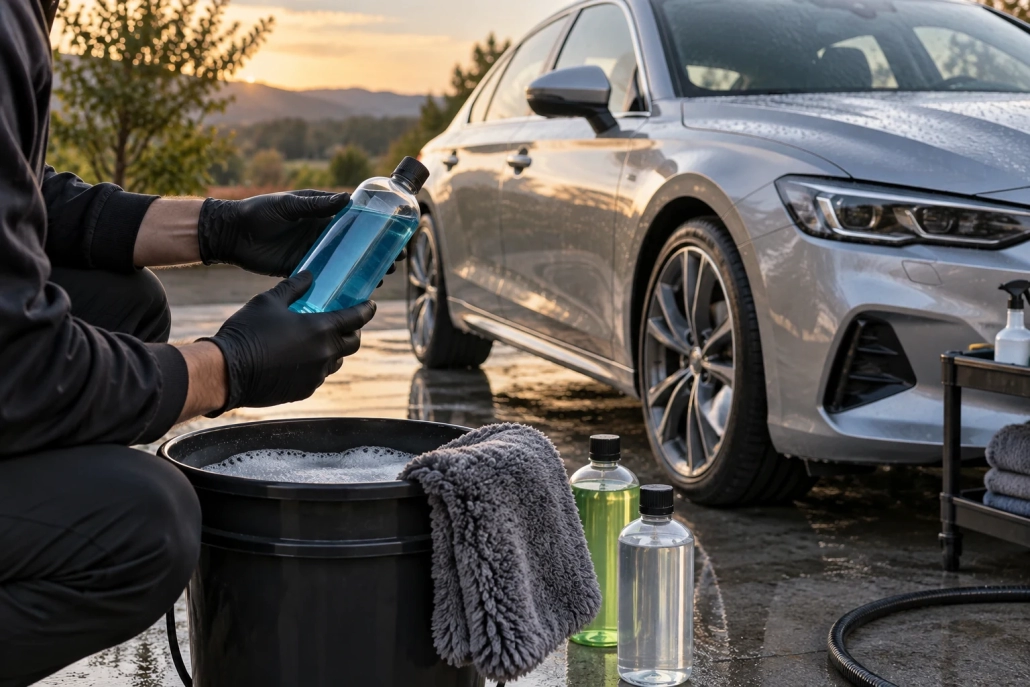
A cleaning demonstration can look convincing halfway through the process because water temporarily changes the appearance of deposits and reflections. A complete sequence shows the initial condition, the treatment and the final dry result.
Identify the area on a panel diagram and take a context photograph. Capture the dry condition before cleaning, using lighting that reveals the reported problem. Keep a nearby untreated comparison area only where doing so is appropriate and will not leave harmful contamination in place.
Do not add extra chemical steps merely to create more photographs. The sequence should describe the actual supported process, including any point where work stopped.
If a cloudy area becomes clear while wet but returns after drying, the wet photograph does not prove successful removal. Compare the final dry images and consider whether residue, a deposit or an altered surface remains. Further treatment should depend on diagnosis and compatibility, not the attractiveness of the wet stage.
When using the sequence publicly, state whether polishing, deposit removal or a maintenance product was involved. Do not attribute all improvement to a coating when substantial correction occurred first.
A useful record also notes the cleaner, dilution basis, contact conditions and towels used. That lets another operator reproduce the successful step and prevents a later maintenance team from repeating an ineffective or unnecessarily aggressive treatment.
Ask NANOLAB about your surface and intended use. For application and care, use the current instructions for the exact product.

Use clear checkpoints before application, after levelling and at handover to make coating work consistent and traceable.
Control viewing positions and lighting sufficiently for useful visual comparisons.
Preserve highlight detail when photographing coated paint so camera exposure does not hide haze, texture or remaining defects.
 Needle Carryover in Contact-Angle Testing: Protect the Next Water Drop