






A full polishing range.
From cutting and one-step correction to final finishing.
Specialist chemistry. Expert application.
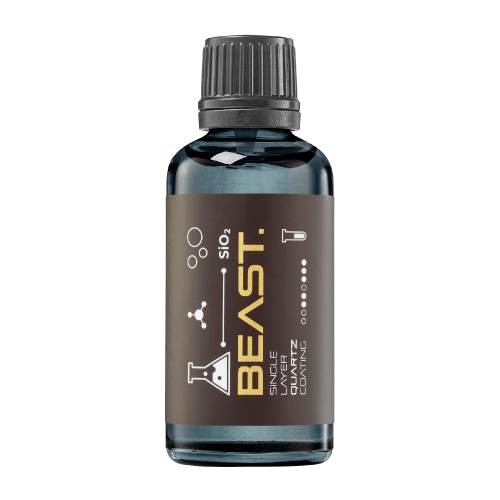
 QUARTZ99 / CERAMIC BASE COAT
The foundation of your coating system.
A layerable quartz base coat designed for mechanical protection. Pair it with a suitable top coat to create the final finish.
For application by NANOLAB certified installers only.
Four formulas. Extended working time. Find the coating for your finish.
Explore the BEAST family of ceramic coatings.
Find the coating for each exterior surface.
 PPF & VINYLGLOSSProtection for glossy films and wraps.Discover
 MATTE & SATINMATTEProtection that respects the finish.Discover
 GLASSWINDOWSExplore dedicated glass protection.Discover
 WHEEL PROTECTIONWHEELSA dedicated coating for your wheels.Discover
 TRIM PROTECTIONPLASTICProtection for plastic surfaces.Discover
Dedicated care for the surfaces inside.
 LEATHER SURFACESLEATHERDiscover NANOLAB leather protection.Discover PLASTIC SURFACESPLASTICProtection for interior plastic surfaces.Discover TEXTILE SURFACESFABRICExplore the latest fabric formulation.Discover
Spray protection, maintenance and upcoming wash products.
 MAINTENANCEBEAST 365Explore the BEAST maintenance range.Discover
Next in washing, cleaning & care.
Ceramic protection for boats and yachts.
An easy-to-apply ceramic coating with an established track record on boats and yachts around the world.
Results vary with surface preparation, exposure and maintenance.
Read 50 MARINE guides →Explore MARINEProtection for the surfaces you live with.
A look at what we’re developing.
From cutting and one-step correction to final finishing.
A wider range for professional vehicle care.
Taking shape alongside BEAST & MATRIX.
Practical guidance for your next coating project.
Explore all guides →
Document matte coated surfaces under a stable lighting geometry so changing reflections are not mistaken for gloss patches or darkening.
Updated · NANOLAB Knowledge

A matte finish changes appearance with the relationship between the lamp, surface and viewer. Moving only the camera can make a patch look darker or more reflective. A fair coating comparison preserves that geometry and also checks ordinary viewing conditions.
Record the untreated finish on a representative area, using a fixed camera position and a diffuse light arrangement. Add an oblique view if the concern is local sheen. Keep the surface clean and dry, and note existing wear or directional texture.
Do not polish the reference area to make it easier to photograph. That changes the surface being evaluated and may permanently alter the matte appearance.
After applying a product explicitly suitable for the finish, inspect the test area according to its instructions. Repeat the same photographs after the relevant waiting period. Look for uneven darkening, border visibility and local changes in sheen, not only an overall attractive image.
| Observation | Question to resolve |
|---|---|
| Patch visible only at one angle | Is the viewing geometry reproduced? |
| Border persists in several views | Has treatment changed the local appearance? |
| Patch changes after supported cleaning | Was removable residue contributing? |
Show the customer the representative test area in ordinary lighting before extending the work. A photograph approved on a small screen is weaker than an agreed physical reference when subtle sheen is important.
Do not use selective contrast or saturation changes to hide a treatment boundary. If the appearance remains uncertain, stop the wider application and obtain finish-specific guidance. The purpose of the trial is to discover incompatibility while the treated area is still limited.
Ask NANOLAB about your surface and intended use. For application and care, use the current instructions for the exact product.
Use clear checkpoints before application, after levelling and at handover to make coating work consistent and traceable.
Create a surface-based selection map rather than applying a single finish assumption everywhere.
Code coating photographs before review to reduce label-driven judgements and record which visual differences reviewers can actually reproduce.

 Blind Review of Coating Photographs: Separate the Label from the Result