






A full polishing range.
From cutting and one-step correction to final finishing.
Specialist chemistry. Expert application.
 QUARTZ99 / CERAMIC BASE COAT
The foundation of your coating system.
A layerable quartz base coat designed for mechanical protection. Pair it with a suitable top coat to create the final finish.
For application by NANOLAB certified installers only.
Four formulas. Extended working time. Find the coating for your finish.
Explore the BEAST family of ceramic coatings.
Find the coating for each exterior surface.
 PPF & VINYLGLOSSProtection for glossy films and wraps.Discover
 MATTE & SATINMATTEProtection that respects the finish.Discover
 GLASSWINDOWSExplore dedicated glass protection.Discover
 WHEEL PROTECTIONWHEELSA dedicated coating for your wheels.Discover
 TRIM PROTECTIONPLASTICProtection for plastic surfaces.Discover
Dedicated care for the surfaces inside.
 LEATHER SURFACESLEATHERDiscover NANOLAB leather protection.Discover PLASTIC SURFACESPLASTICProtection for interior plastic surfaces.Discover TEXTILE SURFACESFABRICExplore the latest fabric formulation.Discover
Spray protection, maintenance and upcoming wash products.
 MAINTENANCEBEAST 365Explore the BEAST maintenance range.Discover
Next in washing, cleaning & care.
Ceramic protection for boats and yachts.
An easy-to-apply ceramic coating with an established track record on boats and yachts around the world.
Results vary with surface preparation, exposure and maintenance.
Read 50 MARINE guides →Explore MARINEProtection for the surfaces you live with.
A look at what we’re developing.
From cutting and one-step correction to final finishing.
A wider range for professional vehicle care.
Taking shape alongside BEAST & MATRIX.
Practical guidance for your next coating project.
Explore all guides →
Plan a one-way shower glass coating route that separates incoming, prepared, treated and released panels without losing traceability.
Updated · NANOLAB Knowledge
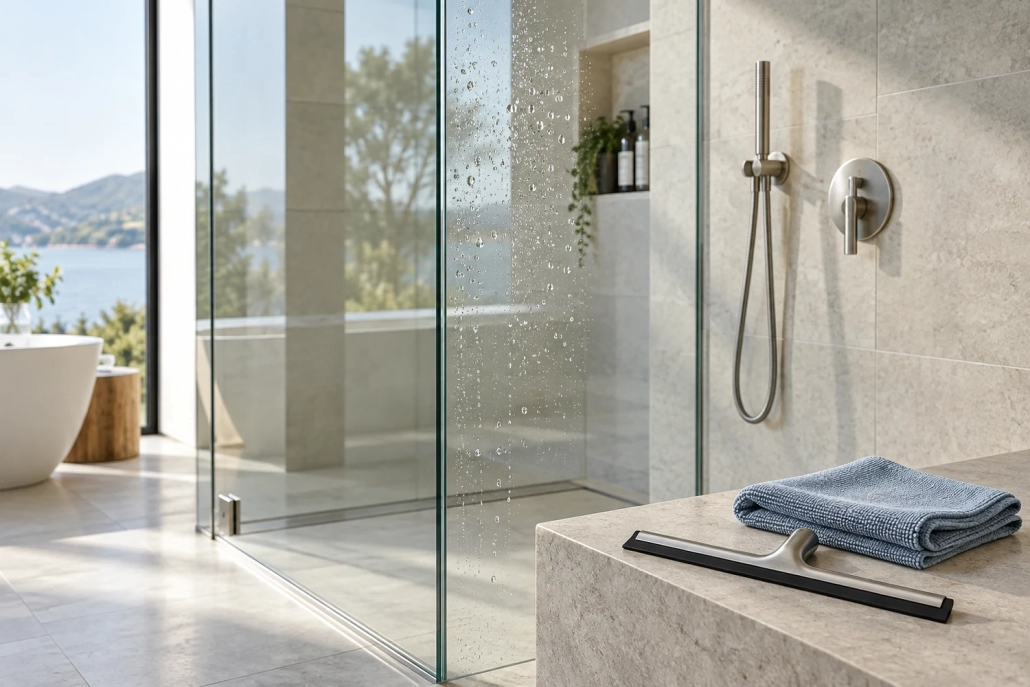
A shower glass coating station works best when a panel’s status is obvious. If untreated, freshly coated and released panes share the same rack without identification, operators can repeat work, miss a face or pack glass before the approved handling point.
Use a layout that moves panels through receiving, preparation, coating, controlled holding, inspection and packing. The exact arrangement depends on safe glass handling and available space. The essential feature is that each transfer changes a recorded status and has a defined destination.
| Zone | Release condition |
|---|---|
| Incoming | Identity and glass condition checked |
| Prepared | Approved cleaning completed and surface ready |
| Treated | Correct face and process recorded |
| Holding | Required product-specific handling conditions met |
| Released | Inspection and packing requirements accepted |
Create a clearly identified review location for uncertain panels. A rejected pane should not return unmarked to the incoming rack, where another operator may assume it is untreated. Record the defect, decision and approved rework process before it rejoins production.
Use a small pilot containing different sizes and orientations. Watch how operators identify the intended face, carry the pane, locate the next rack and retrieve the job record. A route that works for ten identical panels may fail when one door has cut-outs and the next fixed panel has a different treatment scope.
Record travel and waiting separately from application time. Reducing walking can improve throughput without changing the coating chemistry or rushing a required cure stage.
Keep packaging debris, dirty handling materials and wet incoming glass from crossing into the prepared area. Define how shared tools and contact surfaces are checked. Do not assume that a clean-looking rack is compatible with freshly treated glass.
Before routine production, walk one panel through the entire route and ask whether its identity, treated face and release status remain clear at every stop. If any answer depends on an operator remembering what happened, improve the record or physical status system.
Discuss a shower-glass coating project. For application and care, use the current instructions for the exact product.
A short inspection helps determine whether shower glass needs ordinary cleaning, deposit removal or specialist restoration before coating.
A narrow gap beneath a shower door can collect water and cleaner where a cloth is difficult to manoeuvre.
Keep the treated face of shower glass identifiable through coating, handling, packing and installation using a simple traceable system.

 A Coated-Side Identification System for Shower Glass Factories