






A full polishing range.
From cutting and one-step correction to final finishing.
Specialist chemistry. Expert application.
 QUARTZ99 / CERAMIC BASE COAT
The foundation of your coating system.
A layerable quartz base coat designed for mechanical protection. Pair it with a suitable top coat to create the final finish.
For application by NANOLAB certified installers only.
Four formulas. Extended working time. Find the coating for your finish.
Explore the BEAST family of ceramic coatings.
Find the coating for each exterior surface.
 PPF & VINYLGLOSSProtection for glossy films and wraps.Discover
 MATTE & SATINMATTEProtection that respects the finish.Discover
 GLASSWINDOWSExplore dedicated glass protection.Discover
 WHEEL PROTECTIONWHEELSA dedicated coating for your wheels.Discover
 TRIM PROTECTIONPLASTICProtection for plastic surfaces.Discover
Dedicated care for the surfaces inside.
 LEATHER SURFACESLEATHERDiscover NANOLAB leather protection.Discover PLASTIC SURFACESPLASTICProtection for interior plastic surfaces.Discover TEXTILE SURFACESFABRICExplore the latest fabric formulation.Discover
Spray protection, maintenance and upcoming wash products.
 MAINTENANCEBEAST 365Explore the BEAST maintenance range.Discover
Next in washing, cleaning & care.
Ceramic protection for boats and yachts.
An easy-to-apply ceramic coating with an established track record on boats and yachts around the world.
Results vary with surface preparation, exposure and maintenance.
Read 50 MARINE guides →Explore MARINEProtection for the surfaces you live with.
A look at what we’re developing.
From cutting and one-step correction to final finishing.
A wider range for professional vehicle care.
Taking shape alongside BEAST & MATRIX.
Practical guidance for your next coating project.
Explore all guides →
Create a matte-finish reference board that reveals darkening, sheen changes and application boundaries before coating a full surface.
Updated · NANOLAB Knowledge

Matte coating evaluation is an appearance-preservation task. A product can wipe easily and still create an unwanted sheen change. A multi-angle reference board makes that risk easier to see before an entire vehicle or component is treated.
Choose representative matte paint, film or another specified finish. These materials are not interchangeable. Confirm that the proposed cleaner and coating are suitable for the exact surface before making the board. Keep an untreated prepared reference beside the coated area.
| Comparison | Look for |
|---|---|
| Coated versus prepared reference | Darkening or a change in sheen |
| One coated zone versus another | Uneven application appearance |
| Boundary viewed obliquely | A visible transition line |
View the board under broad light, directional light and a representative real-use condition. Keep viewing positions documented so a second person can repeat the check. Rotate the viewing angle deliberately without assuming that a single favourable angle is sufficient.
Agree whether a slight uniform darkening is acceptable and who makes that decision. For a vehicle with existing matte film, the owner may require the treated section to remain visually consistent with untreated panels. That is a different requirement from approving a new finish across an entire component.
Use photographs as supporting records, but retain the physical board where practical. Camera exposure and display settings can hide subtle changes. Do not describe a photographed match as proof that the finishes are indistinguishable in person.
If the board shows an unacceptable change, stop and review product selection or application with the supplier. Do not assume conventional polishing will restore a matte finish; abrasion may itself change the appearance.
Once accepted, record the complete process and product identity. A later formula, film or preparation change can require another board. The reference is strongest when it represents the actual materials and method that the installer will use.
Ask NANOLAB about your surface and intended use. For application and care, use the current instructions for the exact product.
Use clear checkpoints before application, after levelling and at handover to make coating work consistent and traceable.
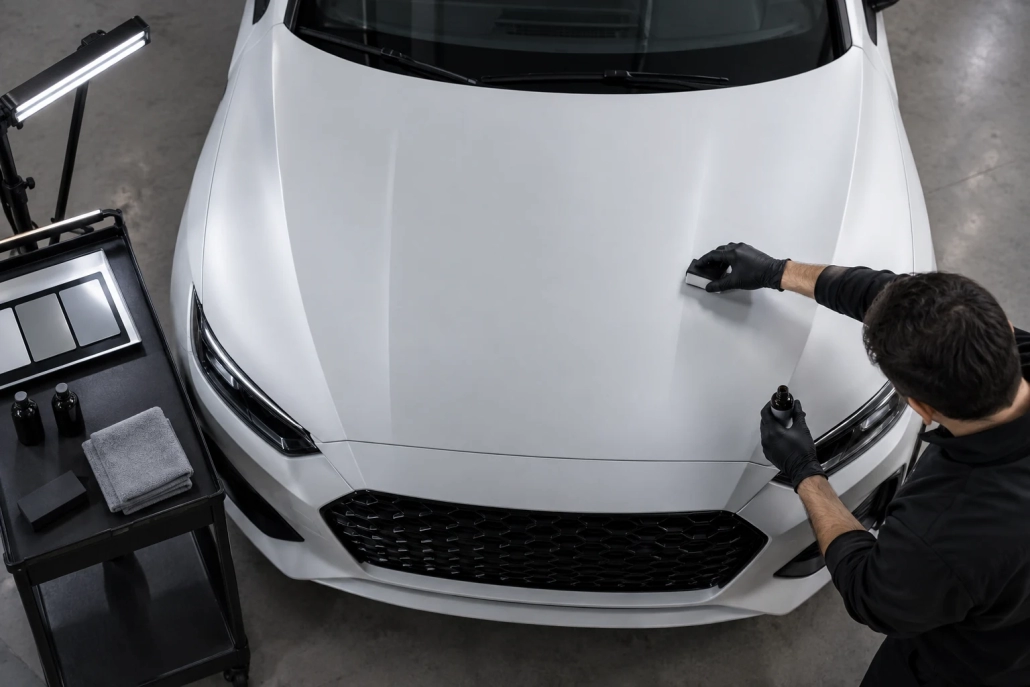
Choose a coating that preserves matte or satin appearance and avoid gloss-enhancing products or correction methods that change the sheen.
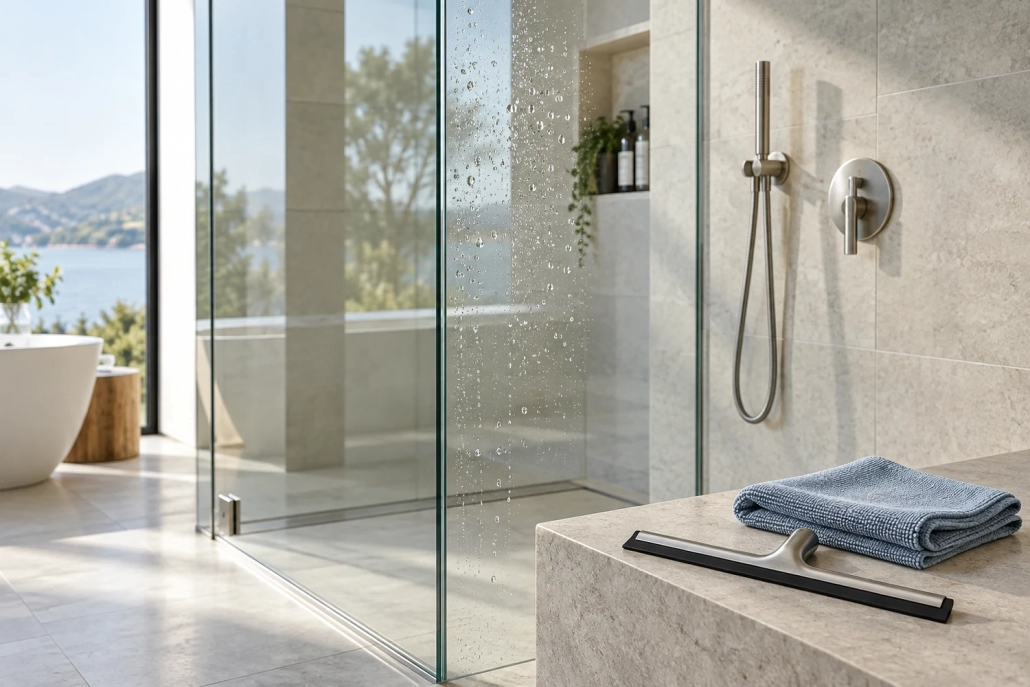
Locate marks on glass by inspecting both faces in transmission and reflection before attributing a defect to the nano coating.
 Glass Inspection from Both Faces: A Four-View Defect Location Method