






A full polishing range.
From cutting and one-step correction to final finishing.
Specialist chemistry. Expert application.
 QUARTZ99 / CERAMIC BASE COAT
The foundation of your coating system.
A layerable quartz base coat designed for mechanical protection. Pair it with a suitable top coat to create the final finish.
For application by NANOLAB certified installers only.
Four formulas. Extended working time. Find the coating for your finish.
Explore the BEAST family of ceramic coatings.
Find the coating for each exterior surface.
 PPF & VINYLGLOSSProtection for glossy films and wraps.Discover
 MATTE & SATINMATTEProtection that respects the finish.Discover
 GLASSWINDOWSExplore dedicated glass protection.Discover
 WHEEL PROTECTIONWHEELSA dedicated coating for your wheels.Discover
 TRIM PROTECTIONPLASTICProtection for plastic surfaces.Discover
Dedicated care for the surfaces inside.
 LEATHER SURFACESLEATHERDiscover NANOLAB leather protection.Discover PLASTIC SURFACESPLASTICProtection for interior plastic surfaces.Discover TEXTILE SURFACESFABRICExplore the latest fabric formulation.Discover
Spray protection, maintenance and upcoming wash products.
 MAINTENANCEBEAST 365Explore the BEAST maintenance range.Discover
Next in washing, cleaning & care.
Ceramic protection for boats and yachts.
An easy-to-apply ceramic coating with an established track record on boats and yachts around the world.
Results vary with surface preparation, exposure and maintenance.
Read 50 MARINE guides →Explore MARINEProtection for the surfaces you live with.
A look at what we’re developing.
From cutting and one-step correction to final finishing.
A wider range for professional vehicle care.
Taking shape alongside BEAST & MATRIX.
Practical guidance for your next coating project.
Explore all guides →
Define the smallest coating performance improvement that matters in practice before interpreting small measured differences.
Updated · NANOLAB Knowledge

A coating can produce a measurable difference that is too small to matter to a customer. Before comparing samples, define the minimum improvement that would change your purchasing, training or service decision. This keeps the evaluation connected to real work.
For levelling effort, the relevant improvement might be enough saved labour to remove a scheduling bottleneck. For appearance, it may be a consistent visible difference under agreed inspection conditions. For maintenance, it may be fewer repeat cleaning steps while achieving the same accepted finish. These thresholds should come from the use case, not a supplier’s strongest result.
Suppose a workshop estimates that a new process needs to save at least eight minutes per vehicle to justify retraining and changing stock. A trial finds a two-minute average saving. Even if that difference is measured consistently, it does not meet the workshop’s operational goal. Conversely, a twelve-minute saving with highly variable finish quality may also be unsuitable.
| Result | Interpretation |
|---|---|
| Difference smaller than useful threshold | Limited practical benefit for this decision |
| Potentially useful difference, uncertain estimate | Repeat a focused trial |
| Useful improvement with acceptable quality | Consider a controlled rollout |
If repeated readings on an unchanged reference vary more than the improvement you seek, refine the measurement process first. Extra decimal places do not solve inconsistent positioning, changing lighting or differing surface preparation. Record variation over the time span relevant to the trial, not only consecutive readings taken within a minute.
A trial that does not detect a difference has not automatically proved equivalence. It may simply be too small or noisy. Define a practical equivalence margin in advance and obtain appropriate statistical analysis if an equivalence claim matters commercially.
The final recommendation should connect performance, uncertainty and operational benefit. A useful coating comparison answers whether the observed change is large enough, dependable enough and relevant enough to justify action.
The sources below support the stated concepts or describe their own methods. The worked scenarios are editorial examples, not NANOLAB test results.
Ask NANOLAB about your surface and intended use. For application and care, use the current instructions for the exact product.
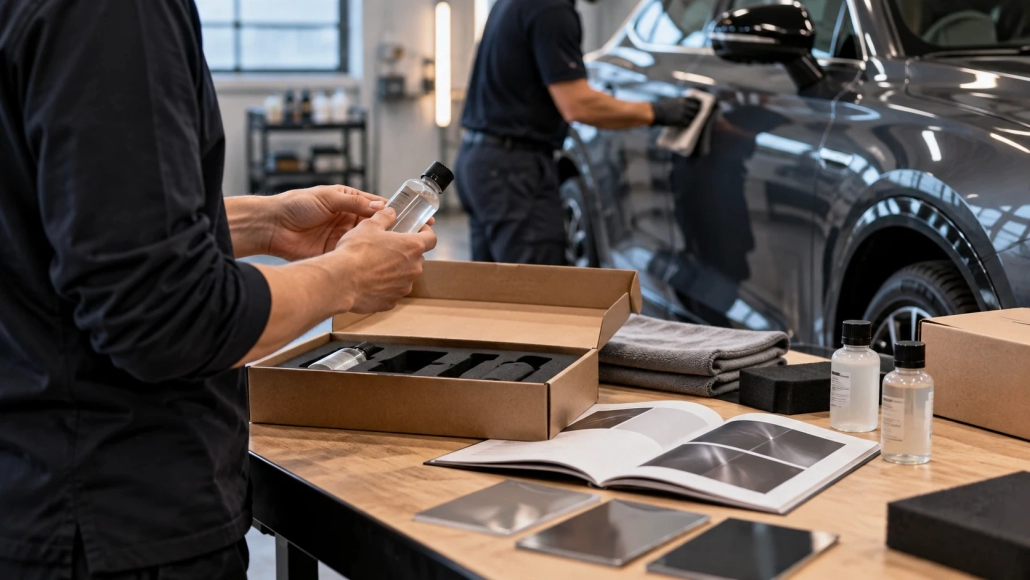
Design a coating field trial with recorded vehicles, use patterns, care routines and inspection points that produce interpretable feedback.
Separate protection requirements from appearance restoration decisions in the buying process.
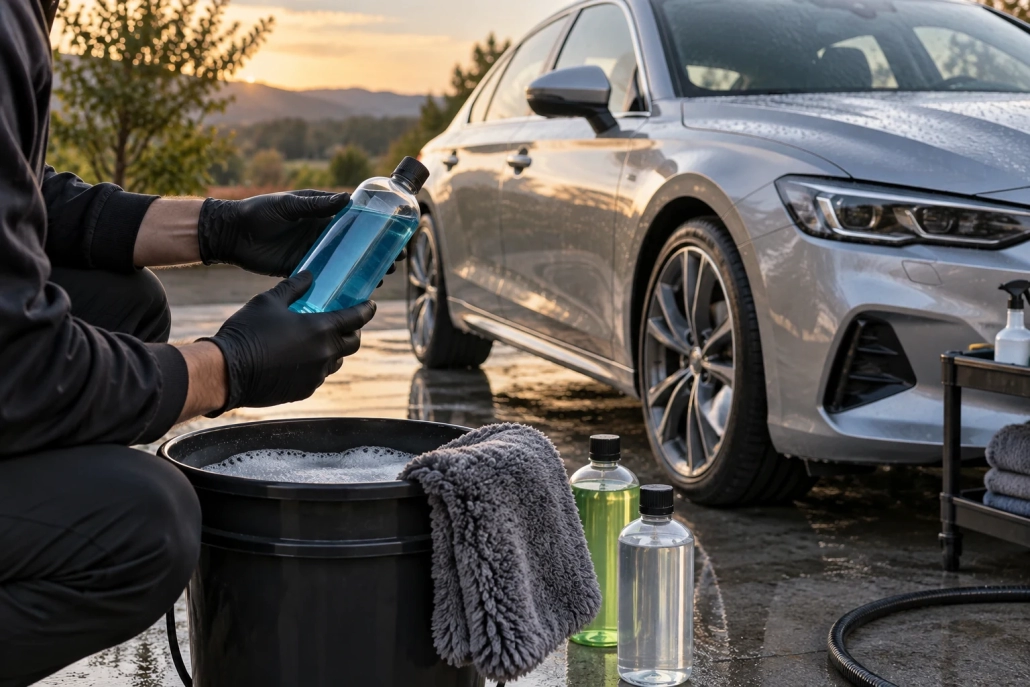
Compare two coatings and two shampoos with a four-combination trial to reveal whether maintenance changes the product ranking.

 Testing Coating and Shampoo Together: A Four-Combination Trial