






A full polishing range.
From cutting and one-step correction to final finishing.
Specialist chemistry. Expert application.
 QUARTZ99 / CERAMIC BASE COAT
The foundation of your coating system.
A layerable quartz base coat designed for mechanical protection. Pair it with a suitable top coat to create the final finish.
For application by NANOLAB certified installers only.
Four formulas. Extended working time. Find the coating for your finish.
Explore the BEAST family of ceramic coatings.
Find the coating for each exterior surface.
 PPF & VINYLGLOSSProtection for glossy films and wraps.Discover
 MATTE & SATINMATTEProtection that respects the finish.Discover
 GLASSWINDOWSExplore dedicated glass protection.Discover
 WHEEL PROTECTIONWHEELSA dedicated coating for your wheels.Discover
 TRIM PROTECTIONPLASTICProtection for plastic surfaces.Discover
Dedicated care for the surfaces inside.
 LEATHER SURFACESLEATHERDiscover NANOLAB leather protection.Discover PLASTIC SURFACESPLASTICProtection for interior plastic surfaces.Discover TEXTILE SURFACESFABRICExplore the latest fabric formulation.Discover
Spray protection, maintenance and upcoming wash products.
 MAINTENANCEBEAST 365Explore the BEAST maintenance range.Discover
Next in washing, cleaning & care.
Ceramic protection for boats and yachts.
An easy-to-apply ceramic coating with an established track record on boats and yachts around the world.
Results vary with surface preparation, exposure and maintenance.
Read 50 MARINE guides →Explore MARINEProtection for the surfaces you live with.
A look at what we’re developing.
From cutting and one-step correction to final finishing.
A wider range for professional vehicle care.
Taking shape alongside BEAST & MATRIX.
Practical guidance for your next coating project.
Explore all guides →
Organofunctional silanes are a family of materials with different functionalities and intended roles. A request for silane alone is therefore incomplete when a manufacturer is discussing an ingredient or a development approach.
Updated · NANOLAB Knowledge
Evonik describes organofunctional silanes as materials that can connect organic and inorganic systems in suitable applications. For a coating buyer, the practical lesson is specificity: the technical team needs the exact material and intended function, while the buyer needs evidence for the finished product rather than a generic ingredient promise.
Illustrative example: a buyer asks for more silane without explaining the performance concern. That instruction does not identify which chemistry, concentration or system change would be appropriate. A clearer brief describes the observed problem and the intended outcome, allowing the manufacturer to assess suitable options.
Do not add raw silanes to a supplied coating or infer compatibility from the family name. This guide does not recommend an ingredient or disclose NANOLAB's formula. Formulation changes require qualified development and validation of the complete product system.
Technical references: Evonik: Dynasylan silanes. These sources describe their stated methods or products; they do not certify NANOLAB products or establish compatibility with an unlisted surface.
Ask NANOLAB about the exact product and intended use. Use the current product documentation for formulation-specific instructions.
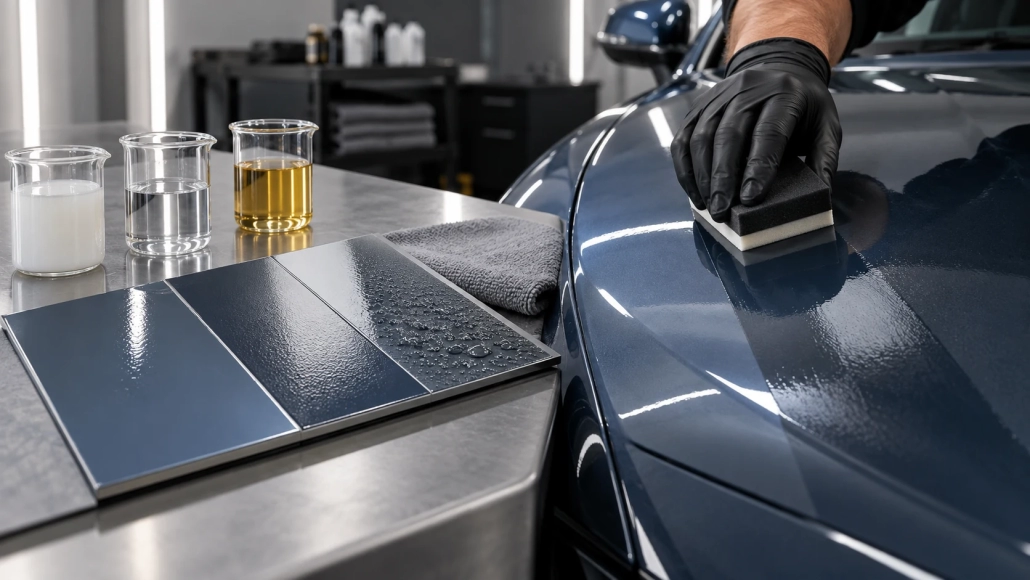
Read silica, silane and siloxane claims without confusing ingredient names or percentages with the measured performance of a finished nano ceramic coating.
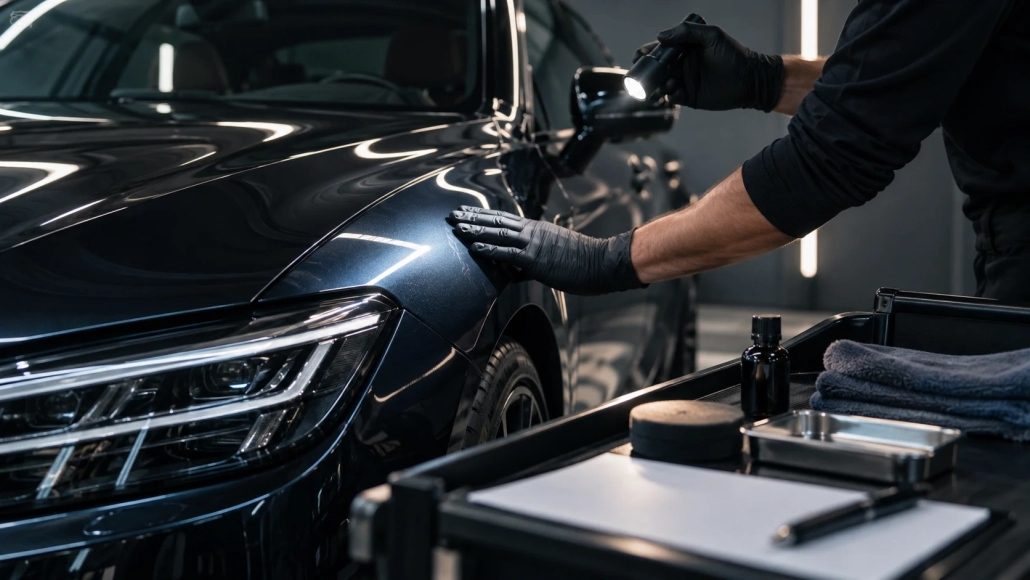
Compare gloss readings with the same measurement geometry, surface preparation and locations rather than treating every gloss number as equivalent.
Film formation and attachment to the substrate are different questions. A coating that appears hard or dry has not, on that observation alone, demonstrated adequate adhesion to the underlying surface.