






A full polishing range.
From cutting and one-step correction to final finishing.
Specialist chemistry. Expert application.
 QUARTZ99 / CERAMIC BASE COAT
The foundation of your coating system.
A layerable quartz base coat designed for mechanical protection. Pair it with a suitable top coat to create the final finish.
For application by NANOLAB certified installers only.
Four formulas. Extended working time. Find the coating for your finish.
Explore the BEAST family of ceramic coatings.
Find the coating for each exterior surface.
 PPF & VINYLGLOSSProtection for glossy films and wraps.Discover
 MATTE & SATINMATTEProtection that respects the finish.Discover
 GLASSWINDOWSExplore dedicated glass protection.Discover
 WHEEL PROTECTIONWHEELSA dedicated coating for your wheels.Discover
 TRIM PROTECTIONPLASTICProtection for plastic surfaces.Discover
Dedicated care for the surfaces inside.
 LEATHER SURFACESLEATHERDiscover NANOLAB leather protection.Discover PLASTIC SURFACESPLASTICProtection for interior plastic surfaces.Discover TEXTILE SURFACESFABRICExplore the latest fabric formulation.Discover
Spray protection, maintenance and upcoming wash products.
 MAINTENANCEBEAST 365Explore the BEAST maintenance range.Discover
Next in washing, cleaning & care.
Ceramic protection for boats and yachts.
An easy-to-apply ceramic coating with an established track record on boats and yachts around the world.
Results vary with surface preparation, exposure and maintenance.
Read 50 MARINE guides →Explore MARINEProtection for the surfaces you live with.
A look at what we’re developing.
From cutting and one-step correction to final finishing.
A wider range for professional vehicle care.
Taking shape alongside BEAST & MATRIX.
Practical guidance for your next coating project.
Explore all guides →
Comparing many products or outcomes increases the opportunity to find an apparently favourable difference by chance. Plan the important comparisons and the analysis before choosing the result that looks best in a large table.
Updated · NANOLAB Knowledge
NIST discusses procedures for multiple comparisons and the importance of their design. A coating buyer should distinguish a planned primary comparison from exploratory findings. Exploratory observations can guide further work, but they should not automatically become definitive superiority claims simply because one number stands out.
Illustrative example: a trial records twenty appearance and handling measures, and one favours a sample while the rest show no clear pattern. Advertising only that isolated result can exaggerate the evidence. The review should consider the planned question and the full analysis context.
Do not apply an adjustment formula mechanically without checking the study design and assumptions. This guide does not select a statistical test for an unidentified dataset. It helps prevent a broad coating claim from being built on a result chosen only after examining many possibilities.
Technical references: NIST: multiple comparisons. These sources describe their stated methods or products; they do not certify NANOLAB products or establish compatibility with an unlisted surface.
Ask NANOLAB about the exact product and intended use. Use the current product documentation for formulation-specific instructions.

Use the collection appointment to explain observations, care requirements and next contact.
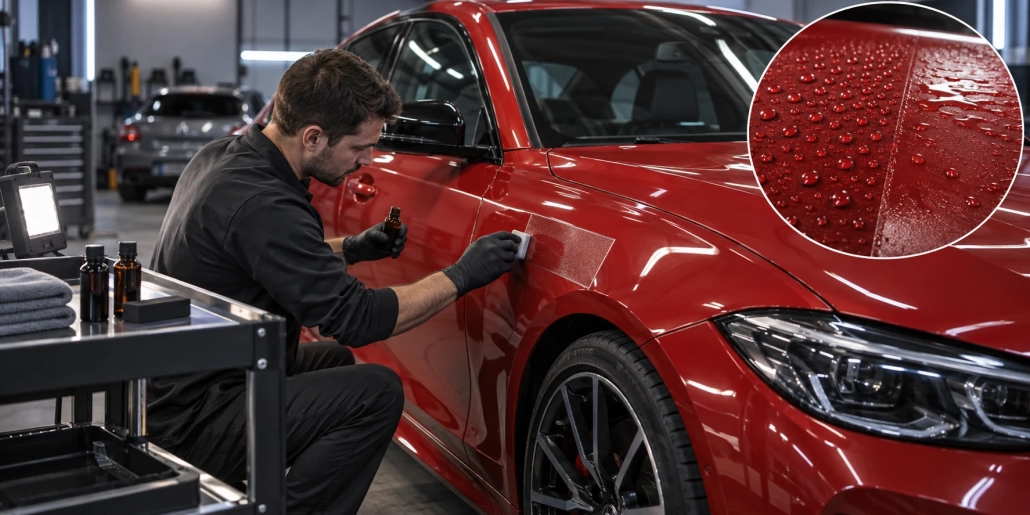
Plan repeat samples and a clear trial objective before drawing broad conclusions from ceramic coating tests.
An elemental silicon result is not automatically a measured silica percentage. The chemical form and reporting basis matter, so preserve the laboratory's actual quantity when summarizing coating-analysis data.