






A full polishing range.
From cutting and one-step correction to final finishing.
Specialist chemistry. Expert application.
 QUARTZ99 / CERAMIC BASE COAT
The foundation of your coating system.
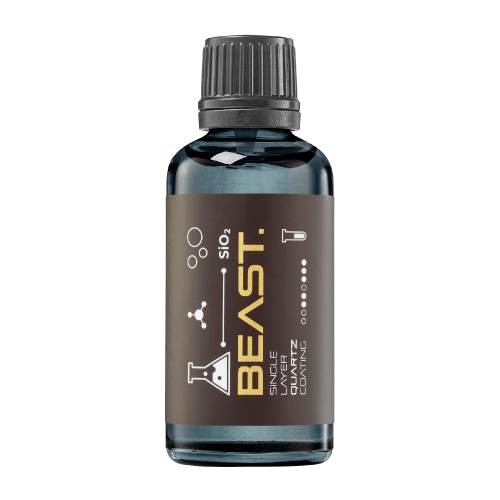
A layerable quartz base coat designed for mechanical protection. Pair it with a suitable top coat to create the final finish.
For application by NANOLAB certified installers only.
Four formulas. Extended working time. Find the coating for your finish.
Explore the BEAST family of ceramic coatings.
Find the coating for each exterior surface.
 PPF & VINYLGLOSSProtection for glossy films and wraps.Discover
 MATTE & SATINMATTEProtection that respects the finish.Discover
 GLASSWINDOWSExplore dedicated glass protection.Discover
 WHEEL PROTECTIONWHEELSA dedicated coating for your wheels.Discover
 TRIM PROTECTIONPLASTICProtection for plastic surfaces.Discover
Dedicated care for the surfaces inside.
 LEATHER SURFACESLEATHERDiscover NANOLAB leather protection.Discover PLASTIC SURFACESPLASTICProtection for interior plastic surfaces.Discover TEXTILE SURFACESFABRICExplore the latest fabric formulation.Discover
Spray protection, maintenance and upcoming wash products.
 MAINTENANCEBEAST 365Explore the BEAST maintenance range.Discover
Next in washing, cleaning & care.
Ceramic protection for boats and yachts.
An easy-to-apply ceramic coating with an established track record on boats and yachts around the world.
Results vary with surface preparation, exposure and maintenance.
Read 50 MARINE guides →Explore MARINEProtection for the surfaces you live with.
A look at what we’re developing.
From cutting and one-step correction to final finishing.
A wider range for professional vehicle care.
Taking shape alongside BEAST & MATRIX.
Practical guidance for your next coating project.
Explore all guides →
A trial does not always produce a defensible winner. If observed differences are too small or inconsistent to support the intended decision, report a tie or an unresolved comparison rather than creating a ranking from extra decimal places.
Updated · NANOLAB Knowledge
Establish what would count as a meaningful difference before testing. Consider the consistency of the observations and the practical consequence for the customer. Two samples may be indistinguishable for the measured outcome while differing in documentation, approved use or supply format. Keep those separate considerations visible instead of pretending the test settled every question.
Illustrative example: two products receive nearly identical appearance scores from several reviewers, with preferences changing between samples. A forced first-and-second ranking would exaggerate the evidence. The buyer can acknowledge the tie and compare other verified requirements without claiming a superior finish.
A tie does not prove that the products are chemically identical or equivalent in every use. It means the particular assessment did not justify separating them. Avoid publishing a best-product claim that the method and observations cannot support.
Ask NANOLAB about the exact product and intended use. Use the current product documentation for formulation-specific instructions.
A control surface can help reveal how cleaning and exposure change the panel without the tested coating. Design it with the same preparation and inspection discipline.
Teach customers to use product identity and surface instructions rather than packaging cues.
A useful coating enquiry describes the exposed finish and the intended use, not just the object. Car, boat or kitchen tells the supplier where the surface is located, but it does not identify what the product will contact.