






A full polishing range.
From cutting and one-step correction to final finishing.
Specialist chemistry. Expert application.
 QUARTZ99 / CERAMIC BASE COAT
The foundation of your coating system.
A layerable quartz base coat designed for mechanical protection. Pair it with a suitable top coat to create the final finish.
For application by NANOLAB certified installers only.
Four formulas. Extended working time. Find the coating for your finish.
Explore the BEAST family of ceramic coatings.
Find the coating for each exterior surface.
 PPF & VINYLGLOSSProtection for glossy films and wraps.Discover
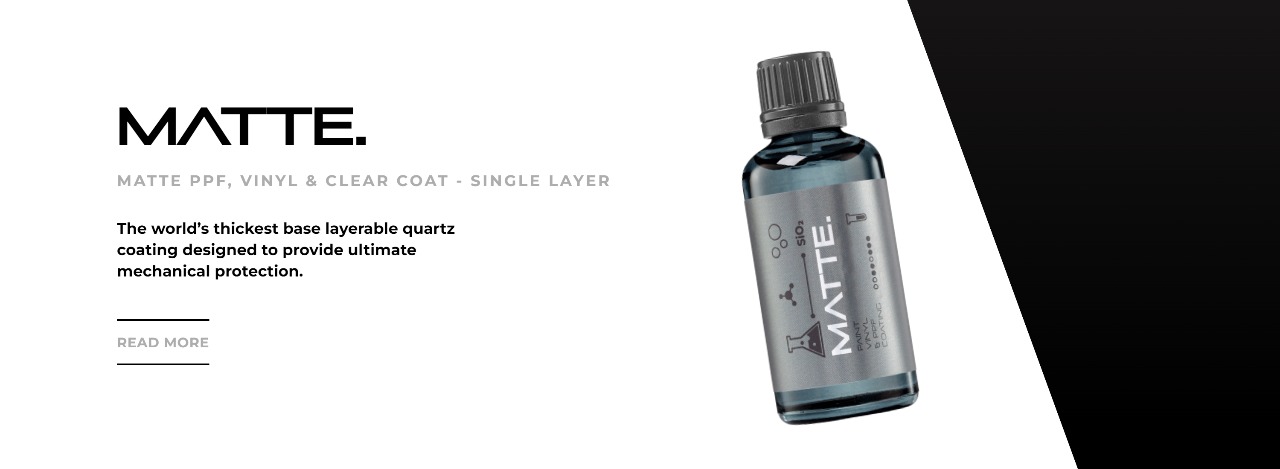
 MATTE & SATINMATTEProtection that respects the finish.Discover
 GLASSWINDOWSExplore dedicated glass protection.Discover
 WHEEL PROTECTIONWHEELSA dedicated coating for your wheels.Discover
 TRIM PROTECTIONPLASTICProtection for plastic surfaces.Discover
Dedicated care for the surfaces inside.
 LEATHER SURFACESLEATHERDiscover NANOLAB leather protection.Discover PLASTIC SURFACESPLASTICProtection for interior plastic surfaces.Discover TEXTILE SURFACESFABRICExplore the latest fabric formulation.Discover
Spray protection, maintenance and upcoming wash products.
 MAINTENANCEBEAST 365Explore the BEAST maintenance range.Discover
Next in washing, cleaning & care.
Ceramic protection for boats and yachts.
An easy-to-apply ceramic coating with an established track record on boats and yachts around the world.
Results vary with surface preparation, exposure and maintenance.
Read 50 MARINE guides →Explore MARINEProtection for the surfaces you live with.
A look at what we’re developing.
From cutting and one-step correction to final finishing.
A wider range for professional vehicle care.
Taking shape alongside BEAST & MATRIX.
Practical guidance for your next coating project.
Explore all guides →
A wet surface and a dry surface do not present the same starting condition to a cleaner. Follow the product's directions, and keep that condition consistent when comparing cleaning results rather than treating pre-wetting as an unrecorded detail.
Updated · NANOLAB Knowledge
Water already on the panel can affect how the applied liquid spreads, drains and mixes at the surface. The practical effect depends on the product and application method. It is therefore unreliable to compare two cleaners when one is applied to a freshly rinsed panel and the other to a dry panel without acknowledging the difference.
Illustrative example: a workshop trials cleaner A immediately after rinsing and cleaner B after the panel has dried. A difference in runoff or cleaning result may reflect the starting condition as well as the product. Repeating an appropriate comparison with clearly documented methods gives a more useful result.
Do not deliberately depart from a product's instructions to force a symmetrical test. Where the approved processes differ, explain that limitation. Avoid estimating the on-panel concentration from bottle dilution alone when the surface water and delivery method have not been measured.
Ask NANOLAB about the exact product and intended use. Use the current product documentation for formulation-specific instructions.
Cleaner dwell instructions belong to the exact product and conditions. A test area still needs active supervision.
A marked container helps establish the intended mixture. Estimating water volume after foam forms can make the dilution less reliable.
Water quality at the treatment outlet does not by itself describe water after storage and delivery. If a detailing operation uses a tank, include that stage in the sampling plan when investigating inconsistent rinse results.