






A full polishing range.
From cutting and one-step correction to final finishing.
Specialist chemistry. Expert application.
 QUARTZ99 / CERAMIC BASE COAT
The foundation of your coating system.
A layerable quartz base coat designed for mechanical protection. Pair it with a suitable top coat to create the final finish.
For application by NANOLAB certified installers only.
Four formulas. Extended working time. Find the coating for your finish.
Explore the BEAST family of ceramic coatings.
Find the coating for each exterior surface.
 PPF & VINYLGLOSSProtection for glossy films and wraps.Discover
 MATTE & SATINMATTEProtection that respects the finish.Discover
 GLASSWINDOWSExplore dedicated glass protection.Discover
 WHEEL PROTECTIONWHEELSA dedicated coating for your wheels.Discover
 TRIM PROTECTIONPLASTICProtection for plastic surfaces.Discover
Dedicated care for the surfaces inside.
 LEATHER SURFACESLEATHERDiscover NANOLAB leather protection.Discover PLASTIC SURFACESPLASTICProtection for interior plastic surfaces.Discover TEXTILE SURFACESFABRICExplore the latest fabric formulation.Discover
Spray protection, maintenance and upcoming wash products.
 MAINTENANCEBEAST 365Explore the BEAST maintenance range.Discover
Next in washing, cleaning & care.
Ceramic protection for boats and yachts.
An easy-to-apply ceramic coating with an established track record on boats and yachts around the world.
Results vary with surface preparation, exposure and maintenance.
Read 50 MARINE guides →Explore MARINEProtection for the surfaces you live with.
A look at what we’re developing.
From cutting and one-step correction to final finishing.
A wider range for professional vehicle care.
Taking shape alongside BEAST & MATRIX.
Practical guidance for your next coating project.
Explore all guides →
Understand what coating viscosity reveals about application, which test conditions matter, and why liquid thickness does not prove film protection.
Updated · NANOLAB Knowledge
Viscosity describes resistance to flow. It helps explain how a liquid loads an applicator, spreads and levels, but it does not tell you how much cured coating remains after application. A syrup-like sample is not automatically more protective than a freely flowing one.
The liquid contains ingredients with different roles. Some remain in the film; others help delivery and then evaporate. Application also removes material into the levelling towel. Two products can therefore feel different in the bottle yet leave similar amounts on a panel, or feel similar and leave different films.
For a wipe-on coating, the useful application question is whether the specified amount can be distributed uniformly and levelled within the documented window. Excess drag, uneven wetting and a difficult wipe-off deserve investigation. They are not measurements of hardness or durability.
A viscosity value needs a method, temperature and units. Depending on the instrument, spindle and speed or the selected flow cup may also matter. A result in seconds from one cup cannot be compared directly with a value in centipoise from a rotational instrument. Some liquids also change their apparent viscosity with the applied shear.
For an incoming sample comparison, retain the supplier's test conditions and record the sample temperature. Let sealed samples reach the agreed test temperature using the supplier's handling instructions. Do not heat an unknown coating to make it flow more easily.
Consider an illustrative trial where sample A spreads in 40 seconds and sample B in 55 seconds over the same test area. That is an application-time observation, not a viscosity measurement. Record levelling effort, visible residue and material consumption separately. Ask the supplier to investigate an unexpected change against its own specification.
Choose a coating using compatible surfaces, documented application requirements and relevant performance evidence. Viscosity is one useful process variable within that decision; it cannot replace a cured-film test.
Technical references: BYK-Gardner: Guide to Viscosity Measurement.
For product-specific application instructions, consult NANOLAB technical documentation or ask about your surface and intended use.
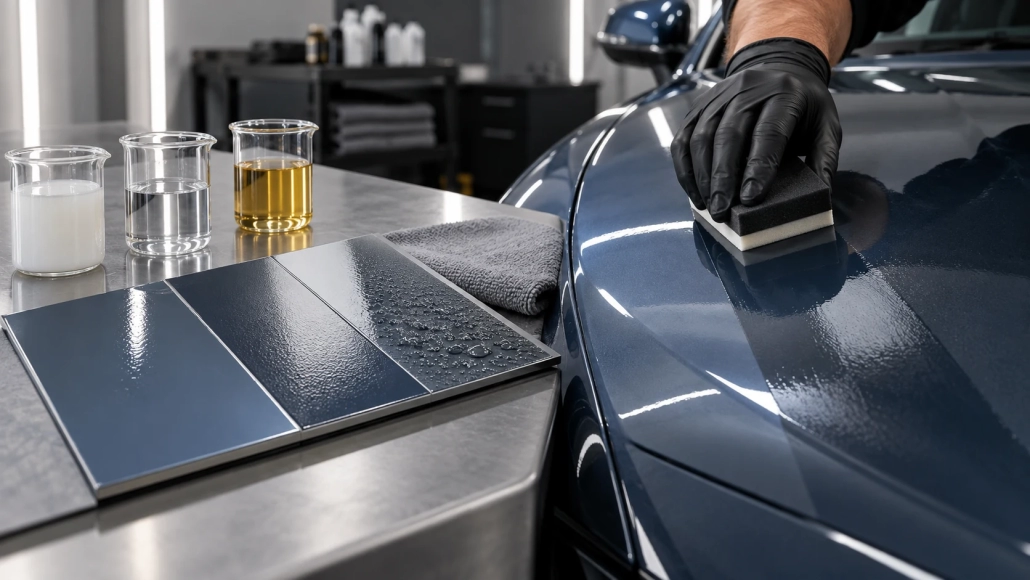
Read coating solids figures alongside application method, finish compatibility and documented performance rather than using one number alone.
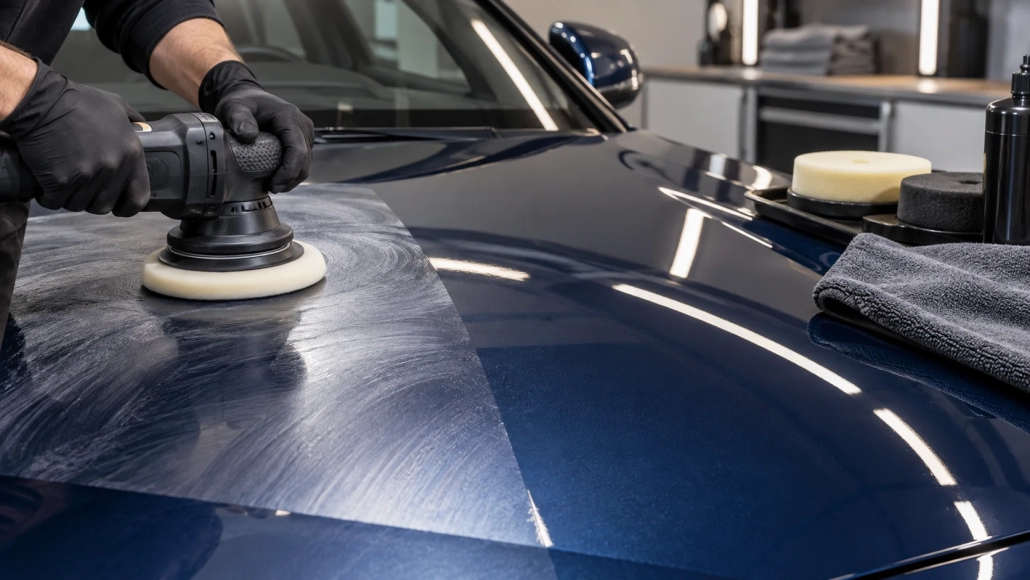
Understand heavy cut compound, fine cut and finishing polish, then choose a paint correction process that fits your paint, machine and intended result.
Understand solutions, dispersions and emulsions, check liquid appearance against specifications, and investigate changed coating samples.