






A full polishing range.
From cutting and one-step correction to final finishing.
Specialist chemistry. Expert application.
 QUARTZ99 / CERAMIC BASE COAT
The foundation of your coating system.
A layerable quartz base coat designed for mechanical protection. Pair it with a suitable top coat to create the final finish.
For application by NANOLAB certified installers only.
Four formulas. Extended working time. Find the coating for your finish.
Explore the BEAST family of ceramic coatings.
Find the coating for each exterior surface.
 PPF & VINYLGLOSSProtection for glossy films and wraps.Discover
 MATTE & SATINMATTEProtection that respects the finish.Discover
 GLASSWINDOWSExplore dedicated glass protection.Discover
 WHEEL PROTECTIONWHEELSA dedicated coating for your wheels.Discover
 TRIM PROTECTIONPLASTICProtection for plastic surfaces.Discover
Dedicated care for the surfaces inside.
 LEATHER SURFACESLEATHERDiscover NANOLAB leather protection.Discover PLASTIC SURFACESPLASTICProtection for interior plastic surfaces.Discover TEXTILE SURFACESFABRICExplore the latest fabric formulation.Discover
Spray protection, maintenance and upcoming wash products.
 MAINTENANCEBEAST 365Explore the BEAST maintenance range.Discover
Next in washing, cleaning & care.
Ceramic protection for boats and yachts.
An easy-to-apply ceramic coating with an established track record on boats and yachts around the world.
Results vary with surface preparation, exposure and maintenance.
Read 50 MARINE guides →Explore MARINEProtection for the surfaces you live with.
A look at what we’re developing.
From cutting and one-step correction to final finishing.
A wider range for professional vehicle care.
Taking shape alongside BEAST & MATRIX.
Practical guidance for your next coating project.
Explore all guides →
Teach customers to use product identity and surface instructions rather than packaging cues.
Updated · NANOLAB Knowledge
Bottle colour and label style are poor substitutes for product identification. A coating range may use similar packaging for items with different intended surfaces or roles. Teach buyers and staff to start with the application and exact product information.
Record the material, finish and known treatment history. Distinguish paint, film, glass and plastic rather than grouping everything by appearance. A dark textured component, for example, should not receive a recommendation based only on how closely its colour matches another familiar surface.
Use the exact name and current document reference. Check whether the item is a protective treatment, part of an approved system or a maintenance product. Do not infer that two similarly branded bottles are interchangeable or that a new label means the formulation and instructions are unchanged.
Keep products labelled and link job records to their names rather than informal descriptions such as the black bottle. Review images and stock references when packaging changes. If a customer sends a photograph, use it to establish identity and ask for missing details instead of guessing. A surface-led selection process makes the range easier to explain and reduces the risk of a visually familiar pack being chosen for an application it has not been confirmed to support.
Bottle colour, label style and range position can help navigation, but the selection record should use the exact product name and identifier. Match that identity to the intended surface and current instructions.
If packaging has changed, confirm whether the product has also changed rather than assuming either equivalence or difference. Keep a photograph of the actual bottle with the job record where useful. A technician should be able to explain why the product suits the surface without referring to it only as the black bottle or the premium one. This becomes especially important in workshops handling several pack sizes, private-label products or visually similar components of different systems.
Ask NANOLAB about the identified surfaces. For supporting information, review the current product documentation and the coating selection guides.
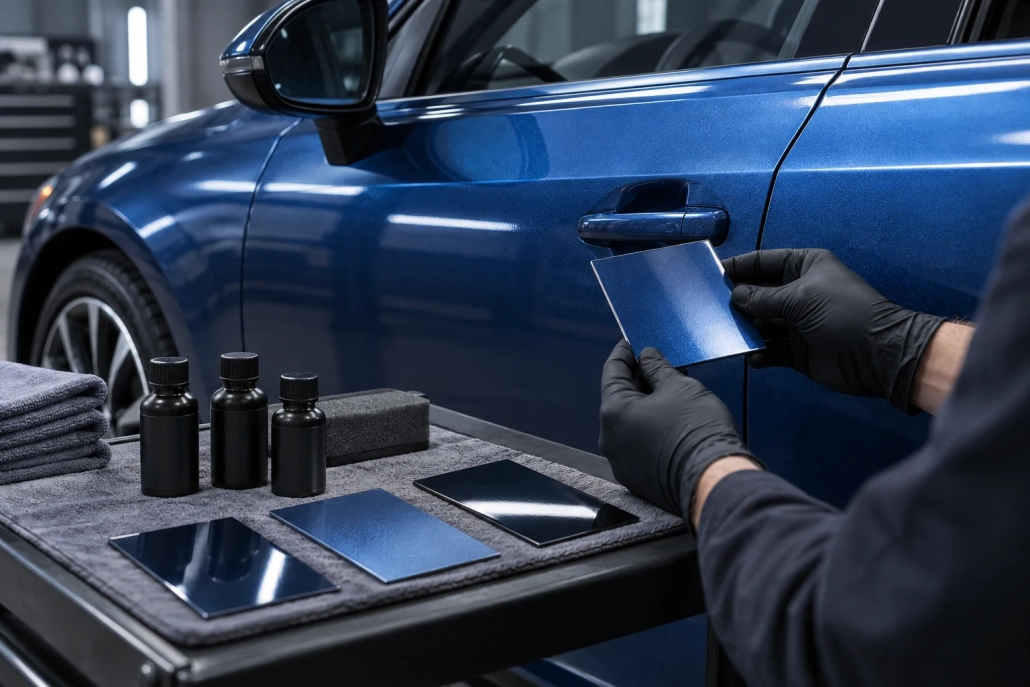
Use surface type, desired finish, installation conditions and maintenance needs to narrow the choice to a suitable NANOLAB coating.
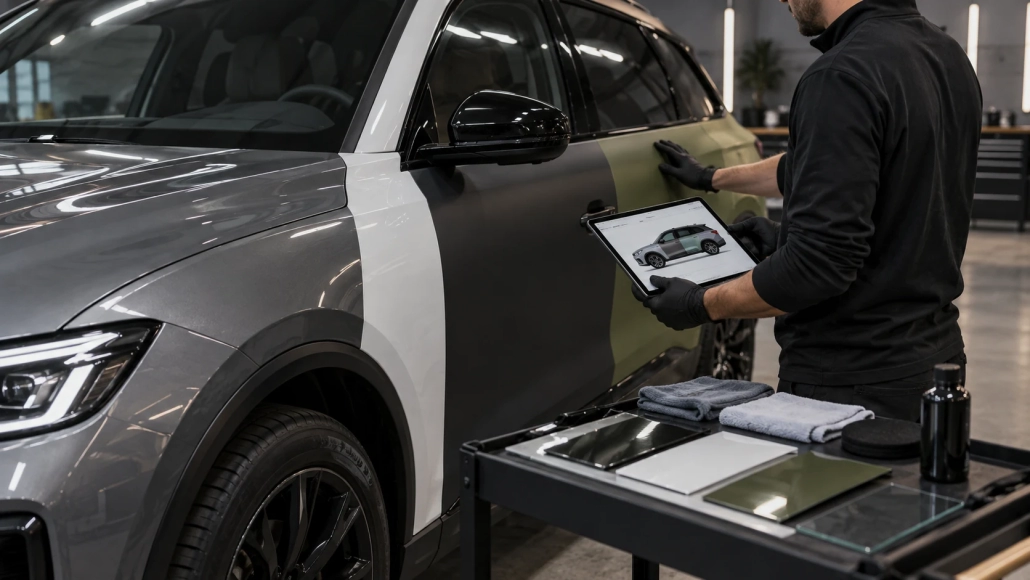
Create a surface map for vehicles combining paint, PPF, vinyl, glass and trim so every area receives a suitable NANOLAB system.
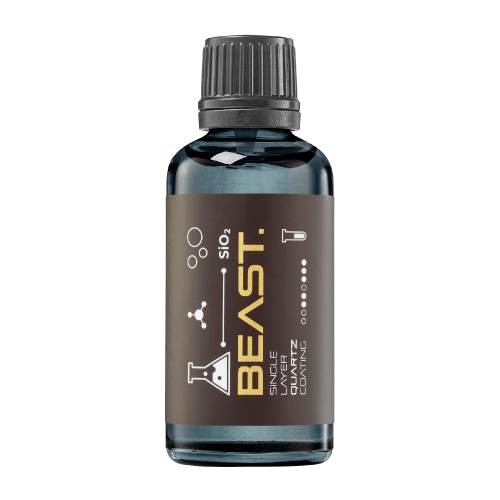
Create an inspection-first enquiry when repaint and protection history are incomplete.