






A full polishing range.
From cutting and one-step correction to final finishing.
Specialist chemistry. Expert application.
 QUARTZ99 / CERAMIC BASE COAT
The foundation of your coating system.
A layerable quartz base coat designed for mechanical protection. Pair it with a suitable top coat to create the final finish.
For application by NANOLAB certified installers only.
Four formulas. Extended working time. Find the coating for your finish.
Explore the BEAST family of ceramic coatings.
Find the coating for each exterior surface.
 PPF & VINYLGLOSSProtection for glossy films and wraps.Discover
 MATTE & SATINMATTEProtection that respects the finish.Discover
 GLASSWINDOWSExplore dedicated glass protection.Discover
 WHEEL PROTECTIONWHEELSA dedicated coating for your wheels.Discover
 TRIM PROTECTIONPLASTICProtection for plastic surfaces.Discover
Dedicated care for the surfaces inside.
 LEATHER SURFACESLEATHERDiscover NANOLAB leather protection.Discover PLASTIC SURFACESPLASTICProtection for interior plastic surfaces.Discover TEXTILE SURFACESFABRICExplore the latest fabric formulation.Discover
Spray protection, maintenance and upcoming wash products.
 MAINTENANCEBEAST 365Explore the BEAST maintenance range.Discover
Next in washing, cleaning & care.
Ceramic protection for boats and yachts.
An easy-to-apply ceramic coating with an established track record on boats and yachts around the world.
Results vary with surface preparation, exposure and maintenance.
Read 50 MARINE guides →Explore MARINEProtection for the surfaces you live with.
A look at what we’re developing.
From cutting and one-step correction to final finishing.
A wider range for professional vehicle care.
Taking shape alongside BEAST & MATRIX.
Practical guidance for your next coating project.
Explore all guides →
Identify which questions local staff can answer and which need manufacturer review.
Updated · NANOLAB Knowledge
Distributors need a clear boundary between routine product support and questions that require manufacturer input. An escalation map makes that boundary practical. It should help staff gather useful evidence without encouraging them to diagnose unfamiliar situations from a short message.
Separate purchasing enquiries, document requests, known product-selection questions and uncertain technical applications. Identify which approved information local staff can communicate directly. Questions involving unknown surface treatments, unexplained changes or conflicting instructions should have an explicit route for further review.
Include the exact product, surface, relevant dates, instructions followed and the customer's observations. Ask for photographs only when they help identify the issue. Keep the customer's explanation of the cause separate from what they actually saw. Remove unnecessary personal information before sharing a technical case.
For example, the distributor can remain the customer's contact while the manufacturer reviews a compatibility question. Record who owes the next response and what remains unresolved. When an answer arrives, preserve its scope; guidance for one identified surface should not become a general rule for unrelated applications. Review recurring escalations to improve training and documentation. The goal is a support process that remains accountable even when several people contribute to the answer.
Define who handles order questions, product-document requests, application observations and unresolved performance concerns. State what each person needs before escalating and where the answer should be recorded. Provide a backup contact route when the usual owner is unavailable.
For a streaking report, the first responder can collect product identity, timing, surface, preparation and photographs without diagnosing the cause. Technical review then determines the next supported step. The distributor should relay that answer with its original limits intact. Close the loop by recording whether the customer understood and followed the recommendation. Forwarding an email alone does not establish that an issue was resolved or that the proposed cause was confirmed.
Discuss your distribution requirements. For supporting information, review the current product documentation and the local distributor information.

Collect useful private label coating feedback from distributors without confusing application issues, packaging faults and product expectations.
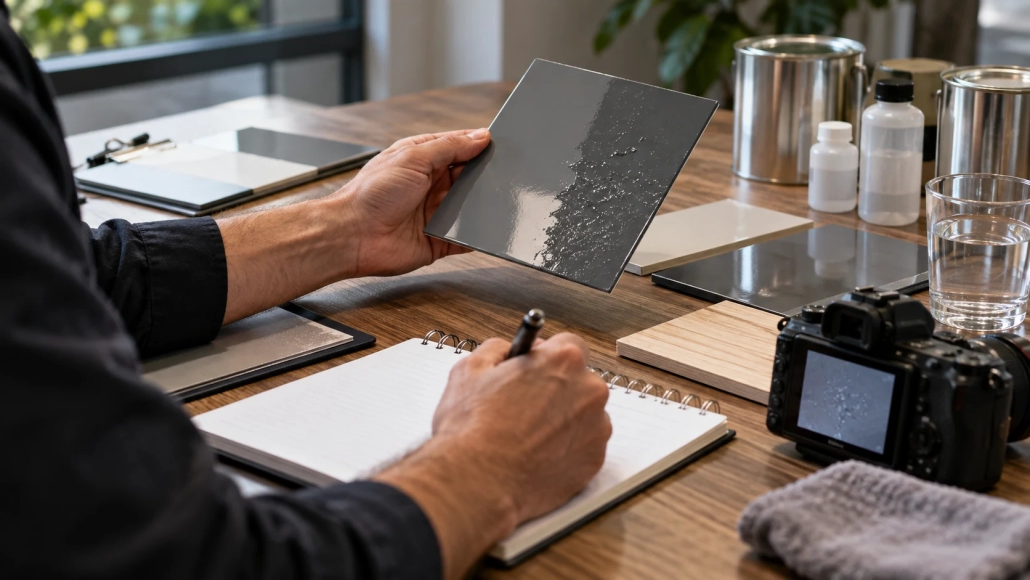
Handle coating support questions by identifying the product, surface, timing and evidence before recommending corrective action.

Convert a short exhibition conversation into a specific evaluation or purchasing next step.