






A full polishing range.
From cutting and one-step correction to final finishing.
Specialist chemistry. Expert application.
 QUARTZ99 / CERAMIC BASE COAT
The foundation of your coating system.
A layerable quartz base coat designed for mechanical protection. Pair it with a suitable top coat to create the final finish.
For application by NANOLAB certified installers only.
Four formulas. Extended working time. Find the coating for your finish.
Explore the BEAST family of ceramic coatings.
Find the coating for each exterior surface.
 PPF & VINYLGLOSSProtection for glossy films and wraps.Discover
 MATTE & SATINMATTEProtection that respects the finish.Discover
 GLASSWINDOWSExplore dedicated glass protection.Discover
 WHEEL PROTECTIONWHEELSA dedicated coating for your wheels.Discover
 TRIM PROTECTIONPLASTICProtection for plastic surfaces.Discover
Dedicated care for the surfaces inside.
 LEATHER SURFACESLEATHERDiscover NANOLAB leather protection.Discover PLASTIC SURFACESPLASTICProtection for interior plastic surfaces.Discover TEXTILE SURFACESFABRICExplore the latest fabric formulation.Discover
Spray protection, maintenance and upcoming wash products.
 MAINTENANCEBEAST 365Explore the BEAST maintenance range.Discover
Next in washing, cleaning & care.
Ceramic protection for boats and yachts.
An easy-to-apply ceramic coating with an established track record on boats and yachts around the world.
Results vary with surface preparation, exposure and maintenance.
Read 50 MARINE guides →Explore MARINEProtection for the surfaces you live with.
A look at what we’re developing.
From cutting and one-step correction to final finishing.
A wider range for professional vehicle care.
Taking shape alongside BEAST & MATRIX.
Practical guidance for your next coating project.
Explore all guides →
Organize preparation, demonstrations and questions so attendees can evaluate a complete workflow.
Updated · NANOLAB Knowledge
A demonstration day for detailers needs enough structure for attendees to understand what they are seeing. Product displays and informal conversation can support the event, but they should not replace a defined learning sequence. Plan the day around a small number of useful workshop decisions.
Identify whether attendees are new to the range or evaluating a specific system. Choose representative surfaces and an approved procedure that can be demonstrated honestly within the available time. If some stages require prepared examples, label those examples and explain their history.
Separate product selection, preparation discussion, application observation and final inspection. Give each station an owner and a clear question to answer. Keep current instructions accessible. Avoid competing demonstrations that make it difficult to connect the product, surface and process being shown.
Collect questions with enough context to route them properly. For example, a participant asking about a matte film should not receive an answer inferred from a glossy paint demonstration. Record the film information needed for technical review. After the event, send the documents or evaluation steps that match each person's enquiry. Review the event by useful conversations and completed next steps, rather than treating attendance or social-media views as proof of product suitability or commercial success.
Use separate segments for the product briefing, surface assessment, application demonstration, inspection and questions. Tell attendees what has been prepared in advance, especially when the demonstration panel is already cleaned or corrected. That prevents the visible application time from being mistaken for the whole service time.
Reserve time for participants to explain their own workshop conditions. Keep sales discussion after the technical demonstration so observers can ask questions without losing the process sequence. Record unanswered questions and assign a follow-up owner. If conditions prevent a valid demonstration, explain the limitation rather than improvising a shortcut to keep the event moving. A clear, bounded result is more persuasive than a theatrical but unrepeatable display.
Discuss your distribution requirements. For supporting information, review the current product documentation and the local distributor information.

Collect useful private label coating feedback from distributors without confusing application issues, packaging faults and product expectations.
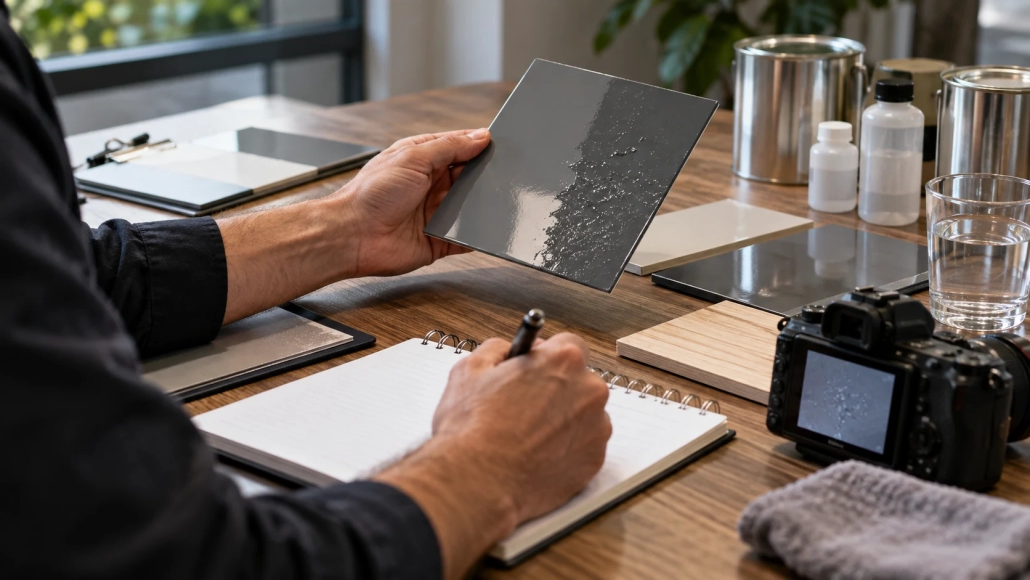
Handle coating support questions by identifying the product, surface, timing and evidence before recommending corrective action.

Compare reachable customer groups by support needs and purchase process, not market size alone.