






A full polishing range.
From cutting and one-step correction to final finishing.
Specialist chemistry. Expert application.
 QUARTZ99 / CERAMIC BASE COAT
The foundation of your coating system.
A layerable quartz base coat designed for mechanical protection. Pair it with a suitable top coat to create the final finish.
For application by NANOLAB certified installers only.
Four formulas. Extended working time. Find the coating for your finish.
Explore the BEAST family of ceramic coatings.
Find the coating for each exterior surface.
 PPF & VINYLGLOSSProtection for glossy films and wraps.Discover
 MATTE & SATINMATTEProtection that respects the finish.Discover
 GLASSWINDOWSExplore dedicated glass protection.Discover
 WHEEL PROTECTIONWHEELSA dedicated coating for your wheels.Discover
 TRIM PROTECTIONPLASTICProtection for plastic surfaces.Discover
Dedicated care for the surfaces inside.
 LEATHER SURFACESLEATHERDiscover NANOLAB leather protection.Discover PLASTIC SURFACESPLASTICProtection for interior plastic surfaces.Discover TEXTILE SURFACESFABRICExplore the latest fabric formulation.Discover
Spray protection, maintenance and upcoming wash products.
 MAINTENANCEBEAST 365Explore the BEAST maintenance range.Discover
Next in washing, cleaning & care.
Ceramic protection for boats and yachts.
An easy-to-apply ceramic coating with an established track record on boats and yachts around the world.
Results vary with surface preparation, exposure and maintenance.
Read 50 MARINE guides →Explore MARINEProtection for the surfaces you live with.
A look at what we’re developing.
From cutting and one-step correction to final finishing.
A wider range for professional vehicle care.
Taking shape alongside BEAST & MATRIX.
Practical guidance for your next coating project.
Explore all guides →
Compare hand and machine correction by access, consistency and the scale of the job, using products approved for the selected application method.
Updated · NANOLAB Knowledge
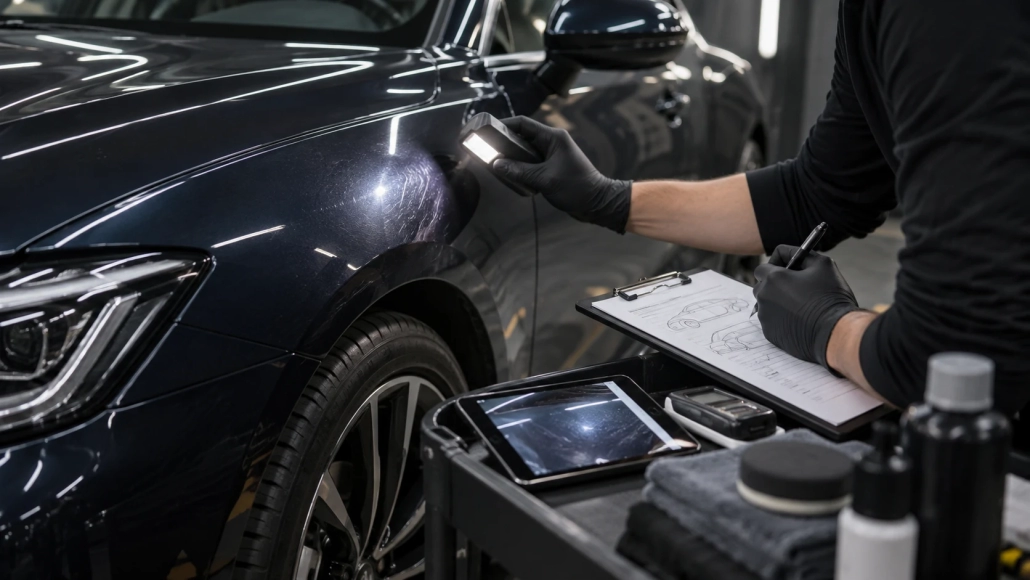
Hand polishing and machine polishing are different ways of applying a supported process. Neither should be chosen solely because it sounds safer or more professional. Consider the area, defect, product instructions and the control available.
Some products support hand and machine application; others specify particular tools. A machine-only instruction should not be replaced with an improvised hand method and an assumed equivalent result.
Identify whether the product corrects abrasively, deposits protection or combines functions. That affects both expectations and preparation for the next treatment.
Hand work can provide access to small areas that a machine cannot reach comfortably. A machine can offer repeatable movement over larger suitable panels when used correctly.
Hand application still removes material when the product is abrasive. Concentrated repeated rubbing on one small spot is not automatically harmless.
Assess a small area and inspect after compatible residue removal. Record useful improvement and the effort needed, not just the immediate oily appearance.
For a whole vehicle, consider consistency and fatigue. A good result in one tiny hand-polished spot may not be practical to reproduce over every panel.
If a defect does not respond within a sensible process, reassess rather than increasing force indefinitely. Unknown paint, sharp boundaries and finish failure remain constraints regardless of how the applicator moves.
A mixed workflow may be appropriate: machine work on accessible areas and a supported hand method where needed. Record that distinction so the service is understandable.
Choose the method that can achieve the intended result predictably on the actual area. The outcome should be a clean inspected finish with clear limits, not a claim that either hands or machines guarantee safe correction in every situation.
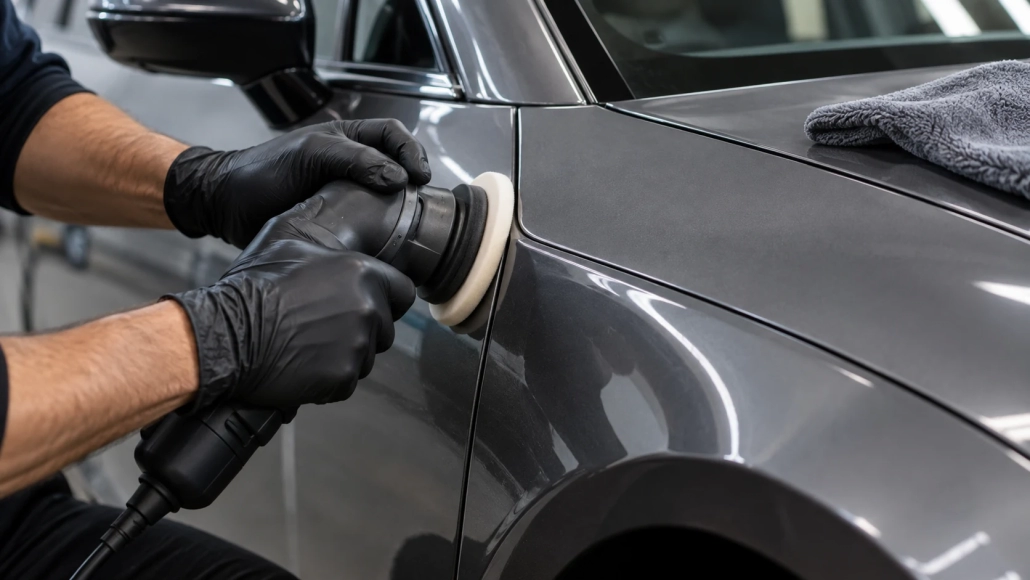
Inspect white paint with controlled lighting and separate contamination, swirls and clarity before choosing the correction process.
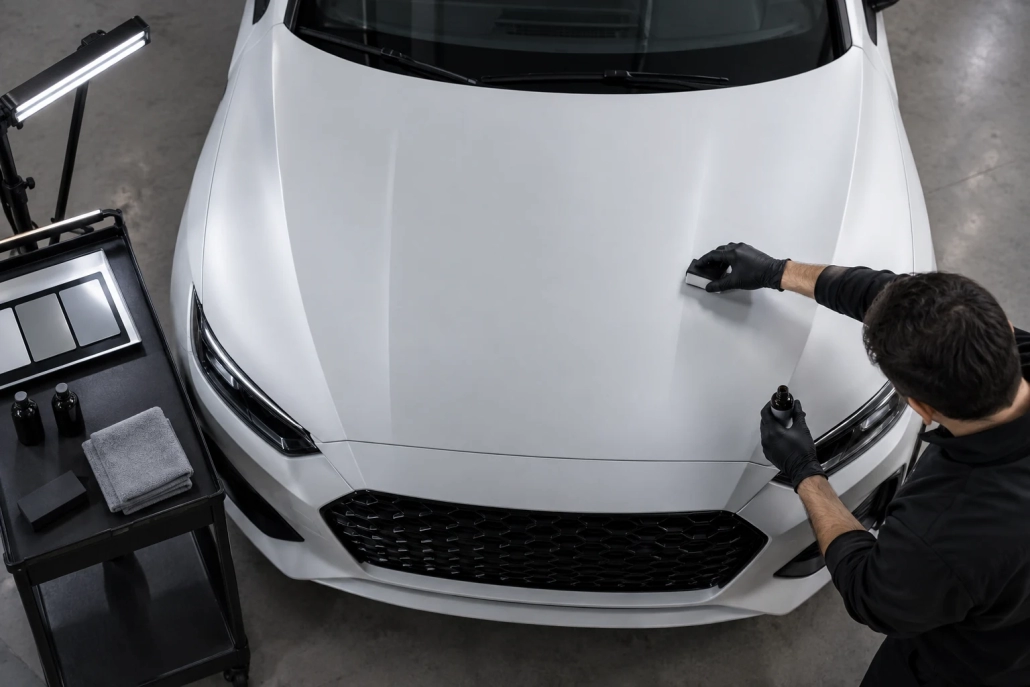
Understand why conventional gloss-enhancing paint correction is unsuitable for preserving matte or satin appearance and how to seek compatible care guidance.
Create a useful record of paint condition, repairs and agreed correction limits before preparation and coating begin.

 Can You Polish Matte Paint? Why Gloss Correction Changes the Goal