






A full polishing range.
From cutting and one-step correction to final finishing.
Specialist chemistry. Expert application.
 QUARTZ99 / CERAMIC BASE COAT
The foundation of your coating system.
A layerable quartz base coat designed for mechanical protection. Pair it with a suitable top coat to create the final finish.
For application by NANOLAB certified installers only.
Four formulas. Extended working time. Find the coating for your finish.
Explore the BEAST family of ceramic coatings.
Find the coating for each exterior surface.
 PPF & VINYLGLOSSProtection for glossy films and wraps.Discover
 MATTE & SATINMATTEProtection that respects the finish.Discover
 GLASSWINDOWSExplore dedicated glass protection.Discover
 WHEEL PROTECTIONWHEELSA dedicated coating for your wheels.Discover
 TRIM PROTECTIONPLASTICProtection for plastic surfaces.Discover
Dedicated care for the surfaces inside.
 LEATHER SURFACESLEATHERDiscover NANOLAB leather protection.Discover PLASTIC SURFACESPLASTICProtection for interior plastic surfaces.Discover TEXTILE SURFACESFABRICExplore the latest fabric formulation.Discover
Spray protection, maintenance and upcoming wash products.
 MAINTENANCEBEAST 365Explore the BEAST maintenance range.Discover
Next in washing, cleaning & care.
Ceramic protection for boats and yachts.
An easy-to-apply ceramic coating with an established track record on boats and yachts around the world.
Results vary with surface preparation, exposure and maintenance.
Read 50 MARINE guides →Explore MARINEProtection for the surfaces you live with.
A look at what we’re developing.
From cutting and one-step correction to final finishing.
A wider range for professional vehicle care.
Taking shape alongside BEAST & MATRIX.
Practical guidance for your next coating project.
Explore all guides →
Assess product, panel and workshop conditions before polishing and avoid improvised dilution when temperature changes the working behaviour.
Updated · NANOLAB Knowledge
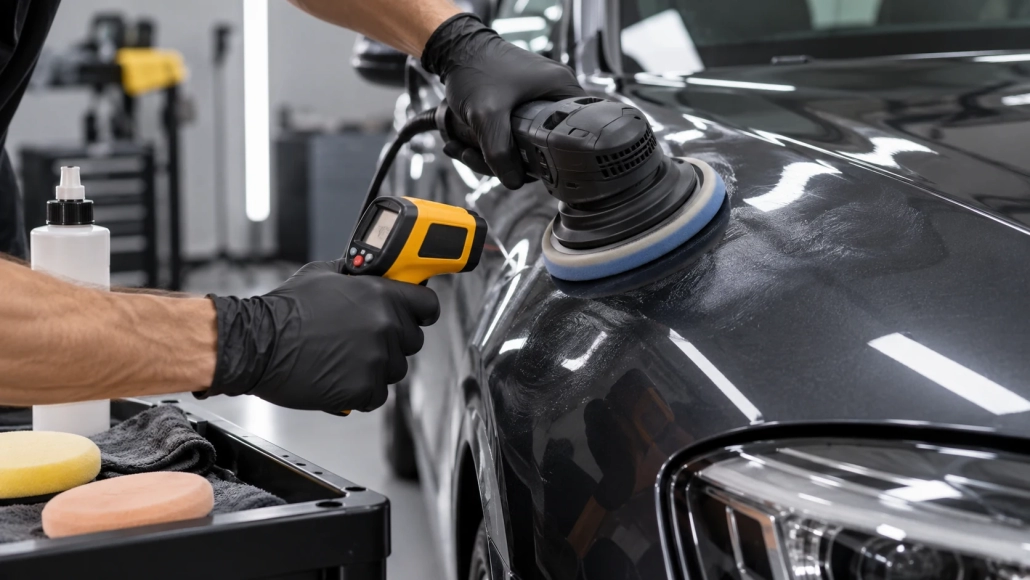
Workshop air temperature is only part of the polishing environment. The panel and stored product may be at different temperatures, especially when a vehicle arrives from outdoors. Let the system reach suitable working conditions before judging how the polish behaves.
A product’s storage guidance is not automatically its application range. Check both and keep pads and liquids in the conditions specified by their makers.
If a bottle has been frozen, overheated or changed unexpectedly, ask the supplier whether it remains usable. Shaking or adding liquid is not a validated repair for damaged stock.
A car brought in from sun or cold may need time before its surfaces suit the intended process. Check the panel rather than assuming the room’s thermostat describes it.
Avoid inventing a universal safe panel temperature. Paint, plastic parts, tools and formulations can have different limits.
If the film behaves differently, examine area size, cycle and pad condition within the product instructions. A method accepted in one set of conditions may need a fresh test.
Change one relevant variable at a time and inspect the cleaned result. Do not automatically compensate through more pressure or extended working.
Do not add water, solvent or another polish unless the manufacturer explicitly supports that adjustment. Improvised mixtures make the effective product and its preparation requirements uncertain.
For a studio, record environmental observations alongside complaints about drying, grabbing or removal. This helps distinguish a repeatable product issue from a conditions issue.
The practical objective is a stable supported operating window. A controlled pause or revised work schedule can be more efficient than forcing correction through unsuitable conditions and then spending time resolving residue, haze or inconsistent results.
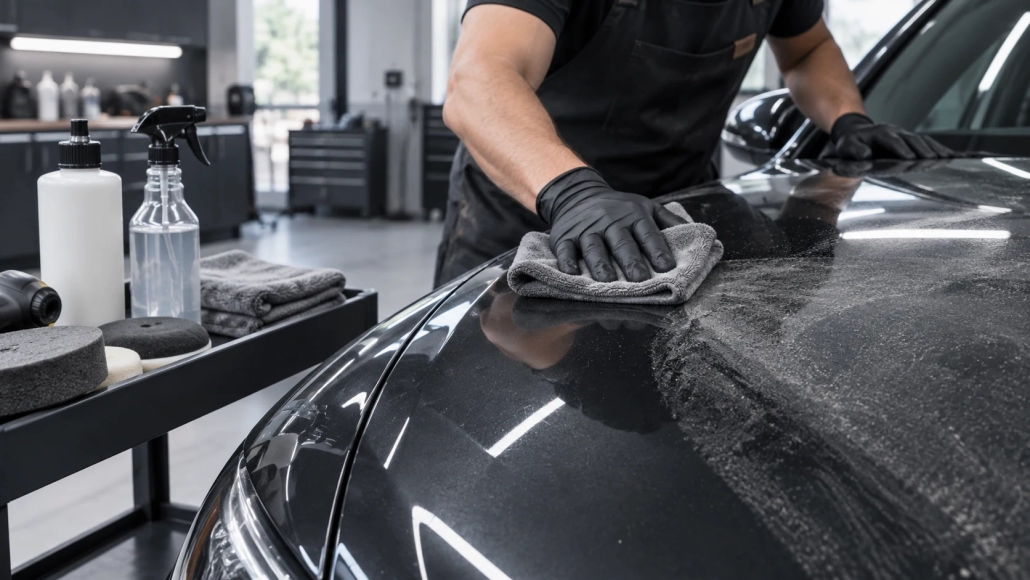
Organise a polishing job into clear decision points for surface assessment, correction, refinement and preparation for protection.
Understand why mixing liquids or carrying residue between polishing stages makes performance and coating preparation harder to verify.
Plan polishing sections, pad rotation and inspection pauses to keep heat and tool control within the limits of the surface and equipment.

 Can You Mix Polishing Compounds on One Pad?