






A full polishing range.
From cutting and one-step correction to final finishing.
Specialist chemistry. Expert application.
 QUARTZ99 / CERAMIC BASE COAT
The foundation of your coating system.
A layerable quartz base coat designed for mechanical protection. Pair it with a suitable top coat to create the final finish.
For application by NANOLAB certified installers only.
Four formulas. Extended working time. Find the coating for your finish.
Explore the BEAST family of ceramic coatings.
Find the coating for each exterior surface.
 PPF & VINYLGLOSSProtection for glossy films and wraps.Discover
 MATTE & SATINMATTEProtection that respects the finish.Discover
 GLASSWINDOWSExplore dedicated glass protection.Discover
 WHEEL PROTECTIONWHEELSA dedicated coating for your wheels.Discover
 TRIM PROTECTIONPLASTICProtection for plastic surfaces.Discover
Dedicated care for the surfaces inside.
 LEATHER SURFACESLEATHERDiscover NANOLAB leather protection.Discover PLASTIC SURFACESPLASTICProtection for interior plastic surfaces.Discover TEXTILE SURFACESFABRICExplore the latest fabric formulation.Discover
Spray protection, maintenance and upcoming wash products.
 MAINTENANCEBEAST 365Explore the BEAST maintenance range.Discover
Next in washing, cleaning & care.
Ceramic protection for boats and yachts.
An easy-to-apply ceramic coating with an established track record on boats and yachts around the world.
Results vary with surface preparation, exposure and maintenance.
Read 50 MARINE guides →Explore MARINEProtection for the surfaces you live with.
A look at what we’re developing.
From cutting and one-step correction to final finishing.
A wider range for professional vehicle care.
Taking shape alongside BEAST & MATRIX.
Practical guidance for your next coating project.
Explore all guides →
Control product distribution, tool startup and pad loading to reduce splatter while maintaining the working film required by the polishing system.
Updated · NANOLAB Knowledge
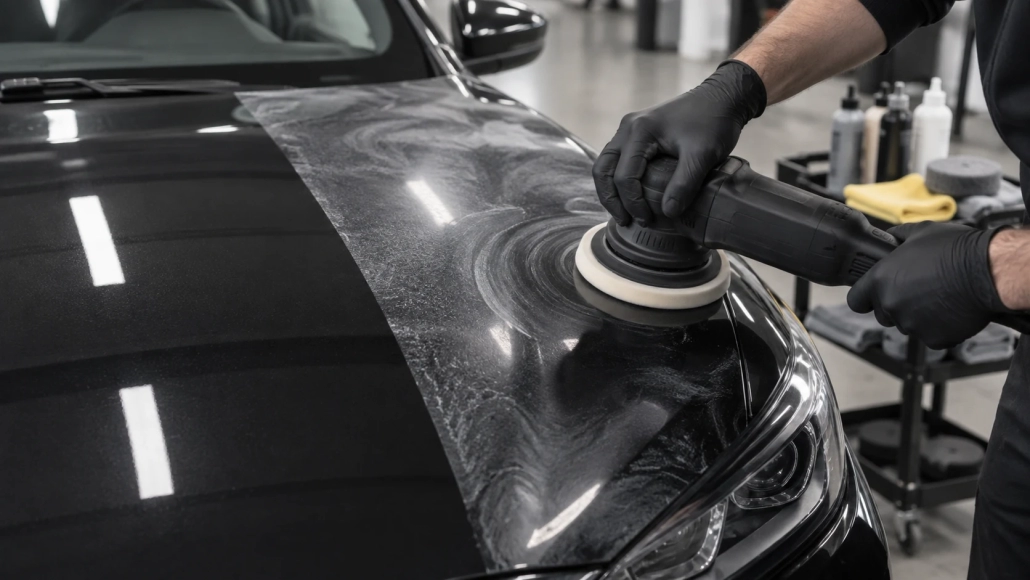
Splatter is often a distribution and handling problem. Reducing it should not mean running an inadequately prepared pad or ignoring the liquid’s working requirements. Check how product reaches the panel and how the tool is started and stopped.
Follow the manufacturer’s directions for pad preparation and reloading. Excessive product is not extra insurance against poor correction.
Keep the working face and bottle tip clean. Uneven lumps of residue or poorly distributed fresh liquid can make startup less predictable.
Use the tool’s recommended procedure for spreading product and beginning the working stage. Keep contact controlled and avoid lifting a spinning loaded pad away from the paint unless the equipment instructions explicitly call for a particular method.
Arrange your position before starting so you do not need an awkward movement immediately after applying product.
An overloaded pad may release residue differently from a freshly prepared one. Inspect and maintain it rather than responding only by lowering the speed.
Confirm proper centring and attachment. Unstable running needs investigation; it should not be accepted as normal merely because the compound still cuts.
Inspect trim, gaps and nearby surfaces for residue. Remove it with compatible methods before it becomes a more difficult cleanup task.
When planning the next section, protect sensitive neighbouring materials appropriately. Masking reduces exposure but does not justify careless distribution.
A successful adjustment should reduce splatter while preserving useful correction and the accepted finish. Compare both outcomes after residue removal. The aim is controlled application, not the smallest possible amount of liquid regardless of the system’s needs. Keeping product where it belongs improves efficiency and helps preserve a clean transition from polishing to protection.
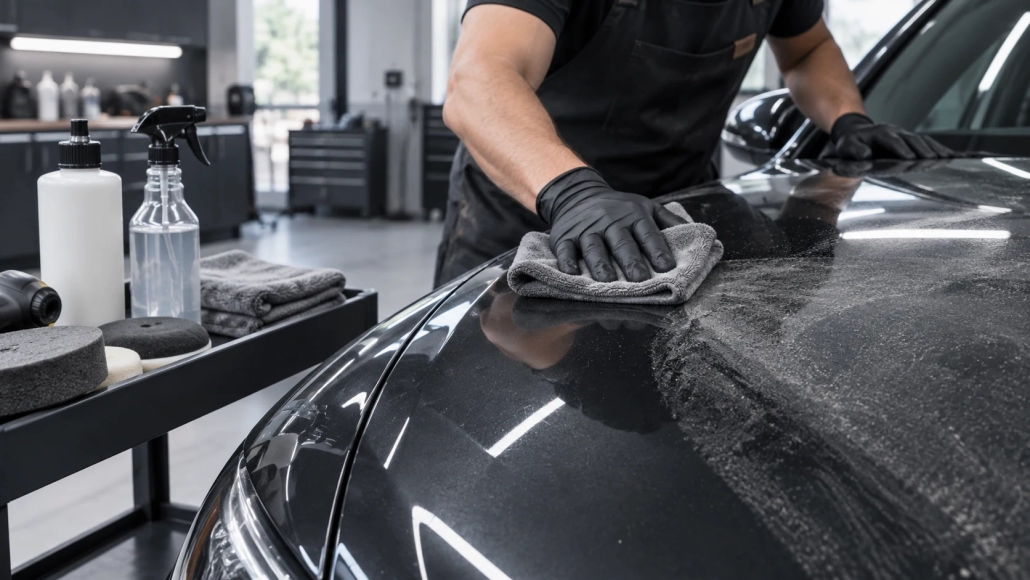
Organise a polishing job into clear decision points for surface assessment, correction, refinement and preparation for protection.
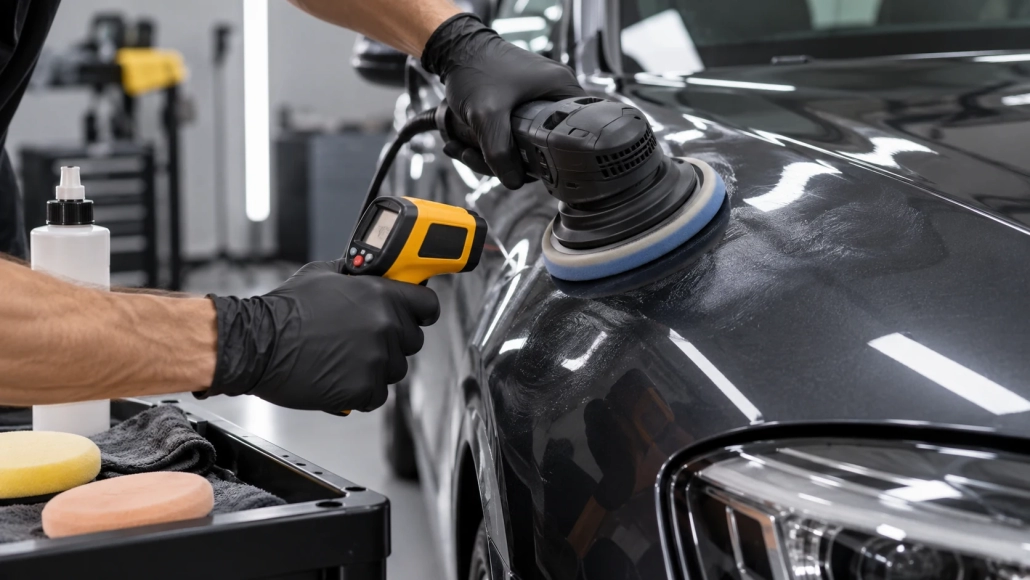
Assess product, panel and workshop conditions before polishing and avoid improvised dilution when temperature changes the working behaviour.
Investigate grabbing pads and difficult polish removal by reviewing surface temperature, product loading, paint history and section size.

 Polishing in a Cold or Warm Workshop: Adjust the Plan, Not the Formula