






A full polishing range.
From cutting and one-step correction to final finishing.
Specialist chemistry. Expert application.
 QUARTZ99 / CERAMIC BASE COAT
The foundation of your coating system.
A layerable quartz base coat designed for mechanical protection. Pair it with a suitable top coat to create the final finish.
For application by NANOLAB certified installers only.
Four formulas. Extended working time. Find the coating for your finish.
Explore the BEAST family of ceramic coatings.
Find the coating for each exterior surface.
 PPF & VINYLGLOSSProtection for glossy films and wraps.Discover
 MATTE & SATINMATTEProtection that respects the finish.Discover
 GLASSWINDOWSExplore dedicated glass protection.Discover
 WHEEL PROTECTIONWHEELSA dedicated coating for your wheels.Discover
 TRIM PROTECTIONPLASTICProtection for plastic surfaces.Discover
Dedicated care for the surfaces inside.
 LEATHER SURFACESLEATHERDiscover NANOLAB leather protection.Discover PLASTIC SURFACESPLASTICProtection for interior plastic surfaces.Discover TEXTILE SURFACESFABRICExplore the latest fabric formulation.Discover
Spray protection, maintenance and upcoming wash products.
 MAINTENANCEBEAST 365Explore the BEAST maintenance range.Discover
Next in washing, cleaning & care.
Ceramic protection for boats and yachts.
An easy-to-apply ceramic coating with an established track record on boats and yachts around the world.
Results vary with surface preparation, exposure and maintenance.
Read 50 MARINE guides →Explore MARINEProtection for the surfaces you live with.
A look at what we’re developing.
From cutting and one-step correction to final finishing.
A wider range for professional vehicle care.
Taking shape alongside BEAST & MATRIX.
Practical guidance for your next coating project.
Explore all guides →
Explore abrasive behaviour in car polish and why working time, residue appearance and finishing technique must follow the actual product instructions.
Updated · NANOLAB Knowledge
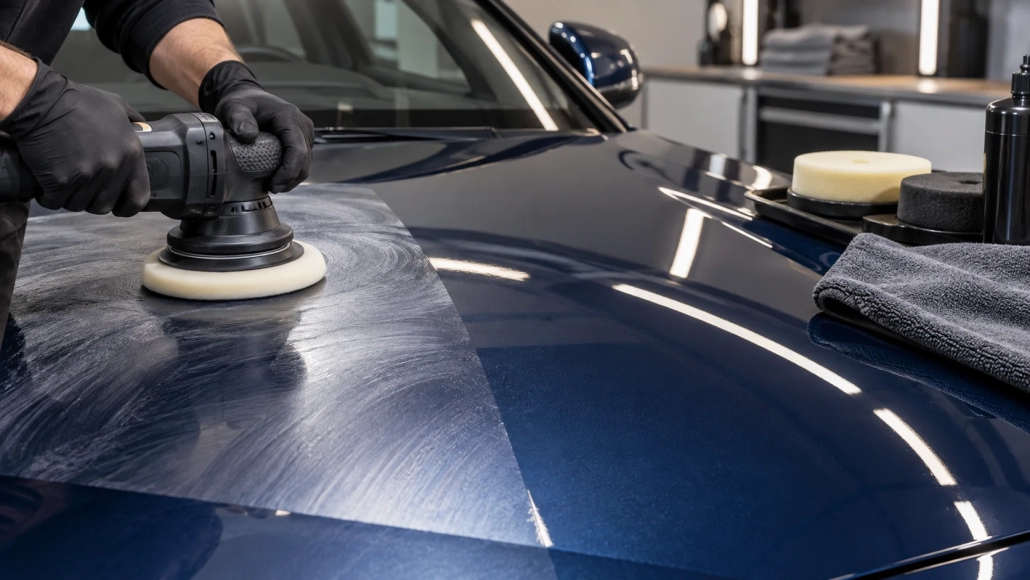
Diminishing and non-diminishing are shorthand descriptions of abrasive behaviour during polishing. They can help explain a product concept, but they do not replace its operating instructions. A liquid’s performance also depends on abrasive distribution, lubrication, pad material and the paint being worked.
Diminishing abrasive systems are commonly described as changing abrasive character during the working cycle. Non-diminishing systems are commonly described as retaining their abrasive character more consistently. These broad labels do not reveal an exact formula, particle-size distribution or required number of passes.
Avoid assigning a category from appearance alone. A translucent residue is not a microscope measurement of abrasive breakdown, and a white film does not necessarily mean the product has not worked.
Some manufacturers specify working a film to a particular appearance. Others describe shorter cycles followed by cleaning, reloading and inspection. Apply those directions to the named product rather than combining unrelated instructions into a universal rule.
Extending the cycle until the pad runs dry is not a reliable route to finer finishing. If lubrication becomes inadequate or the system behaves poorly, stop and assess the cause. Adding water is appropriate only where the product’s instructions permit it.
Compare the cleaned test area with the original defects. If correction remains insufficient, evaluate the pad, surface contact, product quantity and working area before assuming the abrasive technology is at fault.
If the cutting result is satisfactory but the surface remains hazy, test a suitable refining combination. Changing the pad may be as significant as changing the liquid, which is why one-variable comparisons are useful.
Ask the supplier for the current technical instructions, compatible machine movements and a demonstrated process. Claims about abrasive type should support those details, not substitute for them. For a studio choosing stock, a repeatable finish and clear operating window matter more than winning a terminology argument about which abrasive category is universally superior.
Understand heavy cut compound, fine cut and finishing polish, then choose a paint correction process that fits your paint, machine and intended result.
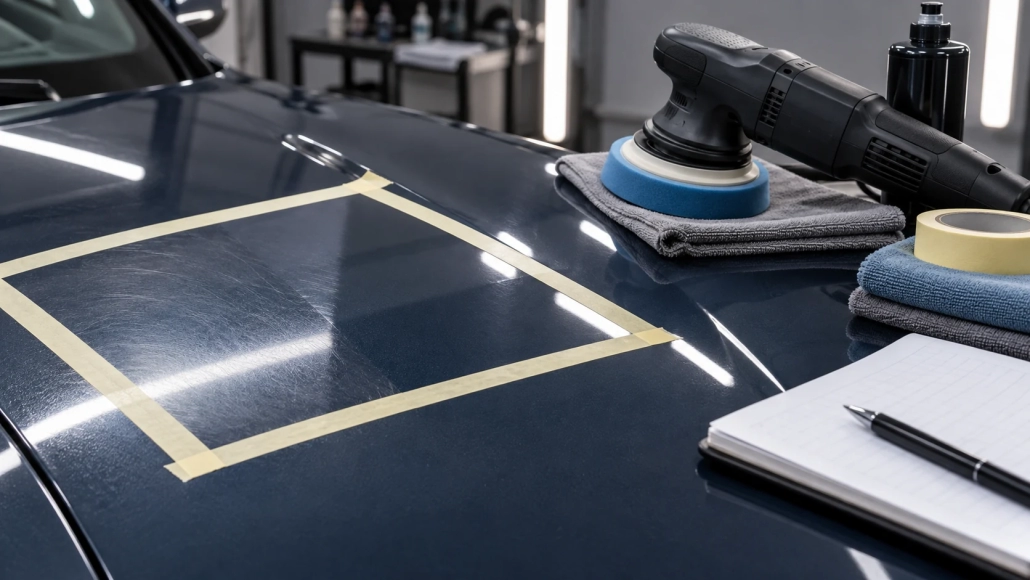
Learn what water-based means for car polish and which separate checks still govern dilution, cleanup, surface compatibility and coating preparation.
Choose a polishing process by testing defect removal, finishing quality and clear-coat preservation rather than counting steps alone.

 Water-Based Car Polish: What the Description Does and Does Not Tell You