






A full polishing range.
From cutting and one-step correction to final finishing.
Specialist chemistry. Expert application.
 QUARTZ99 / CERAMIC BASE COAT
The foundation of your coating system.
A layerable quartz base coat designed for mechanical protection. Pair it with a suitable top coat to create the final finish.
For application by NANOLAB certified installers only.
Four formulas. Extended working time. Find the coating for your finish.
Explore the BEAST family of ceramic coatings.
Find the coating for each exterior surface.
 PPF & VINYLGLOSSProtection for glossy films and wraps.Discover
 MATTE & SATINMATTEProtection that respects the finish.Discover
 GLASSWINDOWSExplore dedicated glass protection.Discover
 WHEEL PROTECTIONWHEELSA dedicated coating for your wheels.Discover
 TRIM PROTECTIONPLASTICProtection for plastic surfaces.Discover
Dedicated care for the surfaces inside.
 LEATHER SURFACESLEATHERDiscover NANOLAB leather protection.Discover PLASTIC SURFACESPLASTICProtection for interior plastic surfaces.Discover TEXTILE SURFACESFABRICExplore the latest fabric formulation.Discover
Spray protection, maintenance and upcoming wash products.
 MAINTENANCEBEAST 365Explore the BEAST maintenance range.Discover
Next in washing, cleaning & care.
Ceramic protection for boats and yachts.
An easy-to-apply ceramic coating with an established track record on boats and yachts around the world.
Results vary with surface preparation, exposure and maintenance.
Read 50 MARINE guides →Explore MARINEProtection for the surfaces you live with.
A look at what we’re developing.
From cutting and one-step correction to final finishing.
A wider range for professional vehicle care.
Taking shape alongside BEAST & MATRIX.
Practical guidance for your next coating project.
Explore all guides →
Build a practical care routine for ceramic-coated chrome, separating fresh water marks, mineral deposits and damage to the underlying finish.
Updated · NANOLAB Knowledge
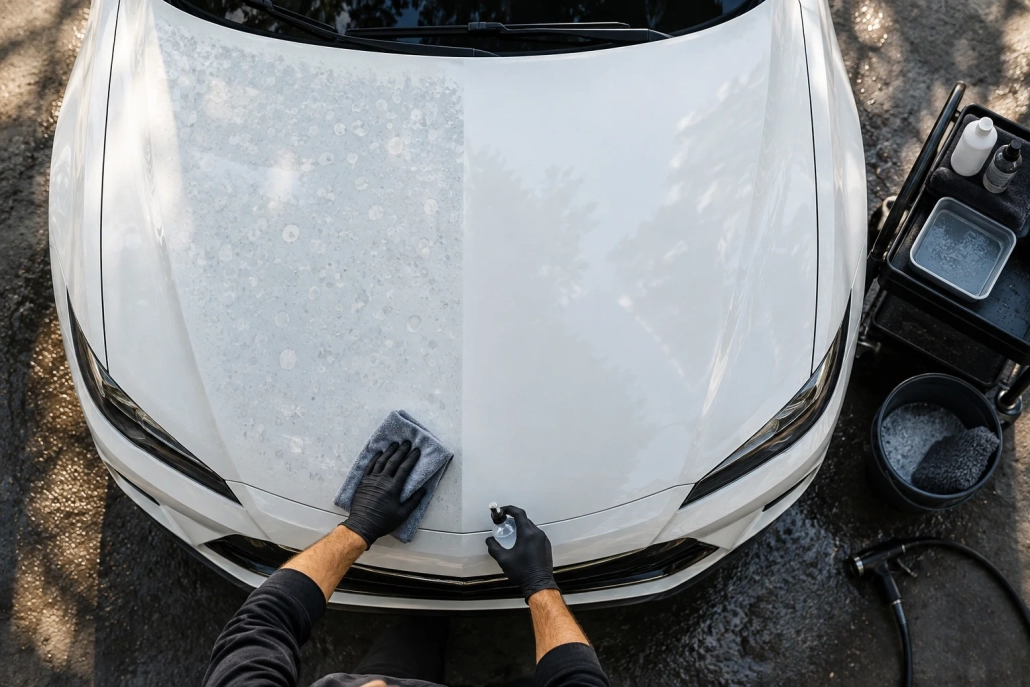
Water repellency does not remove dissolved minerals from water. Chrome can therefore show spots after droplets dry even when a compatible ceramic coating is present. The useful response is to identify the mark and correct the drying routine before adding more products.
Note where the spots occur. Marks below a tap spout suggest repeated dripping; rings on a horizontal trim strip may follow standing water; a line beneath a vehicle mirror can come from trapped rinse water. Photograph the pattern before cleaning so the source is easier to trace.
Check whether the coating is still within its initial curing period. Fresh applications require the installer’s instructions rather than a standard spot-removal routine. Record when the water exposure occurred and what was applied afterward.
Start with a compatible maintenance wash or the fixture maker’s approved cleaning method. Rinse and dry with a clean, suitable cloth. If a mark remains, ask for a deposit-removal process that is compatible with both the chrome finish and the coating. Permission for the coating alone does not establish safety for damaged plating beneath it.
Inspect a small treated area after drying. A mark that no longer feels raised but remains visible may need a different assessment from an obvious surface deposit. Do not keep polishing or applying stronger cleaners merely because the reflection still looks uneven.
On a vehicle, check mirror housings, badges and trim seams after the main drying pass. On bathroom fittings, dry the underside and address a persistent drip through normal maintenance. Choose a practical routine that the owner will actually repeat, rather than a complicated collection of protective sprays.
Judge the clean, dry finish and its behaviour across subsequent washes. One episode of spotting does not by itself establish coating failure. If the approved cleaning process has altered the treatment, ask the installer about a local renewal plan. Keep the original product, application date and cleaner names in the service record so the next decision is based on the actual coating system.
For your exact finish and service conditions, ask NANOLAB about coating suitability and consult the current product documentation.

Prepare chrome fittings with mineral deposits for a coating assessment without confusing descaling, finish restoration and surface protection.
Understand why mineral-bearing water can mark a hydrophobic finish and how rinsing, drying and water management reduce repeated deposits.
Plan ceramic coating for chrome-plated bumpers, including plating inspection, access around mounting points, preparation and practical aftercare.
 Nano Coating Black Chrome and Dark Decorative Finishes