






A full polishing range.
From cutting and one-step correction to final finishing.
Specialist chemistry. Expert application.
 QUARTZ99 / CERAMIC BASE COAT
The foundation of your coating system.
A layerable quartz base coat designed for mechanical protection. Pair it with a suitable top coat to create the final finish.
For application by NANOLAB certified installers only.
Four formulas. Extended working time. Find the coating for your finish.
Explore the BEAST family of ceramic coatings.
Find the coating for each exterior surface.
 PPF & VINYLGLOSSProtection for glossy films and wraps.Discover
 MATTE & SATINMATTEProtection that respects the finish.Discover
 GLASSWINDOWSExplore dedicated glass protection.Discover
 WHEEL PROTECTIONWHEELSA dedicated coating for your wheels.Discover
 TRIM PROTECTIONPLASTICProtection for plastic surfaces.Discover
Dedicated care for the surfaces inside.
 LEATHER SURFACESLEATHERDiscover NANOLAB leather protection.Discover PLASTIC SURFACESPLASTICProtection for interior plastic surfaces.Discover TEXTILE SURFACESFABRICExplore the latest fabric formulation.Discover
Spray protection, maintenance and upcoming wash products.
 MAINTENANCEBEAST 365Explore the BEAST maintenance range.Discover
Next in washing, cleaning & care.
Ceramic protection for boats and yachts.
An easy-to-apply ceramic coating with an established track record on boats and yachts around the world.
Results vary with surface preparation, exposure and maintenance.
Read 50 MARINE guides →Explore MARINEProtection for the surfaces you live with.
A look at what we’re developing.
From cutting and one-step correction to final finishing.
A wider range for professional vehicle care.
Taking shape alongside BEAST & MATRIX.
Practical guidance for your next coating project.
Explore all guides →
Plan residue removal, surface inspection and local protection when a boat's name or graphics are replaced.
Updated · NANOLAB Knowledge
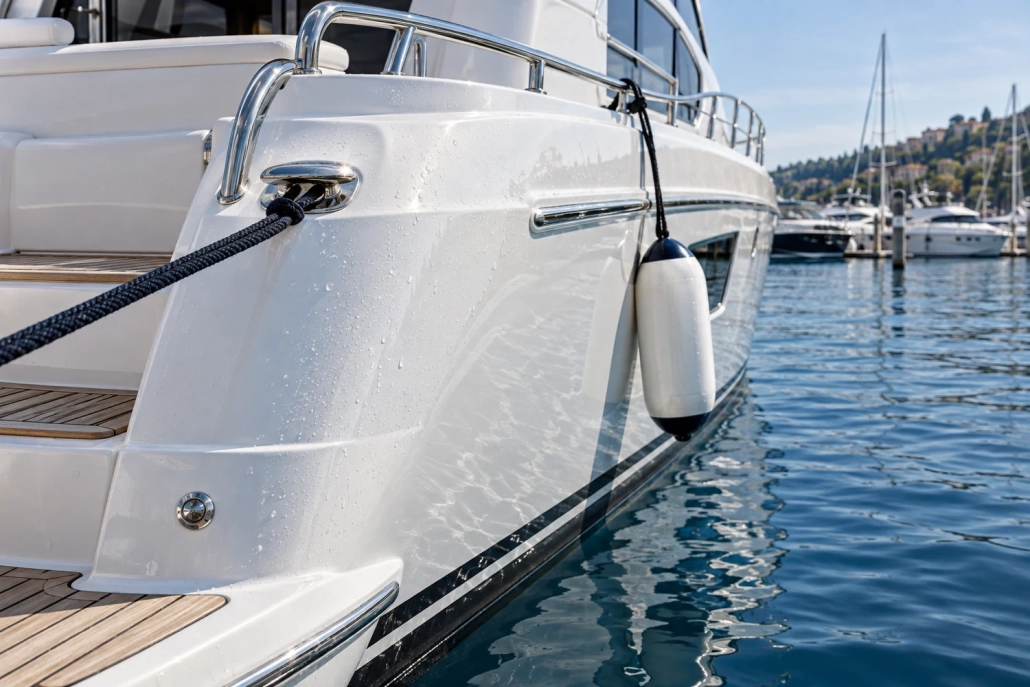
Replacing boat graphics can reveal adhesive residue or an appearance difference between covered and exposed areas. Ceramic coating should follow the graphics plan and surface assessment. It should not be used to hide a visible outline or to interfere with a new adhesive bond.
Ask the graphics installer about the required substrate condition and any restrictions associated with existing coatings. Adhesive placement may need its own preparation. Do not assume a freshly coated surface is automatically suitable for applying new vinyl.
Map old and new graphic boundaries, noting where they differ. Photograph existing outlines before cleaning or polishing so the owner understands what the change reveals.
Use compatible adhesive-removal methods on the actual paint or gelcoat. Avoid excessive abrasion intended to erase every difference without assessing the finish. If colour variation remains after residue removal, discuss the achievable cosmetic result before coating.
Keep graphics, bare neighbouring surfaces and any textured areas distinct. A product approved for the boat body is not automatic approval for every decorative film.
Check NANOLAB MARINE and confirm compatibility with the intended surfaces and graphics. Follow the relevant application and curing instructions, avoiding excess around film edges.
Record which areas received new coating and which retained earlier protection. Give the owner care instructions that respect the new graphics as well as the coating. That combined record makes later edge staining or appearance changes easier to investigate without assuming that all surfaces share the same treatment history.
A repaired panel may need a different preparation and coating plan from the surrounding boat.
Compare coating condition by real exposure when one side of a berthed boat receives more sun or contamination than another.
Plan compatible boat cleaning when freshwater availability is limited, without assuming ceramic coating removes the need for salt management.
 Ceramic Coating on a Boat’s Shaded and Sunny Sides