






A full polishing range.
From cutting and one-step correction to final finishing.
Specialist chemistry. Expert application.
 QUARTZ99 / CERAMIC BASE COAT
The foundation of your coating system.
A layerable quartz base coat designed for mechanical protection. Pair it with a suitable top coat to create the final finish.
For application by NANOLAB certified installers only.
Four formulas. Extended working time. Find the coating for your finish.
Explore the BEAST family of ceramic coatings.
Find the coating for each exterior surface.
 PPF & VINYLGLOSSProtection for glossy films and wraps.Discover
 MATTE & SATINMATTEProtection that respects the finish.Discover
 GLASSWINDOWSExplore dedicated glass protection.Discover
 WHEEL PROTECTIONWHEELSA dedicated coating for your wheels.Discover
 TRIM PROTECTIONPLASTICProtection for plastic surfaces.Discover
Dedicated care for the surfaces inside.
 LEATHER SURFACESLEATHERDiscover NANOLAB leather protection.Discover PLASTIC SURFACESPLASTICProtection for interior plastic surfaces.Discover TEXTILE SURFACESFABRICExplore the latest fabric formulation.Discover
Spray protection, maintenance and upcoming wash products.
 MAINTENANCEBEAST 365Explore the BEAST maintenance range.Discover
Next in washing, cleaning & care.
Ceramic protection for boats and yachts.
An easy-to-apply ceramic coating with an established track record on boats and yachts around the world.
Results vary with surface preparation, exposure and maintenance.
Read 50 MARINE guides →Explore MARINEProtection for the surfaces you live with.
A look at what we’re developing.
From cutting and one-step correction to final finishing.
A wider range for professional vehicle care.
Taking shape alongside BEAST & MATRIX.
Practical guidance for your next coating project.
Explore all guides →
Define accessible wrap returns and preparation limits when coating door shuts on a wrapped vehicle.
Updated · NANOLAB Knowledge
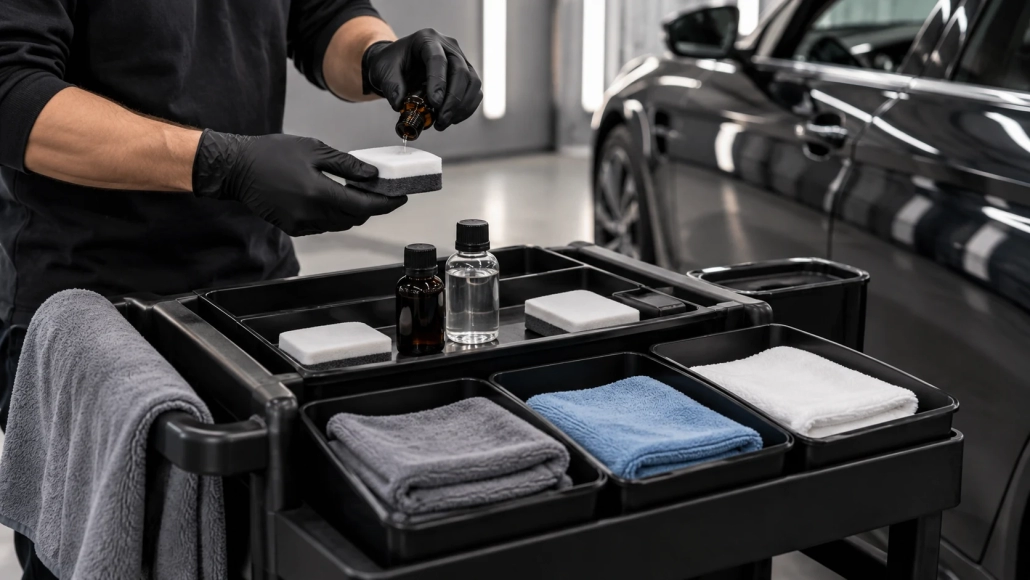
Wrap returns inside door openings can be narrow, curved and close to seals or hinges. Ceramic coating work should focus on compatible, accessible exposed film. It should not imply that coating the return improves the adhesive bond or seals the wrap edge.
Check the wrap product, installation age and edge condition. Identify grease, adhesive residue and water traps without transferring them onto clean exterior film. Keep hinges, latches, seals and functional components separate from the cosmetic treatment.
If a return is lifting or under tension, refer it to the wrap installer. Surface coating is not an edge-repair process. Document excluded areas where access or compatibility is insufficient.
Choose products approved for the film and nearby materials. Avoid soaking edge areas or spreading hinge lubricant into the final-preparation zone. Clean tools and small working sections make the narrow geometry easier to manage.
Test a suitable area when appearance or finishing access is uncertain. For glossy compatible wrap, check NANOLAB GLOSS and its instructions. Do not apply the same selection automatically to matte, satin or textured returns.
Inspect from the angles at which the door opening will actually be seen. Check corners for residue and confirm that closing or opening the door does not bring fresh contamination onto the treated area.
Record the coated sections and provide maintenance instructions that preserve the film edge. The useful outcome is a clean, even finish on the agreed accessible surfaces, together with a clear distinction between surface care and wrap installation or repair.
Define accessible painted areas, protect nearby components and check cleaning and drying before coating door jambs.
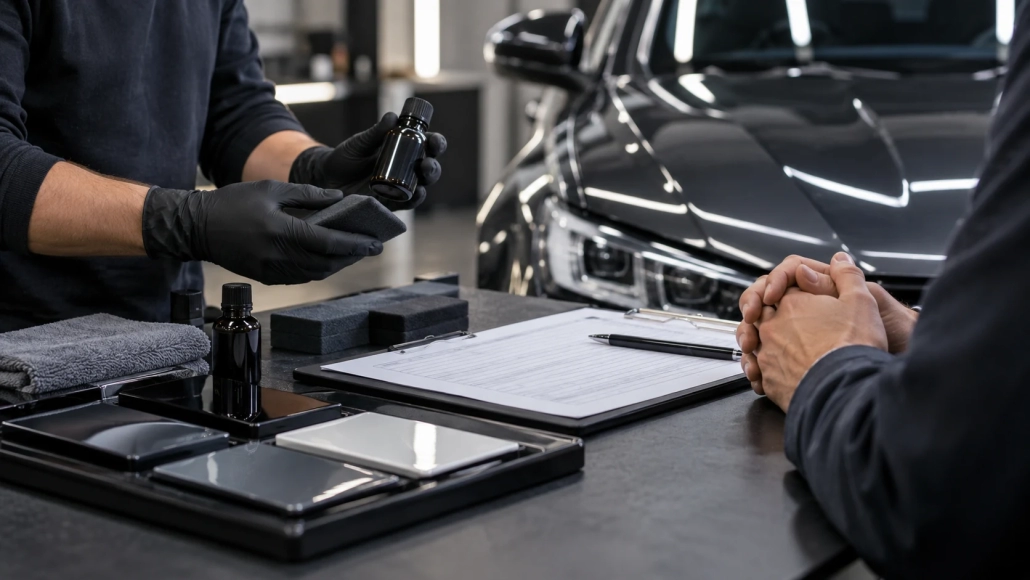
Keep film and coating identities, installation dates and care instructions together when adding ceramic protection to PPF.
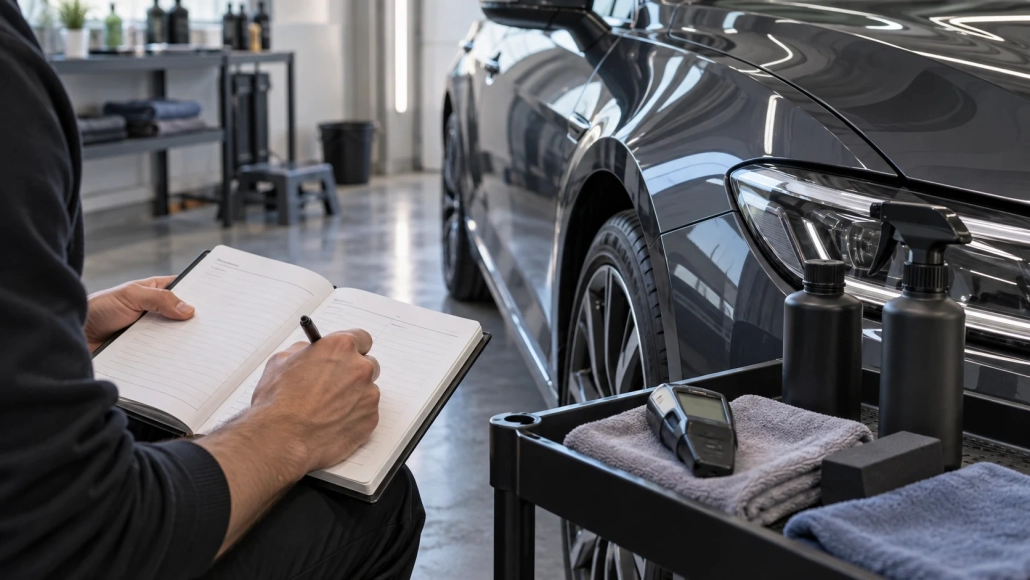
Check the film, existing coating and maintenance goal before adding another spray or topper to paint protection film.

 Ceramic Coating and PPF Warranty Records