






A full polishing range.
From cutting and one-step correction to final finishing.
Specialist chemistry. Expert application.
 QUARTZ99 / CERAMIC BASE COAT
The foundation of your coating system.
A layerable quartz base coat designed for mechanical protection. Pair it with a suitable top coat to create the final finish.
For application by NANOLAB certified installers only.
Four formulas. Extended working time. Find the coating for your finish.
Explore the BEAST family of ceramic coatings.
Find the coating for each exterior surface.
 PPF & VINYLGLOSSProtection for glossy films and wraps.Discover
 MATTE & SATINMATTEProtection that respects the finish.Discover
 GLASSWINDOWSExplore dedicated glass protection.Discover
 WHEEL PROTECTIONWHEELSA dedicated coating for your wheels.Discover
 TRIM PROTECTIONPLASTICProtection for plastic surfaces.Discover
Dedicated care for the surfaces inside.
 LEATHER SURFACESLEATHERDiscover NANOLAB leather protection.Discover PLASTIC SURFACESPLASTICProtection for interior plastic surfaces.Discover TEXTILE SURFACESFABRICExplore the latest fabric formulation.Discover
Spray protection, maintenance and upcoming wash products.
 MAINTENANCEBEAST 365Explore the BEAST maintenance range.Discover
Next in washing, cleaning & care.
Ceramic protection for boats and yachts.
An easy-to-apply ceramic coating with an established track record on boats and yachts around the world.
Results vary with surface preparation, exposure and maintenance.
Read 50 MARINE guides →Explore MARINEProtection for the surfaces you live with.
A look at what we’re developing.
From cutting and one-step correction to final finishing.
A wider range for professional vehicle care.
Taking shape alongside BEAST & MATRIX.
Practical guidance for your next coating project.
Explore all guides →
Understand why accelerated test hours cannot be converted into universal years of ceramic coating durability without relevant correlation.
Updated · NANOLAB Knowledge
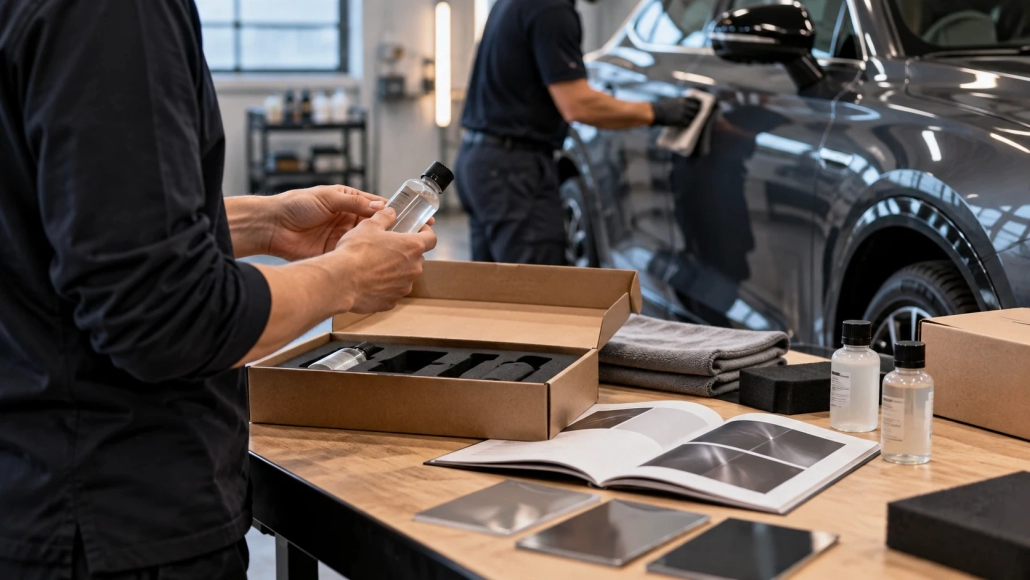
An accelerated test can be useful for comparing materials under defined conditions. It does not provide a universal conversion from laboratory hours to years on every vehicle. Outdoor exposure combines variables that differ between locations, surfaces and maintenance routines.
Request the exposure conditions, sample preparation, test duration and measured endpoint. A report may track appearance, water behaviour or another property. Those endpoints are not automatically equivalent to complete coating failure or successful field service.
Check whether a reference or control sample was included and whether the tested surface resembles the intended application. A result on one substrate should not be silently extended to every paint, film and trim material.
Any claimed relationship to outdoor service should be supported by appropriate real-world observations. Climate, vehicle use, washing and storage all influence the practical setting. Do not multiply test hours by an unexplained factor to produce a marketing lifespan.
For example, retaining water behaviour under one laboratory cycle may support a limited comparison between samples. It does not prove a fixed number of maintenance-free years for a car parked outside in a different environment.
Describe laboratory results with their conditions and pair them with field data where available. Preserve uncertainty and explain the maintenance needed for the intended use. Avoid presenting a test badge as a substitute for application instructions.
Consult NANOLAB documentation for the selected coating’s stated requirements and performance information. A credible durability discussion separates what was measured from what is expected in service, helping customers choose a workable protection routine.
Design a coating field trial with recorded vehicles, use patterns, care routines and inspection points that produce interpretable feedback.
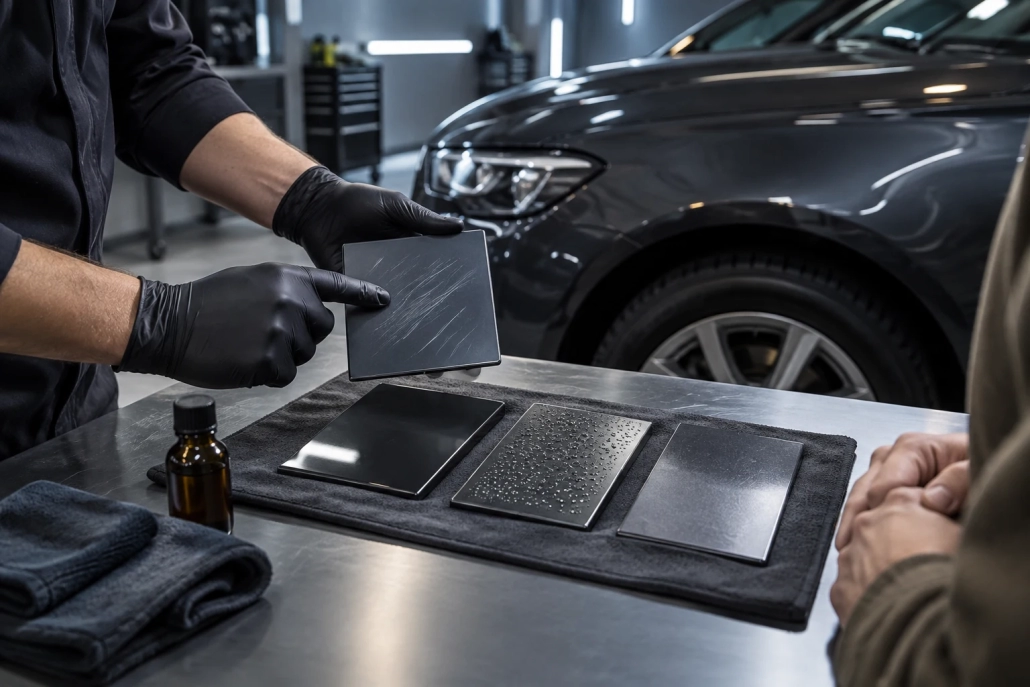
Review cleaner, dilution, contact and inspection conditions before using wash-cycle counts to compare ceramic coatings.
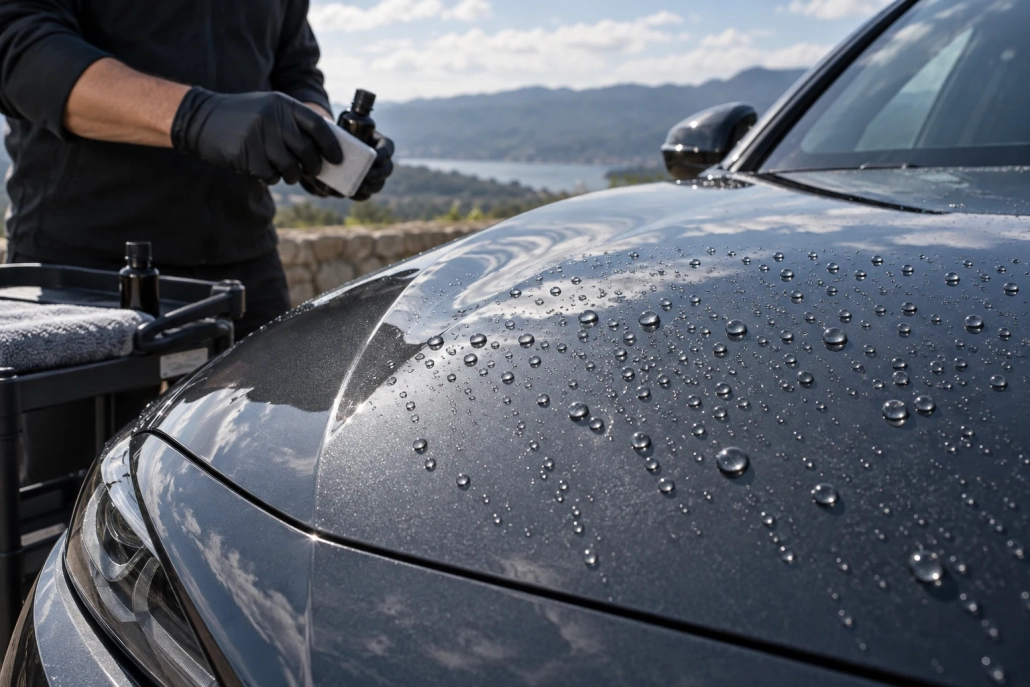
Distinguish the shape of a water drop from how easily it moves when comparing ceramic coating water behaviour.

 Wash-Cycle Tests for Ceramic Coating: Reading the Method