






A full polishing range.
From cutting and one-step correction to final finishing.
Specialist chemistry. Expert application.
 QUARTZ99 / CERAMIC BASE COAT
The foundation of your coating system.
A layerable quartz base coat designed for mechanical protection. Pair it with a suitable top coat to create the final finish.
For application by NANOLAB certified installers only.
Four formulas. Extended working time. Find the coating for your finish.
Explore the BEAST family of ceramic coatings.
Find the coating for each exterior surface.
 PPF & VINYLGLOSSProtection for glossy films and wraps.Discover
 MATTE & SATINMATTEProtection that respects the finish.Discover
 GLASSWINDOWSExplore dedicated glass protection.Discover
 WHEEL PROTECTIONWHEELSA dedicated coating for your wheels.Discover
 TRIM PROTECTIONPLASTICProtection for plastic surfaces.Discover
Dedicated care for the surfaces inside.
 LEATHER SURFACESLEATHERDiscover NANOLAB leather protection.Discover PLASTIC SURFACESPLASTICProtection for interior plastic surfaces.Discover TEXTILE SURFACESFABRICExplore the latest fabric formulation.Discover
Spray protection, maintenance and upcoming wash products.
 MAINTENANCEBEAST 365Explore the BEAST maintenance range.Discover
Next in washing, cleaning & care.
Ceramic protection for boats and yachts.
An easy-to-apply ceramic coating with an established track record on boats and yachts around the world.
Results vary with surface preparation, exposure and maintenance.
Read 50 MARINE guides →Explore MARINEProtection for the surfaces you live with.
A look at what we’re developing.
From cutting and one-step correction to final finishing.
A wider range for professional vehicle care.
Taking shape alongside BEAST & MATRIX.
Practical guidance for your next coating project.
Explore all guides →
Set separate maintenance expectations for coated shower glass, frames and seals so a clean glass face does not hide problems elsewhere in the enclosure.
Updated · NANOLAB Knowledge
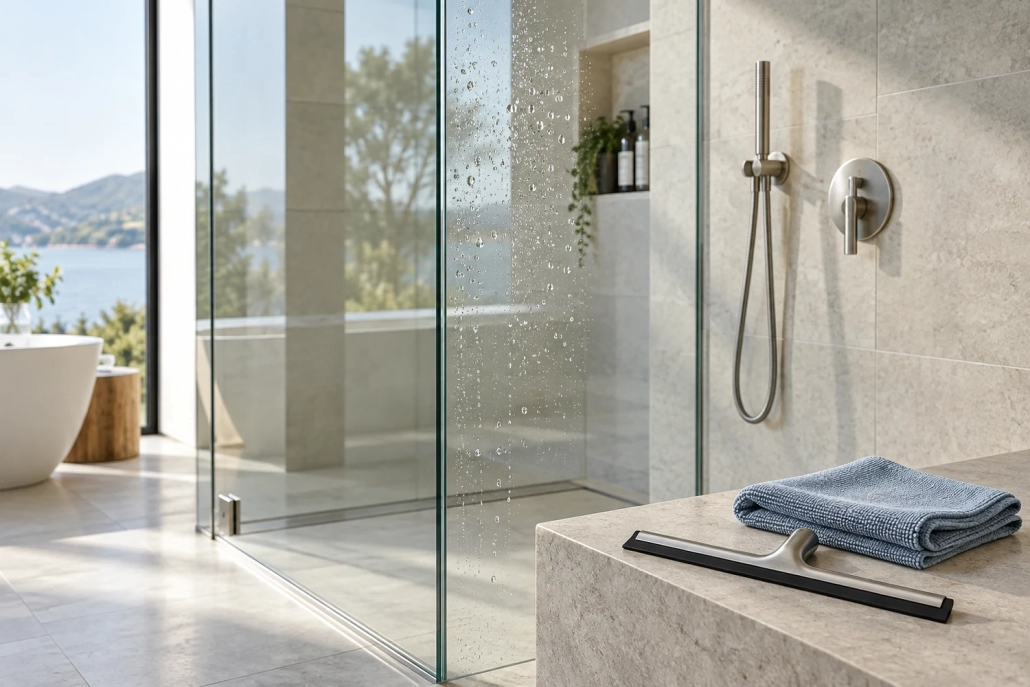
A coated glass face may become easier to clean while the surrounding frame still requires a different routine. Judging the whole enclosure through one surface can hide mismatched maintenance requirements.
Identify the glass treatment, frame finish, hardware and seals. Note the supported cleaner and tool for each area. Check runoff paths because a product applied to one component may reach another.
| Component | Typical acceptance question |
|---|---|
| Glass face | Is the dry view acceptably clear? |
| Frame | Are accessible deposits removed without finish change? |
| Seals and joints | Is service or installer attention required? |
Plan cleaning so residue from hardware does not run onto already finished glass. Use appropriate tool separation and complete the final dry inspection after the assembly has released retained water.
A cleaner approved for one surface is not automatically suitable for the entire enclosure. Likewise, a coating intended for glass should not be extended onto frames or seals without explicit suitability.
If deposits repeatedly return below a frame joint, inspect the source and maintenance access. Recoating the broad glass face may not address that local mechanism.
The hotel standard should describe a complete, maintainable assembly while preserving the different requirements of its materials. A short component map and a clear cleaning sequence help housekeeping deliver a consistent result without turning the simplest surface into a false model for every neighbouring material.
Ask NANOLAB about your surface and intended use. For application and care, use the current instructions for the exact product.
A test patch should represent the actual enclosure, including its existing finish and maintenance needs.
Manage shower glass coatings during a staged hotel refurbishment by separating old, restored and new glazing in the trial and care records.
Use matched lighting and a supported cleaning check to investigate guest reports of cloudy shower glass before deciding that the coating needs renewal.
 Guest Reports of Cloudy Shower Glass: A Lighting and Cleaning Triage